
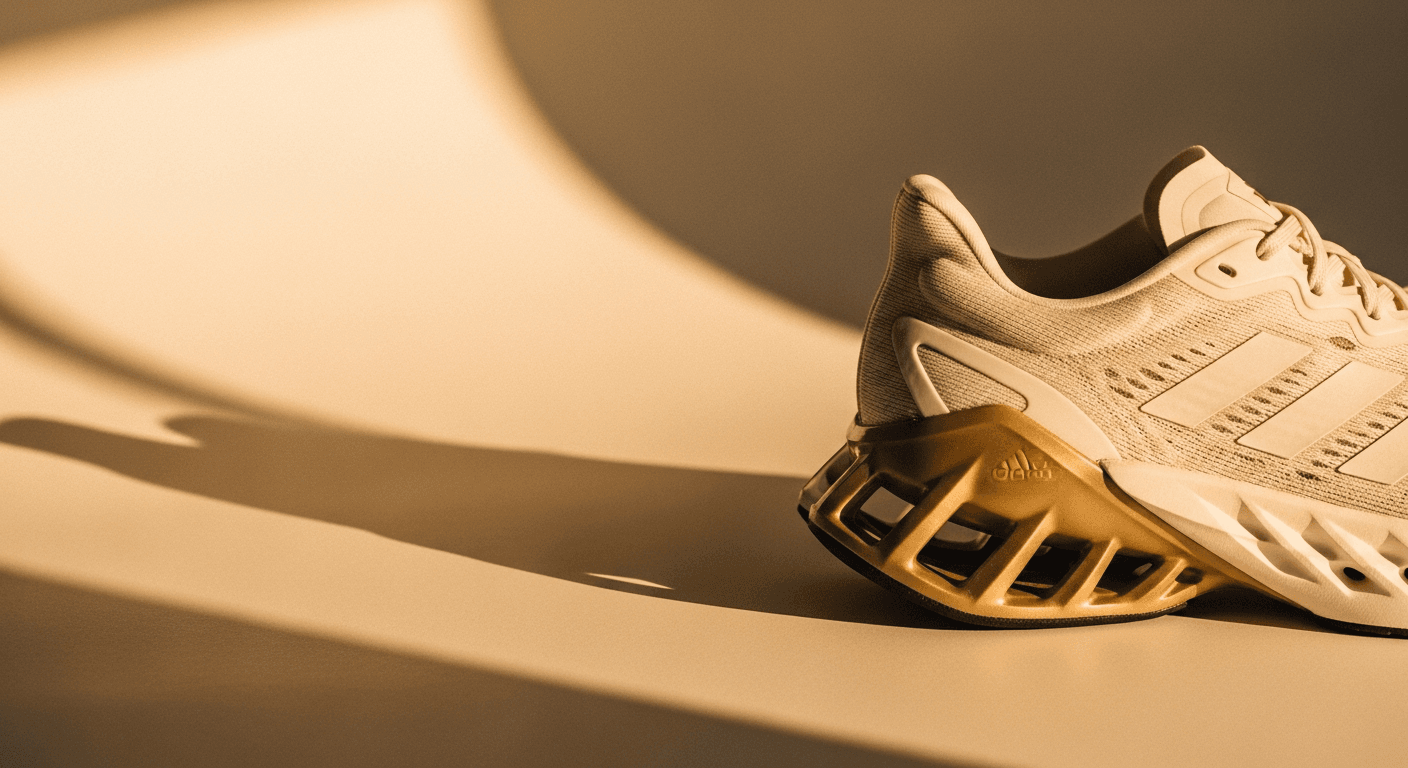
adidas just posted one of its strongest quarterly performances in years, and running is sitting at the center of that story. Revenue growth, margin expansion, and a surge in performance footwear demand all point to a brand firing on multiple cylinders. For runners, that's not just a business headline. It's a signal about what's coming to the market over the next 12 months.
Here's what the numbers actually mean if you lace up regularly.
A Quarter Built on Running Momentum
adidas reported robust Q1 2026 results, with the performance running category cited as a key growth driver. The brand's running segment outpaced several of its other divisions, reflecting both strong sell-through at retail and a surge in consumer attention that began building late in 2025.
The catalyst for much of that attention is hard to miss. When Sabastian Sawe crossed the finish line at the London Marathon in April 2025, stopping the clock at 1:59:30, adidas didn't just get a world record. It got a cultural moment that money can't manufacture. If you want the full breakdown of how that race unfolded, how Sawe ran 1:59:30, including the pacing strategy and shoe technology behind the record, is worth your time.
That performance pulled the Adizero franchise back into the front of the conversation in a category where Nike's Vaporfly and Alphafly had long dominated the narrative. adidas didn't just close the gap. It planted a flag.
The Adizero Halo Effect Is Real
The Adizero Adios Pro franchise, particularly the latest iteration worn by Sawe, has become a genuine rival to the best carbon-plated supershoes on the market. The stack height, the Lightstrike Pro midsole compound, and the carbon fiber architecture have all been refined to the point where elite runners aren't making a compromise by choosing adidas.
But the more commercially significant story is what happens downstream from that halo product. When a brand wins at the top, demand flows toward the rest of the range. Runners who can't justify spending $280 on a race-day supershoe start buying the $140 training versions. Running club members who saw Sawe's run online start checking out adidas options they'd dismissed before. That halo effect is measurable at retail, and it's showing up in Q1 data.
For context on just how significant Sawe's record was for the brand's positioning, the full story of why adidas hit the jackpot with Sawe's 1:59:30 lays out the competitive dynamics in detail.
The Adizero SL and Adizero Boston lines, which sit in the $120 to $160 price range and function as high-mileage trainers, have both seen increased demand. These aren't race shoes. They're the shoes people actually run in three or four times a week. That's where the volume lives, and that volume is growing.
What Strong Financials Signal for R&D
This is the part that matters most for your running in 2026 and beyond. When a brand's running category performs well financially, the internal calculus around research and development investment shifts. Teams get bigger budgets. Projects that were on a two-year timeline get accelerated. Shoe releases that were planned for late 2027 start moving up the calendar.
adidas has been rebuilding its performance running infrastructure for several years, and the Q1 2026 results suggest that investment is paying off. A profitable running category funds more of itself. You can expect a faster cadence of new product releases across 2026, particularly in the Adizero line, as the brand looks to maintain the momentum rather than coast on it.
There's also the question of materials innovation. The battle between foam compounds, plate geometries, and upper constructions is genuinely technical at this level. Strong revenue gives adidas the runway to push further on next-generation midsole materials, where the gap between the best and second-best products in the market can be measured in seconds per kilometer at race pace.
What This Means for Everyday Runners Buying Shoes Now
If you're shopping for running shoes in 2026, the competitive pressure between adidas, Nike, ASICS, and New Balance is working in your favor. Each brand is pushing harder because none of them can afford to fall behind. That competition tends to produce better products at more accessible price points over time.
Here's the practical read on adidas's current lineup for different types of runners:
- Race day and fast training: The Adizero Adios Pro is the flagship, built for marathon and half marathon efforts. It's a legitimate contender against the best Nike and ASICS supershoes on the market. Expect an updated version later in 2026.
- Daily training volume: The Adizero Boston and Adizero SL sit in that $130 to $160 range and offer more energy return than most trainers at that price point. They're not neutral cushion shoes. They reward runners who've built some efficiency into their form.
- Easy and recovery runs: The Supernova and Duramo lines handle this territory, with more cushion and less plate. These haven't changed dramatically, but the brand's overall momentum tends to lift quality standards across the board.
- Cross-training and gym work: If you're incorporating structured cross-training alongside your running, the line between running footwear and functional training footwear is getting blurrier. Worth keeping in mind if you're also looking at formats like how HYROX transitions can cost or save you minutes on race day.
The Broader Supershoe Arms Race
adidas's strong quarter doesn't exist in isolation. The entire performance running footwear market has been on an upward trajectory, driven by growing participation in marathons and half marathons globally, and by the visibility that world record performances bring to the category.
Research tracking running shoe adoption among recreational runners suggests that supershoe technology is no longer a niche consideration. A substantial portion of runners finishing marathons in the three-to-four-hour range are now wearing carbon-plated shoes. The performance benefit is real enough, and the price gap between supershoes and traditional trainers has narrowed enough, that the calculus has shifted for a lot of runners.
What adidas is betting on is that its engineering credentials, now backed by Sawe's world record, can pull a larger share of that market. The Q1 2026 results suggest it's working. For a broader look at how the marathon world record has evolved and what Sawe's time means in historical context, the full history of the marathon world record from 1908 to Sawe's 1:59:30 puts it in perspective.
Training Smarter While the Gear Gets Better
Better shoes don't replace better training. That's worth saying plainly. The gains from moving to a well-engineered supershoe are real, somewhere in the range of 2 to 4 percent improvement in running economy under controlled conditions, according to published research. But they sit on top of whatever fitness you've built.
If you're preparing for a fall marathon and planning to take advantage of adidas's upcoming releases, the shoe decision is one part of a larger picture. Recovery management, nutrition timing, and load management are the other parts. On the recovery side, a week-by-week marathon recovery guide is a useful framework whether you're coming off a spring race or building toward an autumn one.
The gear improvements coming out of adidas's increased R&D investment will be real. But the runner who combines those tools with disciplined training will always outrun the runner who just buys the fastest shoe and hopes for the best.
The Bottom Line
adidas's Q1 2026 results are good news for runners, and not just because it validates the brand's competitive position. Strong financials in the running category mean more investment, faster innovation cycles, and a more aggressive product calendar through the rest of 2026 and into 2027.
The Adizero franchise is the engine of that story, but the benefits flow across the entire range. Whether you're buying a race shoe, a daily trainer, or somewhere in between, you're operating in a market where the brands are pushing each other hard. That pressure produces better products at every price point.
Watch adidas's fall 2026 product announcements closely. If the Q1 momentum holds, and there's no obvious reason it shouldn't, the releases coming in the second half of the year could be genuinely significant for runners at every level.