
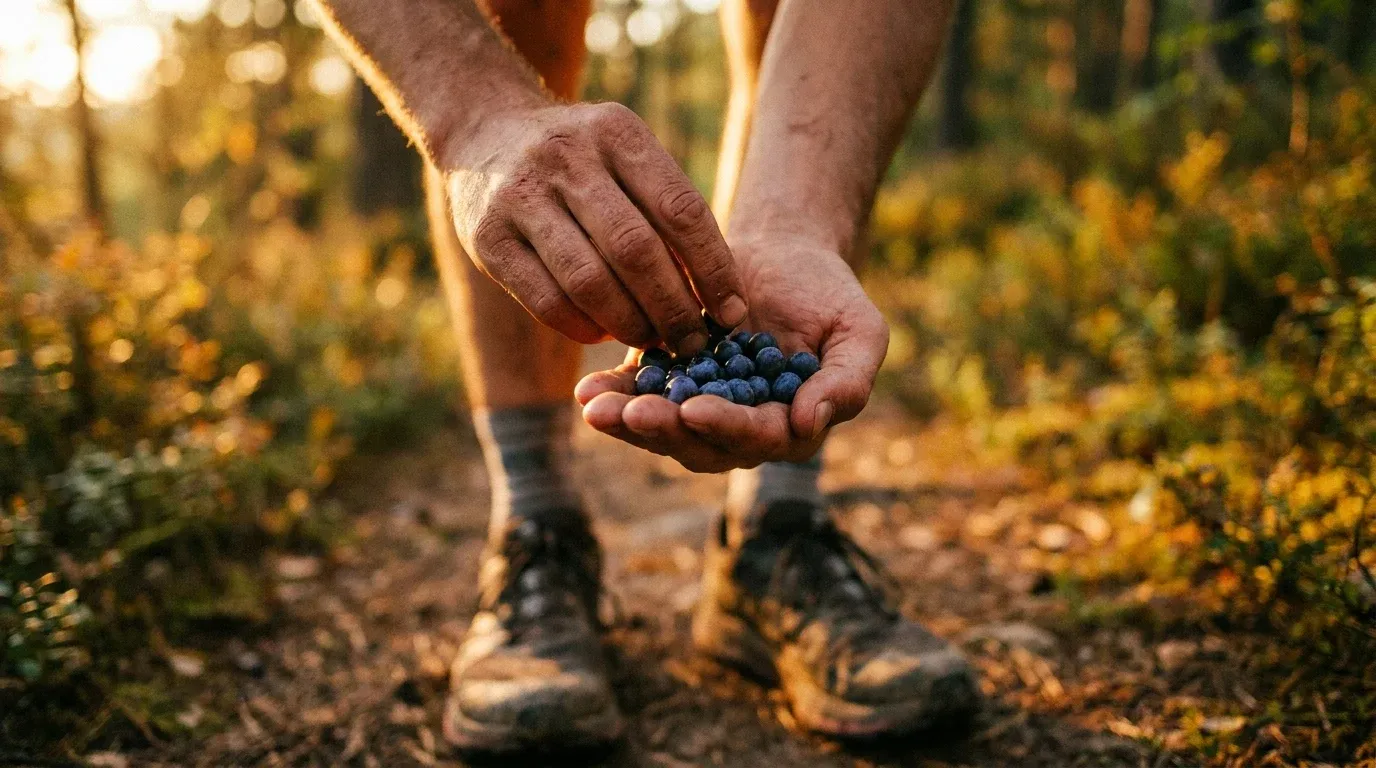
Before your next big race, you're probably thinking about taper runs, sleep, and dialing in your nutrition. But a small, intriguing study out of the University of the Fraser Valley (UFV) suggests there might be another variable worth adding to your pre-race checklist: blueberries.
The research, funded by the US Highbush Blueberry Council, tested whether a week of highbush blueberry supplementation could reduce the physiological punishment that trail running inflicts on your body. The results are preliminary. But the mechanism is biologically sound, and the practical implications are worth understanding.
What the Study Actually Did
Researchers recruited nine recreational trail runners and had them supplement with either highbush blueberry extract or a placebo for seven days leading up to a simulated 22.2 km trail race. After the race, the team measured key biomarkers associated with muscle damage, systemic inflammation, and oxidative stress.
The sample size is small. Nine participants isn't enough to draw sweeping conclusions, and the researchers would be the first to acknowledge that. But the direction of the data is notable: the blueberry group showed potential reductions across all three categories compared to the placebo group.
That's meaningful when you consider what those markers actually represent. Muscle damage markers like creatine kinase reflect micro-tears in muscle tissue. Inflammatory cytokines signal the body's stress response. Oxidative stress indicators measure the imbalance between free radical production and your body's ability to neutralize them. Trail running, with its relentless downhill pounding and variable terrain, drives all three of these through the roof.
Why Blueberries? The Biology Behind the Hype
Blueberries aren't a wellness trend. They're one of the most studied fruits in sports nutrition, largely because of their exceptionally high anthocyanin content. Anthocyanins are polyphenolic compounds that give blueberries their deep color and act as potent antioxidants and anti-inflammatory agents in the body.
When you run hard, especially on trails, your muscles produce a cascade of reactive oxygen species. Left unchecked, this oxidative load accelerates tissue damage and slows recovery. Anthocyanins help interrupt that cascade. They also modulate inflammatory pathways, potentially reducing the post-race soreness and stiffness that cost you training days in the week after a hard effort.
The UFV study fits neatly into a broader body of evidence. Earlier research on blueberries, tart cherries, and other polyphenol-rich foods has consistently pointed toward faster recovery and reduced exercise-induced inflammation in endurance athletes. The specific application to trail running, with its uniquely punishing eccentric load on the legs, is what makes this study particularly relevant.
The Limits You Need to Know
Let's be direct about what this study is and isn't. Nine participants over a single simulated race is a pilot study. It's hypothesis-generating, not hypothesis-confirming. Without a larger randomized controlled trial, you can't make definitive claims about efficacy, optimal dosing, or which specific populations benefit most.
The funding source also matters. The US Highbush Blueberry Council has a commercial interest in positive outcomes. That doesn't invalidate the research. Industry-funded studies are common in nutrition science and are often conducted rigorously. But it's a factor worth keeping in your peripheral vision when you interpret the results.
The supplement industry itself is a complex space. Regulatory standards for what goes into a "blueberry supplement" vary widely, and not all products deliver what's on the label. If you're considering a supplement rather than whole fruit, understanding how to evaluate product quality is increasingly important. The Bill That Could Reshape the Supplement Industry breaks down upcoming regulatory changes that could affect how these products are made and marketed in the US market.
Seven Days of Blueberries Before a Race: Is It Worth It?
Here's where the practical calculus becomes interesting. Even accounting for the study's limitations, the risk-benefit profile of adding blueberries to your race-week nutrition is essentially zero on the downside.
Whole blueberries are widely available, affordable, and carry no known performance drawbacks at normal dietary quantities. A cup of fresh blueberries costs around $3 to $5 at most US grocery stores. Frozen blueberries, which retain most of their polyphenol content, are even cheaper. You're not disrupting your gut. You're not introducing an unfamiliar compound. You're eating fruit.
If you're building a structured approach to race week, this fits naturally alongside the other nutritional levers you're already pulling. For a detailed framework on timing your peak, How to Peak for a Fall Race: Your Week-by-Week Plan covers the full picture of what to prioritize in the days before a hard effort.
The more important principle here is that race-week nutrition isn't just about carbohydrate loading. It's about managing inflammation, protecting muscle tissue, and setting your body up to absorb the stress of race day without collapsing into a recovery hole afterward. Blueberries address the second half of that equation in a way that pasta simply doesn't.
Whole Food vs. Supplement: What to Choose
The UFV study used a concentrated highbush blueberry supplement, not whole fruit. That distinction matters because the polyphenol concentration in a standardized extract can be significantly higher than what you'd get from a cup of berries at breakfast.
That said, whole food sources come with a matrix of additional compounds, fiber, and micronutrients that isolated extracts don't replicate. For most recreational trail runners, adding one to two cups of blueberries daily for the seven days before a race is a reasonable starting point. If you're interested in a supplement, look for products standardized to a specific anthocyanin percentage and third-party tested for purity.
This is especially relevant for athletes who are already working hard to optimize their overall nutrition. Under-fueling is a persistent issue in the running community, particularly among women. 80% of Female Athletes Are Underfueling explores how chronic low energy availability undermines performance and recovery in ways that no single supplement can fix. Blueberries are an add-on, not a substitute for adequate overall intake.
What This Means for Your Training, Not Just Your Race
The study focused on the pre-race supplementation window, but the recovery implications extend well beyond race day. If blueberries genuinely attenuate muscle damage and oxidative stress during high-intensity efforts, there's a reasonable argument for incorporating them more consistently during heavy training blocks, not just in the final week.
Post-race nutrition is its own discipline. What you eat in the hours after crossing the finish line determines how quickly you bounce back and how soon you can resume quality training. HYROX Post-Race Recovery: Why What You Eat Next Matters covers the glycogen and protein priorities that apply across high-intensity race formats, and the same logic translates directly to trail running recovery.
Managing inflammation through nutrition also has implications for athletes who train through multiple events in a season. If you're running a fall race after a summer of heavy mileage, your body is already carrying accumulated fatigue. Polyphenol-rich foods are one tool in a larger toolkit for staying ahead of that load.
The Bigger Picture on Race Nutrition
Trail running places unique demands on the body that road running simply doesn't replicate. The eccentric muscle contractions on descents, the proprioceptive demands of uneven terrain, and the duration of most trail events all combine to create a recovery burden that's substantially higher than a comparable road effort.
That context is exactly why studies like this one matter, even at a small scale. The sport's nutritional needs are under-researched relative to road running, and any credible evidence pointing toward accessible, practical interventions deserves attention. Common errors in race nutrition can quietly undermine months of solid training. Race Day Nutrition Mistakes That Wreck Your Marathon outlines the patterns that most often derail athletes on race day, and most of them apply equally to trail events.
The UFV blueberry study won't be the last word on this topic. Larger trials with more participants, longer supplementation windows, and different race distances are needed before anyone can write a definitive protocol. But the signal is there, the cost is low, and the mechanism makes sense.
Add blueberries to your race-week plan. Eat them at breakfast. Throw them in a smoothie. Keep a bag of frozen ones in your freezer. It's one of the lowest-effort nutritional adjustments you can make, and the emerging evidence suggests it might actually be doing something useful while you're out there on the trails.