
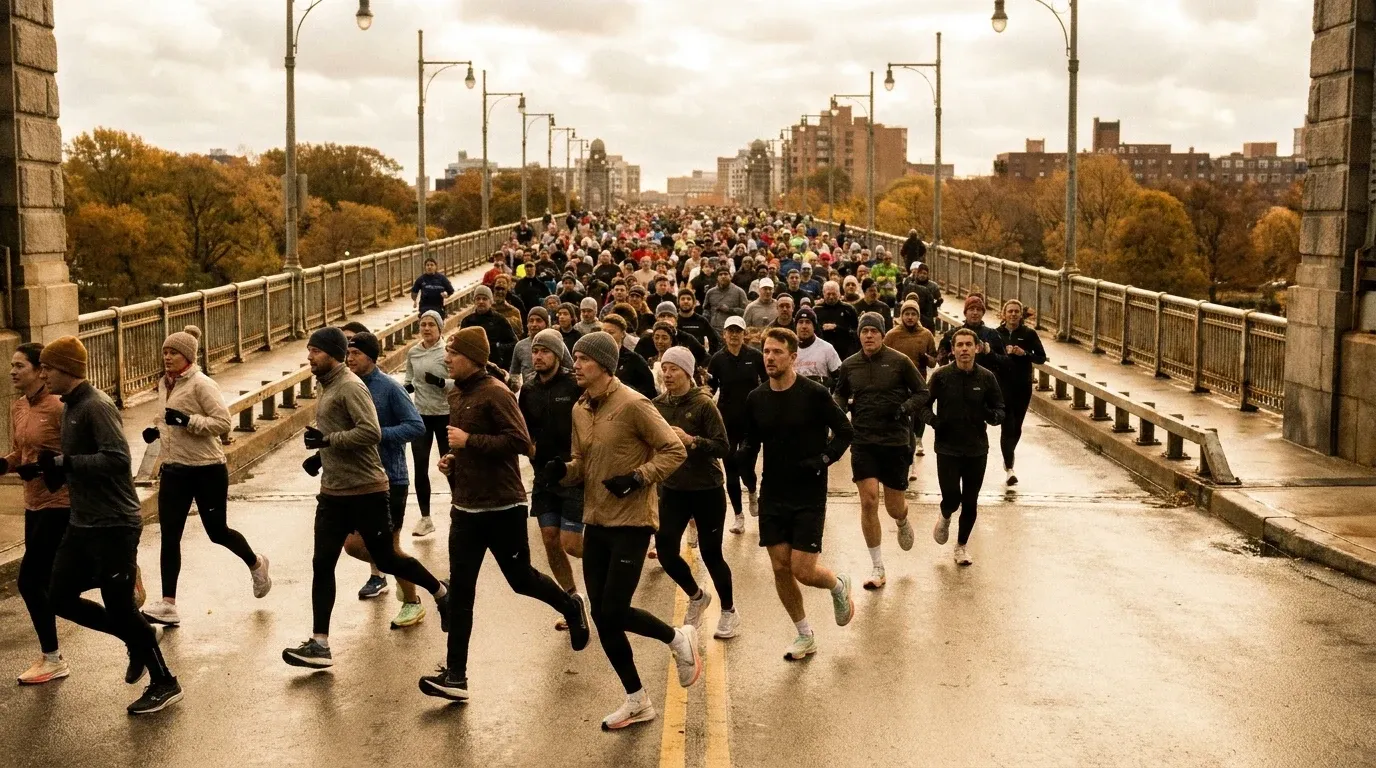
Numbers don't lie, and the 2026 New York City Marathon just posted one that the running world won't forget quickly. A record 61,146 runners crossed the finish line in Central Park, making this the largest finisher total in the event's 55-year history. That's not a marginal gain. It's a statement about where road running is headed and how fast it's getting there.
For context, the previous record sat at around 55,000 finishers. The jump to 61,146 represents a leap of roughly 11 percent in a single cycle. If you're trying to understand why that matters, consider that NYC was already the biggest marathon on the planet before this year. Now it's bigger still.
A Record That Goes Beyond the Finish Line
What makes the 2026 figure remarkable isn't just the raw number. It arrived alongside a new charity fundraising milestone, with the race officially confirming that runners collectively surpassed previous donation records. The NYC Marathon has long operated as a dual-identity event: elite competition at the front, mass-participation movement everywhere else. This year, both sides of that identity hit new highs simultaneously.
The race's official charity program channels funds through hundreds of partner organizations, covering causes from cancer research to veterans' support to youth fitness. That fundraising engine doesn't slow down when elite times improve or weather turns difficult. It runs independent of everything else, powered by the simple fact that people run for reasons that go deeper than personal records.
That duality is part of what separates the World Majors from every other road race category. As covered in NYC Marathon 2026 Breaks Finisher Record and Charity Goal, this year's edition reaffirmed that the event's commercial and humanitarian dimensions aren't in tension. They reinforce each other.
What It Actually Takes to Move 61,000 Runners Through a City
Getting 61,146 people across a finish line in New York isn't a matter of opening more corrals and printing more bibs. The logistics behind an event at this scale would make most city planners lose sleep.
The race spans all five boroughs, covering 26.2 miles of roadway that must be cleared, managed, and then restored to normal traffic flow within hours. Water station coverage has to account for runners spread across a window of seven hours or more between the first finisher and the final participant crossing the line. Medical tents, defibrillator placements, and triage capacity all scale with field size, and medical directors must plan for the full statistical range of incidents that come with 61,000 participants.
Corral management has become increasingly sophisticated. Staggered wave starts reduce crowding at the Verrazzano-Narrows Bridge and prevent dangerous bottlenecks in the early miles. The logistics team coordinates across the NYPD, New York Road Runners, volunteer medical crews, and dozens of municipal agencies. That coordination has to work without visible seams, because for most runners, the race should feel seamless even when it isn't.
Finish-line flow is its own discipline. Processing 61,000 finishers means managing everything from mylar blanket distribution and medal placement to food, hydration, and the reunification of runners with their gear. The post-finish corridor in Central Park stretches for nearly a mile and requires precise crowd-flow modeling to prevent congestion that could compromise safety for exhausted runners.
Why the Growth Trajectory Isn't Slowing
NYC's record didn't emerge from a vacuum. It reflects a broader global boom in marathon participation that has been building steadily since the mid-2010s and accelerated sharply after 2022, when post-pandemic demand for in-person events surged across all distance categories.
Global marathon finisher numbers have climbed consistently across World Major events. London, Chicago, Berlin, Tokyo, and Boston have all reported record or near-record fields in recent cycles. Smaller regional races are following the same trajectory. The Nice-Cannes Marathon 2026 saw 25,000 runners set a record edition, illustrating that the appetite for marathon participation isn't confined to the flagship events. It's distributed across the global calendar.
Several forces are driving this. Wearable technology has made training more accessible and measurable, lowering the perceived barrier to entry for new runners. Social media has turned finish-line moments into cultural currency. And the fundraising dimension of events like NYC gives millions of people a reason to run that isn't purely performance-driven. You don't need a sub-four-hour goal to have a reason to be there.
The demographic profile of marathon participation has also shifted. Women now make up approximately 45 percent of marathon finishers in the US, up from around 10 percent in the 1980s. Participation among runners over 50 has grown substantially. The sport is wider and more inclusive than it has ever been, and that breadth is showing up directly in finisher counts.
The Pressure This Creates on Race Directors Everywhere
When NYC raises the ceiling, every World Major feels the pressure to respond. That pressure isn't just about capacity. It's about experience quality at scale.
Runners who pay entry fees, travel internationally, and train for months arrive with high expectations. Entry to the NYC Marathon via the standard lottery is notoriously difficult. Guaranteed entry through charity fundraising typically requires raising a minimum of $2,500 to $3,500, depending on the charity. Time-qualifier spots are contested. The demand so far exceeds supply that NYRR receives hundreds of thousands of lottery applications annually.
That scarcity dynamic means that every runner who makes it to the start line has invested significantly, financially and emotionally. Delivering a race experience that justifies that investment at 61,000-person scale is an operational challenge with no clean analogue outside of a handful of events worldwide.
Other majors face the same tension. Hong Kong's first Northern Metropolis Marathon encountered real problems on its debut, illustrating how difficult it is to execute mass-participation events correctly from the start. Even experienced organizations make mistakes when field sizes grow faster than infrastructure can adapt.
What This Means If You're Training for a Major
If NYC is on your target list, the finisher record changes one thing immediately: the competitive landscape for entry. Fields this size mean lottery odds stay long and charity minimums may rise in future cycles as demand continues to grow.
It also means your preparation needs to be serious. A 61,000-person race is energizing, but it's also physically demanding in ways that go beyond the miles themselves. The crowding in early miles, the noise, the pacing disruption from large fields, and the mental challenge of holding your plan in a stadium-like environment all require specific training attention.
If you're newer to distance running and wondering how to structure a build that's hard enough to get you to the finish line but doesn't break you in the process, the principles in how hard you should actually train at the gym apply directly to endurance work. Progressive overload, recovery management, and honest self-assessment matter whether you're on a track or a treadmill.
Nutrition strategy also becomes more important as field size increases, because you'll be on the course longer than a small-race equivalent. Aid station timing matters, and your fueling plan should be tested in training, not improvised on race day. For runners who rely on caffeine to push through late miles, understanding the actual performance data and the limits of safe dosing is worth your time before race week. The evidence on caffeine, exercise, and cardiac risk is more nuanced than most pre-race advice suggests.
The Bigger Picture for Road Running Culture
The 2026 NYC Marathon finisher record isn't just a number on a results page. It's evidence of something happening in running culture that's structural, not cyclical.
Road running has evolved from a niche pursuit into one of the most broadly participatory sports on earth. The World Majors sit at the top of that ecosystem, but the growth is feeding upward from every level. Parkrun events globally count millions of regular participants. Half-marathon fields are expanding. Trail running is pulling in runners who want something beyond the road. The ecosystem is diversifying even as the flagship events grow larger.
What NYC confirmed in 2026 is that scale and quality aren't necessarily incompatible. Running 61,146 people through one of the world's most complex urban environments, raising record charity funds in the process, and delivering a finish-line experience that runners describe as one of sport's genuinely transcendent moments. That's not an accident. It's the result of decades of operational refinement meeting a moment of genuine cultural momentum.
The question now isn't whether the growth continues. It's whether the infrastructure of road running, from city permits to medical standards to lottery systems, can evolve fast enough to keep pace with the runners who want in.