
Key Takeaways
- The 130th Boston Marathon (April 20, 2026) switches from 4 to six waves for its 30,000 runners.
- The main goal: reduce crowding, especially in the opening miles out of Hopkinton.
- The elite wave remains separate, starting roughly 25 minutes before the amateur waves.
- All amateur wave starts are spread across approximately 90 minutes total.
- Three reigning champions are racing: men's, women's, and wheelchair categories.
The 130th Boston Marathon runs on Monday, April 20, 2026, Patriots Day in Massachusetts. And for the first time in recent memory, the Boston Athletic Association (BAA) is switching from four waves to six for its 30,000 runners. It's the most significant logistical change of the 2026 edition, and it has real, practical implications for how your race day unfolds.
Why Six Waves Now?
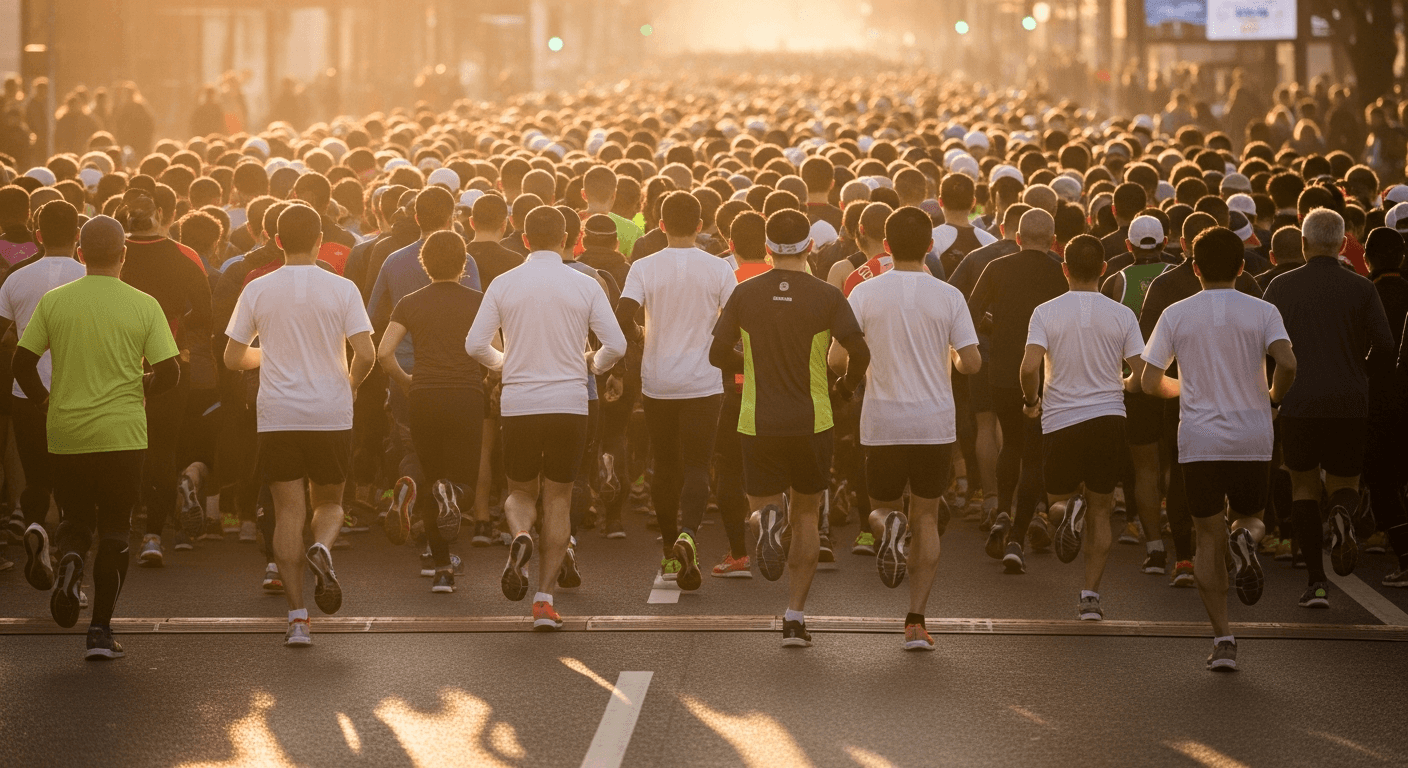
Boston is one of the most congested major marathons in its early miles. The course out of Hopkinton is narrow at the start, and 30,000 runners grouped into four waves creates a density that's difficult to manage both for safety and for performance, especially in those critical opening kilometers where pace discipline matters most.
By moving to six waves, the BAA mechanically reduces the number of runners per starting group. Each wave now holds roughly 5,000 runners instead of the 7,500 from previous four-wave editions. That translates to less crowding in Hopkinton, less weaving in the early miles, and better conditions for holding your target pace from the gun.
The change also reflects a broader trend in mass participation running: major races are adapting their format to improve the experience for mid-pack runners, not just elites. According to WROR's 2026 preview, the BAA had been planning this restructuring for several months.
The Six-Wave Structure: Who Goes When
The placement logic stays the same as before, but it now applies across six groups:
- Elite wave: professional athletes and invited runners, starting roughly 25 minutes before the amateur waves. Elites race without the mass field around them.
- Wave 1: qualifiers with the fastest times, well below their age-group qualifying standard.
- Waves 2 through 5: qualifiers sorted by descending qualification times. The higher the wave number, the closer your qualifying time is to the official threshold for your age group.
- Wave 6: charity runners, official guests, and non-qualifiers who entered through special allocations. This is the most diverse wave in terms of performance range.
All amateur wave starts are spread across approximately 90 minutes. If you're in Wave 1, you'll be on the road considerably earlier in the morning than if you're in Wave 6. Check your exact start time on your bib or in the athlete portal on the BAA website.
What This Actually Changes for Your Race
Less congestion in the first five miles. This is the most immediate and most positive impact for the majority of runners. With around 5,000 people per wave, the opening miles out of Hopkinton will be noticeably more open. You'll do less weaving, which conserves energy early when you should be running controlled.
More accurate early pacing. When the field is less dense, it's easier to lock into your target pace from the start instead of running at crowd pace for the first two or three miles. For mid-pack runners, that's a concrete advantage over the first 10 kilometers, the stretch where most early pacing errors happen. Understanding how elite runners balance heart rate and pace can help you make smarter use of that cleaner early window.
Different pre-race logistics. If you're running in 2026, you need to plan your arrival at Hopkinton based on your specific wave. Staging areas are differentiated by wave. Arriving too early for a late wave means waiting in potentially cold April morning conditions. Arriving too late means missing your start. Don't guess: check your confirmed wave assignment on the BAA athlete portal.
A more homogeneous field feel at the gun. Six waves creates tighter pace groupings than four. You're more likely to be surrounded by runners at a similar fitness level when the clock starts, which makes it easier to avoid being swept out at the wrong pace in the excitement of the moment.
The Reigning Champions Are Back
Beyond logistics, the 2026 edition features the return of all three reigning Boston champions: the winners from the men's, women's, and wheelchair categories. Their presence guarantees elite-level competition at the front and the kind of early pacing that could produce fast finishing times if Patriots Day conditions cooperate. For a full breakdown of who's racing and what to expect at the front of the field, the Boston 2026 elite field analysis covers every major contender in depth.
Boston remains one of the few major races where the course profile, a net downhill with the potential for a helpful tailwind, can still produce top-level times despite the difficulty of the Newton Hills in the second half.
Three Things to Lock In Before April 20
If you're running Boston 2026, here are three things worth handling before race day:
- Confirm your wave and exact start time in the BAA athlete portal. Don't assume it matches previous years.
- Plan your Hopkinton arrival based on your wave. Smaller wave sizes change wait times and staging flow in ways that earlier editions didn't require.
- Use the cleaner early miles to your advantage. Less congestion means you can calibrate your real pace instead of running at crowd pace. Don't waste that window by going out too fast just because it feels easy.
The move to six waves is the right call for a 30,000-person race. If you've run Boston before in the four-wave format, you'll feel the difference within the first mile.