
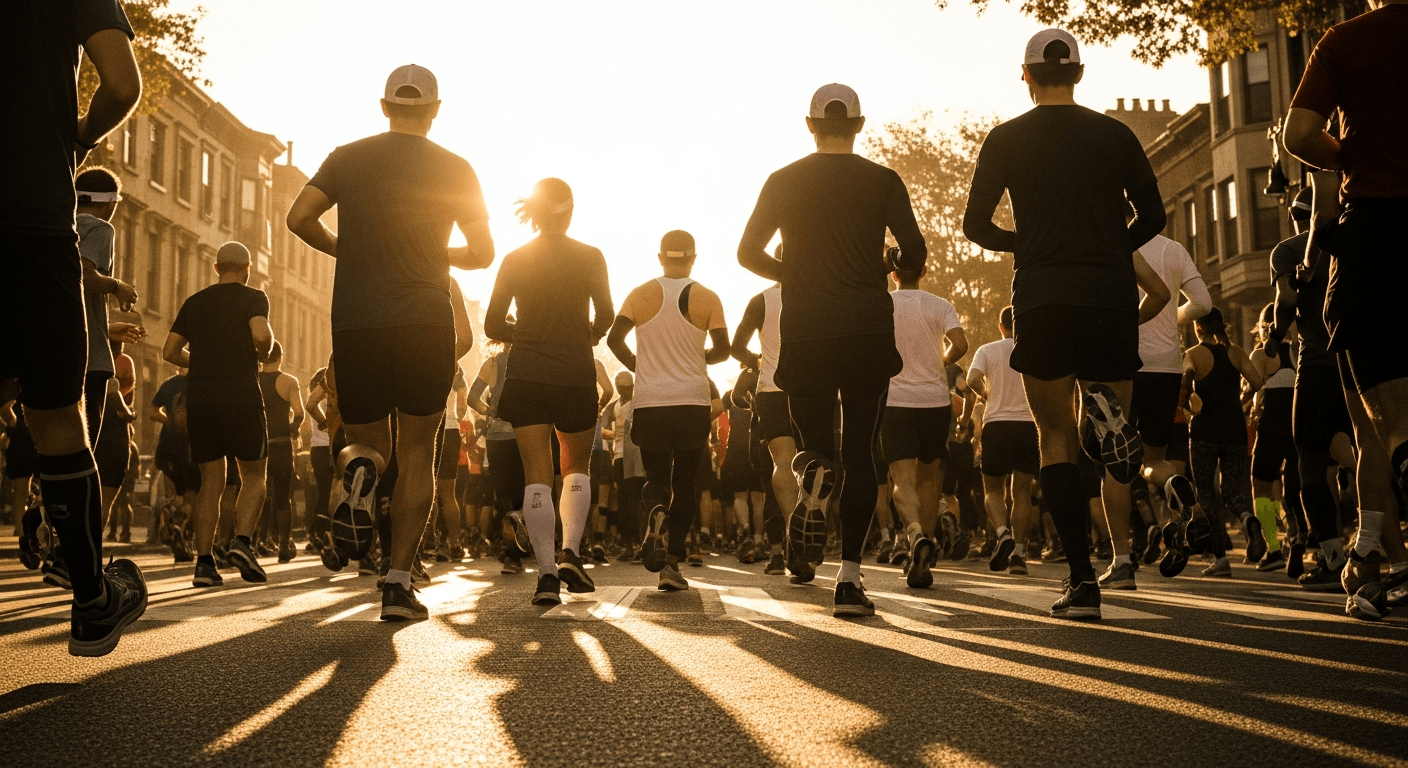
The 2026 Brooklyn Half Marathon officially became one of the largest half marathon events in U.S. history, drawing a record-breaking field that surpassed every previous edition of the race. Tens of thousands of runners lined up in Prospect Park and flooded the streets of Brooklyn, turning what was already a beloved spring tradition into something much bigger.
For everyday runners debating their next goal race, this moment is worth paying attention to. The Brooklyn Half isn't just growing. It's becoming a benchmark for what mass-participation road racing looks like in the modern era.
By the Numbers: What "Record-Breaking" Actually Means
The Brooklyn Half Marathon, organized by New York Road Runners (NYRR), consistently ranks among the most-entered half marathons in the country. The 2026 edition pushed past previous participation highs, with registration selling out faster than any prior year and a waitlist that stretched into the thousands.
That scale matters. When a single race draws this kind of turnout, it reflects something broader happening in the sport. Half marathon participation in the U.S. has climbed steadily since 2022, outpacing recovery in full marathon registration following the pandemic disruption. According to Running USA data, the half marathon is now the most popular race distance in the country, accounting for more total finishers annually than any other format.
Brooklyn's numbers confirm that trend isn't slowing down.
Why the Half Marathon Is Winning the Distance War
The full marathon will always carry a certain mystique. But for the majority of runners, the half marathon hits a sweet spot that the 26.2-mile distance simply can't match.
The training commitment is significantly lower. Most half marathon programs run 10 to 14 weeks, require no more than four days of running per week at peak volume, and don't demand the long recovery windows that full marathon training does. You can train for a half marathon while holding a demanding job, managing a family schedule, and still showing up on race day feeling prepared rather than depleted.
The injury risk profile is also more forgiving. Running-related injuries spike sharply as weekly mileage climbs above 40 to 50 miles, a range most full marathon plans regularly require. Half marathon training typically keeps runners well below that threshold, making it a more sustainable option for athletes who've dealt with overuse injuries in the past.
If you've been wondering when running fitness actually starts to decline, the answer has important implications for how aggressively you approach your training load. Managing volume intelligently is what keeps runners racing year after year.
Brooklyn as a Cultural Event, Not Just a Race
What separates the Brooklyn Half from a generic road race is the environment it creates. The course moves through some of Brooklyn's most distinctive neighborhoods, from the leafy paths of Prospect Park through Flatbush, Bay Ridge, and down to the Coney Island boardwalk. The finish line at the beach, with ocean views and the sound of the crowd, has become one of the most photographed race finishes in American running.
Runners travel from dozens of countries specifically for this event. A significant portion of the field consists of international participants who combine the race with a broader New York experience. Hotels near the start area book out months in advance. Local businesses near the course report their highest foot traffic of the year on race weekend.
That cultural weight is part of what drives registration demand. People aren't just signing up to run 13.1 miles. They're signing up to be part of something. The race has become a shared experience that extends well beyond the finish line, and NYRR has invested heavily in the logistics, entertainment, and athlete support that make that experience worth the entry fee.
The same dynamic is fueling growth at major events across the country. If you're also considering a spring race closer to the Rocky Mountains, the Bolder Boulder 10K is filling up fast in 2026 and follows a similar logic: iconic course, deep community investment, and a race-day atmosphere that draws runners who could technically run the distance on their own but choose the event for what surrounds it.
What This Means If You're Planning Your Next Race
Record participation creates some practical realities you need to factor into your planning.
Register early. The Brooklyn Half sold out within hours in 2026. NYRR members and returning runners got priority access windows, and general registration opened to a waitlist almost immediately. If Brooklyn is on your list for 2027, mark the registration date now and treat it like a concert drop, not a casual sign-up.
Prepare for the crowd. Racing with 25,000-plus other runners changes the experience significantly. The first two miles of a large-field half marathon are often congested, and pace management at the start requires patience rather than aggression. Seeding yourself accurately in the correct corral is one of the most underrated race-day decisions you can make.
Train for the specific course demands. Brooklyn's course is largely flat, which encourages fast times but also rewards runners who've done tempo work and practiced sustained effort rather than relying on hills to break up the monotony. Your fueling strategy matters more than you might think on a flat, fast course where pacing errors compound quickly.
Speaking of fueling: the principles that apply to high-intensity fitness events transfer directly to half marathon race day. The HYROX Race-Day Carb Fueling guide covers the science of carbohydrate loading and intra-race fueling in detail, and most of that guidance translates cleanly to any endurance event lasting 90 minutes or more.
The Bigger Picture: Road Racing Is Healthier Than It Looks
There was a period, roughly 2015 to 2020, when industry observers started questioning whether mass-participation road racing had peaked. Marathon registration was plateauing in some major markets. Smaller races were folding. The overhead of organizing large events was squeezing margins for race directors.
What's happened since tells a different story. Participation in half marathons and 10Ks has rebounded strongly, driven largely by a new cohort of runners who came to the sport during the pandemic and are now moving into organized racing. These runners skew younger, are more active on social media, and treat race entry as part of a broader wellness and social identity. They want the medal, the photo at the finish, and the community. Brooklyn delivers all of it.
The Ogden Marathon's 2026 women's record and standout performances point to something similar at the competitive end of the spectrum: elite interest in domestic U.S. road racing is also rising, which raises the profile of events at every level.
Internationally, events like the London, Tokyo, and Berlin half marathons are also posting strong registration numbers, confirming that the trend is not uniquely American. But the Brooklyn Half's combination of urban spectacle, accessible distance, and the gravitational pull of New York City makes it a particularly visible symbol of where road racing is heading.
Should You Run Brooklyn?
If you've never run a major city half marathon, Brooklyn is one of the best possible introductions. The course is fast and well-organized. The crowd support is consistent from Prospect Park to Coney Island. NYRR's logistics are polished after decades of running large-scale events. And finishing on the Coney Island boardwalk is genuinely memorable in a way that a finishing chute in a parking lot simply isn't.
If you're already an experienced half marathon runner looking for a PR course, Brooklyn's flat profile makes it competitive-friendly. The main challenge is managing the early congestion and not going out too fast on what feels like an easy opening mile.
Either way, the 2026 record isn't a ceiling. It's a new floor. Demand for the Brooklyn Half will almost certainly grow in the years ahead, and getting into the habit of registering early is the only strategy that guarantees you a bib.
The half marathon is having its moment. Brooklyn just made that impossible to ignore.