
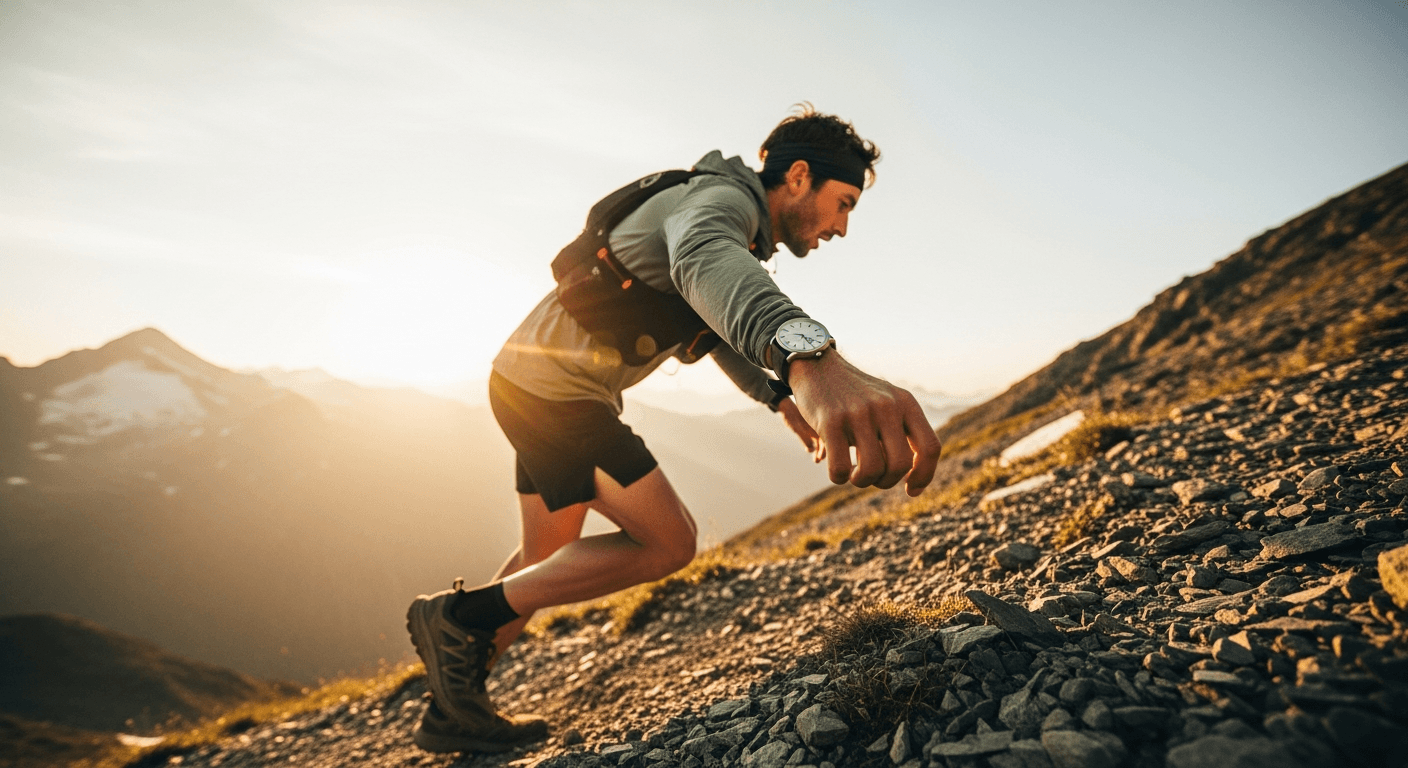
When a Swiss luxury watchmaker best known for outfitting professional divers and racing drivers decides that trail running deserves its attention, you pay attention. TUDOR's official partnership with the UTMB World Series isn't a quirky marketing experiment. It's a clear-eyed bet on where premium sport culture is heading.
For trail runners, whether you're lining up at a local 50K or dreaming of Chamonix, this deal signals something worth understanding. The sport you love is being repositioned at the highest level of aspirational lifestyle branding. That has real consequences for gear, media, and the broader running ecosystem.
What the TUDOR-UTMB Partnership Actually Means
TUDOR has confirmed an official partnership with the UTMB World Series, the global circuit of trail and ultra-distance races that culminates each August in the Alps with the flagship event: the HOKA UTMB Mont-Blanc. The partnership places TUDOR alongside a property that has become the most recognized name in trail running worldwide.
The brand will integrate across the race series through timing, branding at key events, and content production. That's the surface level. But read between the lines and you're looking at a luxury house making a deliberate play to associate its identity with extreme human performance and mountain aesthetics. Those are values TUDOR has always claimed. UTMB gives them a living proof point.
For context, TUDOR sits within the Rolex Group, and its watches typically retail from around $1,500 to $5,000. This is not a brand that attaches itself to anything casually.
Why UTMB Is the Right Stage
If you're going to plant your flag in trail running, the HOKA UTMB Mont-Blanc is where you do it. The race covers 106 miles through France, Italy, and Switzerland, with 10,000 meters of cumulative elevation gain. Runners navigate technical mountain terrain, extreme weather, and sleep deprivation across roughly 20 to 46 hours of continuous movement.
The dropout rate sits around 40%. That figure alone sets UTMB apart from almost every other mass-participation endurance event on the planet. Getting a finisher's buckle at UTMB requires years of qualification through the UTMB World Series index system, which means athletes compete at qualifying races across six continents just to earn entry.
That global qualifying structure is precisely what makes UTMB valuable to a brand like TUDOR. The race isn't just French. It's a worldwide journey that tens of thousands of runners participate in across dozens of countries before a single step is taken in Chamonix. If you want premium global reach within a deeply committed athletic community, UTMB delivers it.
For those drawn to similarly mythic races built around suffering and landscape, Hardrock 100: Why This Race Captivates Runners explores what makes these extreme mountain events so culturally powerful, and why runners keep coming back.
Trail Running Is Following Cycling's Playbook
This isn't the first time luxury brands have moved into endurance sport. Cycling went through a nearly identical transformation over the past 15 years. What started as a niche pursuit dominated by weekend club rides became a lifestyle category commanding premium pricing on bikes, apparel, and accessories. LVMH brands, luxury car manufacturers, and high-end watchmakers all followed the money and the culture into cycling.
Open-water swimming and triathlon have seen similar trajectories, with brands like Breitling, Panerai, and IWC building long-running associations with ocean racing and endurance competition. The pattern is consistent: a sport builds a passionate, affluent, performance-driven audience, and luxury brands recognize that audience as aligned with their own customer profile.
Trail running has now reached that inflection point. Global participation has surged over the past decade. Race entry fees for premium ultras routinely exceed $300 to $500, and serious trail runners invest thousands annually in gear, travel, coaching, and nutrition. The average UTMB qualifier isn't a weekend jogger. They're a committed athlete with disposable income and strong brand loyalty.
TUDOR isn't chasing trail runners. It's chasing who trail runners are.
The Trickle-Down Effect on Everyday Trail Running
Here's where this gets relevant for the runner who isn't racing through the Alps anytime soon. Luxury sponsorship at the top of a sport doesn't stay at the top. It generates revenue, visibility, and infrastructure that gradually reshapes the entire landscape.
When cycling attracted premium investment, it didn't just change what pro riders wore. It funded better race coverage, drove apparel innovation at accessible price points, built out a coaching industry, and created media ecosystems that served athletes at every level. The same dynamic applies here.
Specifically for trail running, you can expect:
- More investment in grassroots race infrastructure. As UTMB World Series events grow in prestige and commercial value, the qualifying races that feed into the system receive better organization, timing technology, and media production.
- Accelerated gear innovation. Brands compete harder for market share when luxury positioning is on the table. That typically means better shoes, apparel, and recovery tools reaching the market faster and at a wider range of price points.
- Expanded media coverage. Sponsorship dollars fund broadcast deals, streaming content, and editorial coverage. More coverage means more runners discover trail racing, which grows the overall community.
- A rising coaching and training services market. As trail running attracts more mainstream attention, demand for structured training increases alongside it.
None of this happens overnight. But the trajectory is clear, and it mirrors what runners in road racing have already witnessed. London Marathon Goes Two Days for 100,000 Runners in 2027 is a strong example of how premium event infrastructure, driven partly by commercial investment, scales to serve vastly larger audiences.
What It Means for How You Train
Increased visibility at the elite level tends to raise the bar for what's considered standard preparation in the broader community. When UTMB finisher stories circulate more widely and media coverage goes deeper, more runners engage seriously with periodization, recovery, and race-specific conditioning.
If you're building toward a qualifying ultra or simply want to survive a tough mountain race in one piece, training structure matters more than most runners acknowledge. The injury science has also evolved significantly. The 10% Rule Is Wrong: New Injury Science breaks down why the old volume-increase rules don't hold up, and what current research actually recommends for building load safely.
Nutrition is the other lever. Ultra-distance trail running places demands on the gut that are genuinely different from road marathon prep. Fueling at altitude, managing sodium balance, and maintaining gut function during prolonged effort are all areas where better research is reaching everyday runners. What Ultra-Processed Foods Actually Do to Your Gut is worth reading if you're taking long training days and race-day digestion seriously.
The Broader Cultural Shift
There's a larger story here about what counts as prestige in sport. For most of the 20th century, luxury brand partnerships stayed inside sailing, golf, tennis, and Formula 1. Those were sports with wealthy audiences, polished aesthetics, and controlled environments. Endurance sport was too chaotic, too sweaty, too democratic.
That calculus has changed. The athlete who completes a 100-mile mountain race represents something specific in contemporary culture: discipline, resilience, and a willingness to pursue difficulty for its own sake. Those are values that resonate with how premium brands now want to position themselves. The mud on your trail shoes isn't a problem anymore. It's the point.
TUDOR's move into UTMB is a recognition that trail running has developed the cultural vocabulary luxury brands require. The sport has its own mythology, its own heroes, its own geography. Chamonix has become a pilgrimage site the way Augusta or Wimbledon are pilgrimage sites. You don't need to be a runner to understand what finishing UTMB means.
That level of cultural legibility is what opens the door to luxury partnerships. And once that door opens, it doesn't close again.
What Trail Runners Should Take From This
If you're deep in the trail running world, the TUDOR-UTMB partnership is validation. The thing you've been doing, often outside the mainstream, often without the media attention that road running commands, has arrived at a level of cultural recognition that attracts serious investment.
That investment will shape the sport. Some of it will feel commercial and distant from why you started running mountain trails in the first place. Some of it will genuinely improve your experience, from better event organization to stronger gear to richer content that helps you train smarter.
The sport is growing. The question now is how you grow with it.