
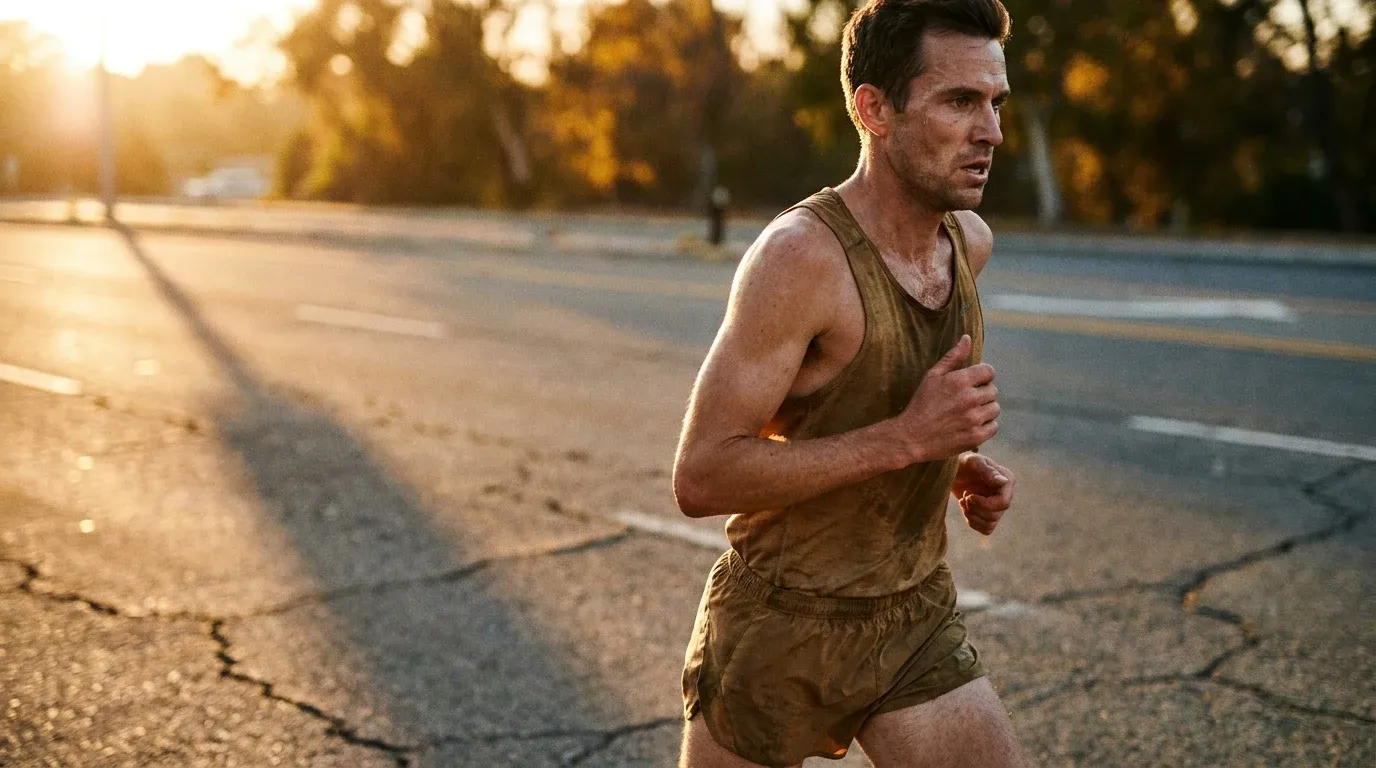
A hamstring injury after the 2026 Chicago Marathon would slow most runners down. For Clayton Young, it's become a test of how serious he really is about breaking one of American distance running's most coveted records. The answer, based on everything he's said since Chicago, is: very serious.
Young hasn't backed away from his stated goal of chasing the American marathon record, currently standing at 2:04:58 set by Galen Rupp in 2017. That's the benchmark. That's the wall. And Young, despite the setback, is still pointing himself directly at it.
What Happened in Chicago
Young competed at the 2026 Bank of America Chicago Marathon with legitimate record ambitions. He came in fit, sharp, and executing a race plan built around sustained sub-5:00 pace. Then his hamstring tightened. The kind of tightening that makes you recalibrate mid-race and spend the following weeks explaining yourself to coaches, physios, and a running public that was watching closely.
The injury wasn't catastrophic. Young didn't DNS or DNF his way out of the record conversation permanently. But it raised real questions about the timeline for his pursuit and about the physical toll of running at the edge of what the human body can sustain over 26.2 miles.
Hamstring problems in marathoners aren't unusual at this level. The combination of high weekly mileage, tempo work, long runs, and race-day effort creates cumulative stress that can surface exactly when you need it least. The question for Young isn't whether the injury happened. It's what he does next.
The Record He's Chasing and Why It Still Matters
Galen Rupp's 2:04:58 at the 2017 Chicago Marathon has stood as the American record for nearly a decade. In a sport where global elites now regularly dip under 2:02, the US mark has started to look like a gap that American running needs to close. It's not just about national pride. It's about proving that the American development pipeline, the college system, the professional running groups, the shoe company sponsorships, can produce athletes who compete at the absolute frontier of the event.
Young's pursuit is meaningful precisely because he's gone through the American system. He ran at BYU, developed through the collegiate distance ranks, and built toward the marathon the way most Americans do: methodically and late. He didn't emerge as a prodigy on the roads. He earned his way there.
That path matters. When you look at the global scale of events like the 2026 Geneva Marathon, where tens of thousands of runners turn out at every level of the sport, it's clear that marathon culture is bigger and more international than ever. American runners who compete at the elite end of that spectrum carry the weight of that visibility.
What It Actually Takes to Run at Record Pace
Breaking 2:04:58 over the marathon distance requires averaging roughly 4:46 per mile for 26.2 miles. That's not a number you stumble into. It demands years of aerobic base building, precise lactate threshold work, and a physiological profile that puts you in a very small group of humans alive on earth right now.
Training for that standard also demands exceptional nutritional discipline. You can't produce or sustain that kind of output on guesswork. If you're curious about what fueling at performance-level mileage actually looks like, the breakdown in this guide to cross-training nutrition, macros, and fueling timing offers a useful framework. The principles apply directly to high-volume endurance athletes managing both training load and recovery.
Hydration is equally non-negotiable. At elite marathon paces, sweat rates are high, core temperature rises fast, and the margin between optimal and compromised performance is narrow. Getting pre-workout hydration right, starting well before training begins, is one of the controllable variables that separates athletes who perform consistently from those who degrade late in long efforts.
Beyond the physiological mechanics, there's the mental architecture required to pursue a record through injury. Young has to hold the goal, adjust the timeline, trust the process, and resist the temptation to rush back. That's harder than the mileage.
Injury, Patience, and the Arithmetic of Elite Marathon Careers
Elite marathoners have narrow competitive windows. The average age of marathon record setters at the world level is in the late 20s to early 30s, and Young is operating within that band. That means a hamstring setback matters. It compresses the timeline. It forces decisions about which races to target, how aggressively to rebuild, and whether to protect long-term health or push back toward race fitness quickly.
Most sports medicine frameworks recommend a graduated return to full training after a significant hamstring strain, typically 8 to 16 weeks depending on severity, before race-specific sessions resume. For a marathoner chasing a specific performance target, that's not just recovery time. That's a full training cycle, possibly two, depending on what races fit the calendar.
Young has been open about the fact that the setback doesn't change his goal. It changes the schedule. That's a distinction worth taking seriously. Runners who conflate timelines with ambition often make the mistake of returning too soon, getting reinjured, and compressing their window further. The ones who separate the two tend to come back better.
The Depth Behind Him Makes This More Urgent
One thing that raises the stakes for Young's pursuit is the field chasing similar goals. American marathon running in 2026 is not thin. There are a handful of US athletes with legitimate sub-2:06 capabilities, and the competitive pressure to be the one who finally moves past Rupp's record isn't coming from outside the country. It's coming from the starting line of the same races.
That internal competition is healthy for the sport. Events that attract broad participation and strong domestic fields lift overall standards. You see this dynamic play out at regional level too. The kind of grassroots investment that drives sold-out community events, like the Crawlin' Crab Half Marathon, which draws 4,000 runners from 13 states, feeds a pipeline that eventually produces the athletes competing at the front of Chicago and Boston.
American running culture is building from both ends simultaneously. And the record Young is chasing sits at the top of that structure.
What Comes Next for Young
The likely scenario is a targeted return to racing in the first half of 2027, assuming Young manages his hamstring recovery on schedule and builds back without a secondary incident. That would put him on course for either Boston or London as a proving ground, with a fall 2027 major as the genuine record attempt if conditions align.
That's speculative. Elite athletes don't always move on predictable timelines, and injury adds variance that even the best coaching staff can't fully control. But the logic holds if the hamstring responds well and the training cycle goes to plan.
What's not speculative is Young's stated commitment. He's been clear: the American record is still the goal. The injury is a complication, not a conclusion.
Why This Pursuit Matters Beyond Young Himself
When a US athlete publicly commits to chasing the American marathon record through adversity, it sends a signal to the next generation of distance runners in the country. It says the record is reachable. It says the pursuit is worth the pain and the patience and the long seasons of accumulation that lead to a single 2:04-something performance on a flat course in ideal conditions.
American marathoning has had periods of drought and periods of genuine excellence. Rupp's record came during a period of depth. Young's pursuit, if it succeeds, could mark another. The sport is better when that record is under genuine attack.
You don't have to be running at 4:46 pace to understand what's at stake. Anyone who's trained seriously, managed setbacks, and come back to a goal they care about knows exactly what Young is navigating. The scale is different. The feeling isn't.
The American record is still there. Young is still coming for it.