
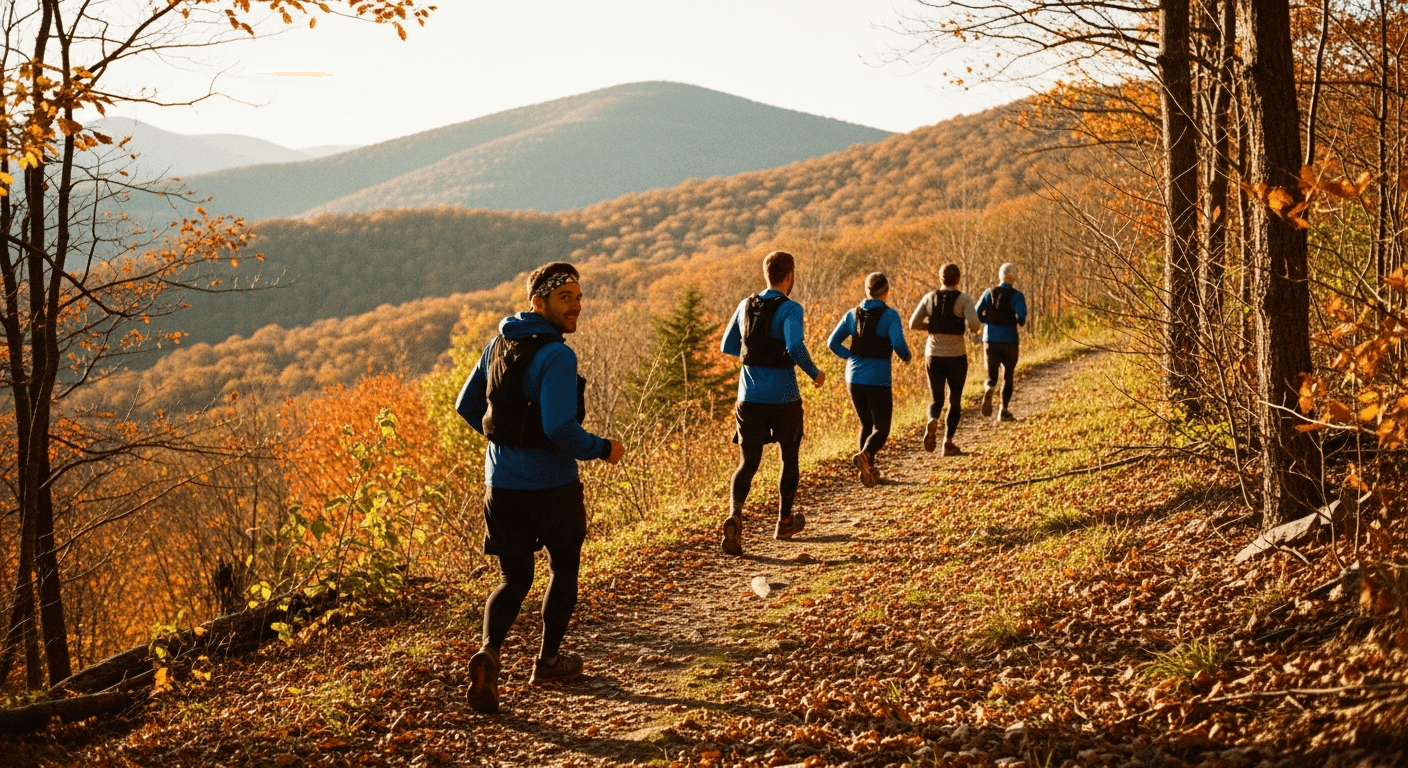
Marathon Sports, the Boston-based specialty running retailer, has announced Dirt Camp, a curated multi-day trail running experience set in the Berkshire Mountains of western Massachusetts. It's the brand's most ambitious experiential product to date, and it signals something larger happening across the running industry: road runners want off the pavement, and they're willing to pay for a structured way to get there.
Dirt Camp is designed for intermediate runners who have logged serious road miles but haven't yet committed to technical terrain. Think the runner who has finished a few half marathons, maybe a full, and is now wondering what's beyond the asphalt. Marathon Sports is betting there are a lot of those runners out there. Based on current participation data, that bet looks smart.
What Dirt Camp Actually Offers
The format is guided and deliberately curated. Participants spend multiple days in the Berkshires running trails under the supervision of experienced coaches, with sessions covering terrain reading, technical descents, elevation management, and gear selection. It's not a race. It's not a casual group run. It sits somewhere between a running clinic and a wellness retreat, with the Berkshires' forested ridgelines as the backdrop.
Programming includes structured morning runs calibrated to skill level, afternoon workshops on trail-specific movement and injury prevention, and evening sessions focused on recovery and planning. Meals, accommodation, and gear guidance are bundled into the experience. Pricing for the full package is expected to fall in the $600 to $900 range per participant, positioning it squarely in the premium experiential fitness category.
That price point is intentional. Marathon Sports isn't trying to replicate what you'd get from a local trail club or a free YouTube tutorial. The brand is selling access, expertise, and environment as a single product. It's the same logic driving growth across high-end fitness experiences, from structured alpine climbing courses to coached open-water swim camps.
The Berkshires as a Trail Running Destination
The location choice matters. The Berkshires offer a range of terrain that's genuinely useful for new trail runners: enough elevation to build confidence on climbs and descents, enough technical root-and-rock sections to develop foot awareness, but not so extreme as to intimidate someone transitioning from flat road courses. Trails like those in October Mountain State Forest and along the Appalachian corridor give coaches real material to work with across multiple days.
Western Massachusetts is also logistically accessible for Marathon Sports' core demographic. Boston, New York, Hartford, and Providence are all within a two to three hour drive. You don't need to fly to Chamonix to spend a weekend learning how to read a trail. That accessibility is part of the product's appeal for East Coast road runners who want a genuine wilderness experience without a significant travel commitment.
The region has quietly built a reputation as a trail running hub over the past decade, with events like the Escarpment Trail Run in nearby New York drawing serious athletes and the Berkshire Outdoor Pursuits network expanding its footprint. Dirt Camp is entering a geography that's ready for it.
Road Runners Are the Growth Engine
The timing of this launch reflects a well-documented shift in running culture. Trail running is growing at 8% annually, and road runners are the primary driver of that expansion. The demographic fueling trail participation isn't elite mountain athletes. It's experienced road runners who have plateaued in their current discipline and are looking for new stimulus, new scenery, and new physical challenges.
That transition, however, isn't frictionless. Trail running demands skills that road running doesn't develop: technical footwork, proprioception on uneven surfaces, nutrition strategies for variable-pace efforts, and genuine navigation awareness. Research consistently shows that runners who cross over without proper preparation face higher injury rates in their first trail season, particularly ankle sprains and knee stress from downhill mechanics that road training doesn't address.
If you're a road runner considering the move, the preparation gap is real. Studies show that trail runners frequently overestimate their wilderness readiness, and that overconfidence tends to peak precisely among those who have strong road running backgrounds. Confidence earned on asphalt doesn't transfer automatically to technical terrain.
That's the gap Dirt Camp is designed to close. Rather than letting runners figure it out through trial, error, and avoidable injury, Marathon Sports is offering a structured bridge between the two disciplines.
A Broader Trend in Experiential Running Products
Marathon Sports isn't alone in identifying this opportunity. Across the running industry, brands and retailers are moving beyond product sales toward experience-based offerings that build deeper loyalty and command higher margins. Running shoe companies have launched ambassador camps. Specialty retailers are hosting destination events. Race organizers are adding multi-day festival formats around their events to extend participant engagement.
The economics make sense. A runner who spends a weekend at Dirt Camp is likely to purchase trail-specific shoes, poles, hydration vests, and nutrition products in direct connection with that experience. The camp becomes both a revenue product and a conversion funnel toward higher-value trail running gear. For a specialty retailer, that's a compelling business model.
The experiential fitness market in the US is currently valued at over $30 billion and growing, with premium fitness experiences, retreats, and destination events representing one of the fastest-expanding segments. As the line between athletic participation and lifestyle identity continues to blur, runners are increasingly willing to invest in experiences that reinforce who they are, not just products that help them perform.
This shift sits alongside the rise of events like HYROX, which has transformed functional fitness competitions into global lifestyle festivals. The sub-52 world record at HYROX Warsaw 2026 generated mainstream media attention precisely because HYROX had already built an audience of recreational participants who could contextualize elite performance. Trail running is developing the same architecture: elite races at the top, mass participation in the middle, and gateway experiences at the entry point. Dirt Camp occupies that last position deliberately.
What to Expect If You Register
Marathon Sports has structured Dirt Camp to be immediately actionable for its target participant. Here's what the core experience is expected to include:
- Skill-tiered trail sessions covering climbs, technical descents, and rooted single-track at appropriate challenge levels
- Coached movement workshops addressing trail-specific biomechanics, including downhill form and cadence management on uneven ground
- Gear clinics with hands-on evaluation of trail shoes, poles, and hydration systems from the Marathon Sports product catalog
- Nutrition and fueling sessions tailored to variable-effort trail efforts versus the more predictable pacing of road races
- Recovery programming including guided stretching, mobility work, and education on managing cumulative fatigue across multi-day efforts
- Group evening sessions covering route planning, weather reading, and basic wilderness preparedness
The multi-day structure is important. Single-day clinics can introduce concepts, but they don't give your body enough exposure to develop real trail instincts. Two to three days of continuous terrain work, with coached feedback across multiple sessions, is where actual skill transfer happens. Marathon Sports appears to understand that distinction.
The Bigger Picture for Running Culture
Dirt Camp arrives at a moment when road running's cultural dominance is being genuinely tested. Spring 2026's major road races delivered spectacular performances. Boston 2026 saw Lokedi repeat and Hug claim a ninth title in front of massive crowds. Road marathons remain the aspirational pinnacle for millions of runners worldwide.
But trail running offers something road racing structurally cannot: genuine wilderness, unpredictability, and a sensory experience that no urban course can replicate. For runners who have already hit their road goals and are looking for the next thing, the trails represent a compelling answer. The question has always been how to get there safely and effectively.
Products like Dirt Camp are the infrastructure that bridges aspiration and capability. They don't replace road running culture. They extend it into new terrain, literally and figuratively. If the 8% annual growth in trail participation continues to hold, the demand for premium onboarding experiences is going to keep rising. Marathon Sports is positioning itself early in what looks like a durable market shift.
If you're a road runner who has been curious about trails but unsure where to start, an experience like Dirt Camp is worth watching closely. The Berkshires will be there regardless. The question is whether you show up prepared or not.