
Trail running is growing fast. Participation has surged across the US, UK, Australia, and Canada over the past decade, with millions of runners now heading into backcountry terrain on weekends. But a new study suggests many of them are venturing out less prepared than they think.
Research published in Wilderness and Environmental Medicine surveyed more than 1,000 trail users and found a consistent pattern across both hikers and trail runners: people routinely overestimate their readiness for wilderness environments. Among trail runners, that gap between confidence and actual competence comes with measurable consequences.
The Confidence-Competence Gap Is Real
The study asked participants to self-assess their wilderness preparedness across a range of categories, including navigation, first aid knowledge, gear selection, and emergency response. Both groups rated themselves highly. When those ratings were cross-referenced with actual gear carried, training received, and incident history, a different picture emerged.
A significant portion of respondents in both groups admitted to situations where they were unprepared for conditions they encountered. Hikers skewed toward overconfidence in navigation. Trail runners showed the broadest gap between self-reported readiness and objective indicators of preparedness.
The findings aren't entirely surprising given how trail running has evolved. The sport attracts athletes with strong cardiovascular fitness and a tolerance for physical discomfort, but fitness and wilderness competence are not the same skill set. Speed and endurance don't translate directly into knowing how to manage a sprained ankle six miles from the trailhead.
Trail Runners Are Getting Hurt More Often
One of the more striking findings in the study is the injury rate. Trail runners reported higher rates of wilderness injuries and near-miss incidents compared to hikers. That includes everything from falls and musculoskeletal injuries to situations involving weather exposure, route-finding errors, and inadequate hydration or nutrition.
Part of this is simply a function of speed. Moving faster over uneven terrain increases fall risk. It also compresses the time available to assess conditions, make route decisions, and respond to warning signs. A hiker who notices an oncoming storm has more time to react than a runner covering the same ground at twice the pace.
But the injury gap also reflects behavioral differences that go beyond speed alone. Trail runners in the study were significantly more likely to venture off-trail and to do so alone. Both factors independently increase risk. Together, they create situations where a single incident, a twisted ankle, a navigation error, a sudden weather change, can escalate quickly without any margin for recovery.
Solo and Off-Trail: The Risk Multiplier
Running off-trail removes the safety net that maintained paths provide. Marked trails exist in part because they represent known, navigable routes with predictable hazards. Once you leave them, terrain becomes unpredictable, footing is less reliable, and the likelihood of becoming disoriented increases substantially.
Running alone compounds every risk factor. There's no one to assist if you're injured. There's no second perspective on navigation. There's no one to go for help or to stay with you while help is summoned. The study found trail runners were more likely than hikers to combine both variables, running solo and off-trail simultaneously.
This pattern likely reflects the culture of trail running as much as individual choices. The sport places high value on self-sufficiency and exploration. Events like the Marathon des Sables 2026, where elite competitors navigated extreme desert terrain across multiple days, sit at one end of a continuum that influences how recreational runners think about their own capabilities. The aspirational framing of trail running, built around freedom and self-reliance, can quietly discourage the kind of conservative planning that wilderness environments actually demand.
Different Gear, Different Assumptions
The study also revealed meaningful differences in how hikers and trail runners equip themselves, and what those choices reveal about their underlying assumptions.
Hikers were more likely to carry traditional safety gear: first-aid kits, physical maps, compasses, extra layers, and emergency shelter. These items reflect a preparedness mindset, the expectation that something could go wrong and that you'll need to manage it yourself for an extended period.
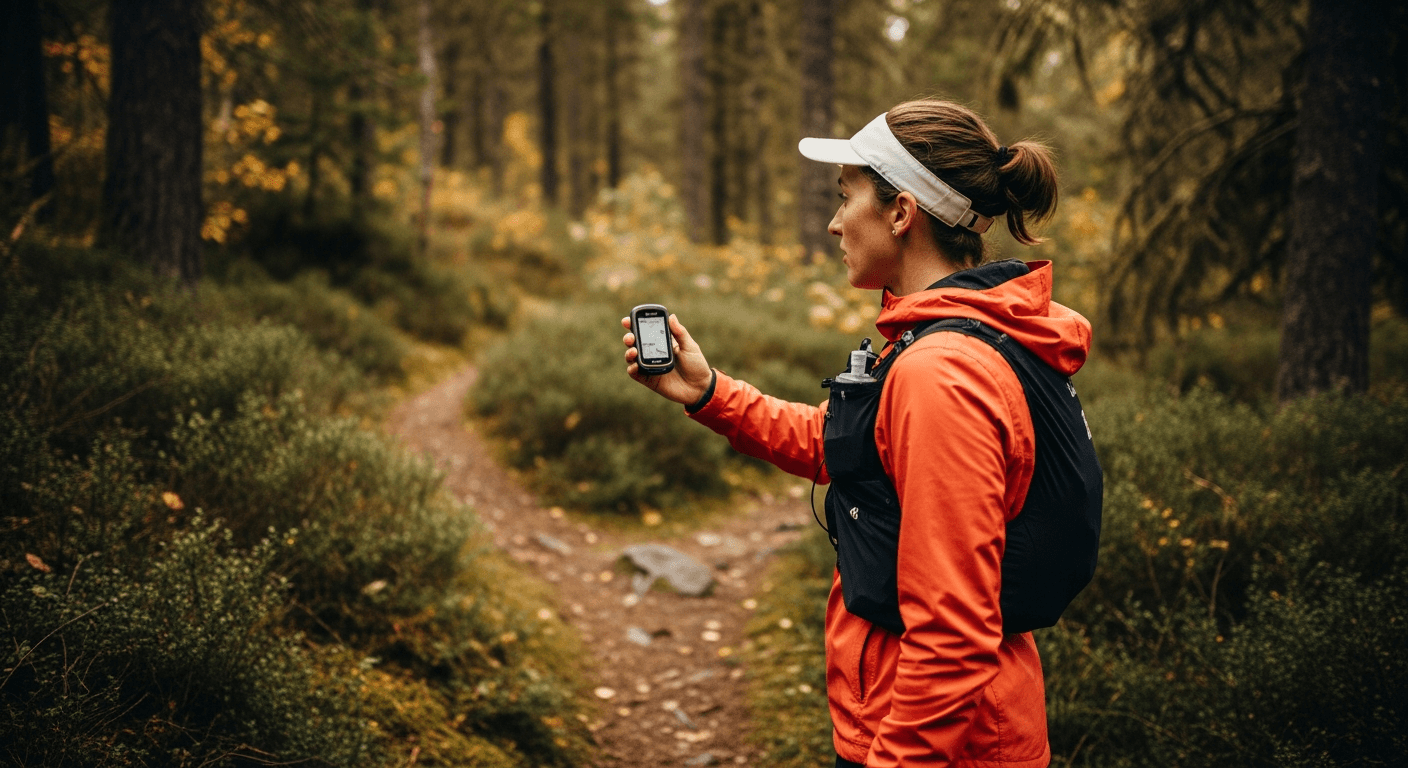
Trail runners, by contrast, relied more heavily on GPS devices and personal locator beacons or SOS devices. This technology is genuinely useful. A satellite communicator can summon rescue from nearly anywhere on Earth. But carrying one doesn't mean you'll avoid the situation that requires using it. And in many wilderness scenarios, the gap between an incident occurring and rescue arriving can be several hours or longer.
A GPS device won't splint a fracture. It won't treat hypothermia. It won't stop bleeding. Runners who rely primarily on emergency communication technology without carrying or knowing how to use basic medical and survival gear are effectively outsourcing their safety response rather than building it into their own kit.
There's also a training dimension. Owning a GPS unit is not the same as being proficient at wilderness navigation. The study found that trail runners were less likely than hikers to have completed formal wilderness first aid or navigation training, even as they rated their own competence highly.
Why Trail Runners Need Targeted Safety Education
The study's authors argue that the rapid growth of trail running creates an urgent need for safety education that speaks directly to this community. General outdoor safety resources exist, but they're often designed for hikers, mountaineers, and backpackers. Trail runners have distinct behavioral profiles, different risk exposures, and different cultural reference points. Education that doesn't account for those differences is less likely to land.
Trail running has grown quickly enough that its community now spans a huge range of experience levels. You have veteran ultramarathoners who've logged thousands of miles in serious terrain alongside weekend athletes who bought trail shoes six months ago and are now exploring backcountry routes they found on social media. The latter group may have no framework at all for wilderness risk assessment.
This is partly an infrastructure gap. Road running has well-developed safety cultures built around organized racing, coaching certification programs, and club structures that transmit knowledge across experience levels. Trail running's culture still leans heavily toward self-directed learning, which works well for motivated athletes who seek out information but leaves gaps for those who don't know what they don't know.
Race organizations, trail clubs, and gear brands all have roles to play here. Pre-race safety briefings, gear requirement checklists, and trail orientation programs for newer participants are practical starting points. Some event formats already build mandatory safety gear lists into their entry requirements, a model that could be more widely adopted. The broader growth of structured fitness competition formats, like those reshaping how athletes train and compete across disciplines, shows that community-level standards can shift behavior at scale when institutions commit to them.
What You Should Actually Carry
If you're trail running in any environment beyond well-maintained, heavily trafficked paths, here's a practical baseline to build from:
- Navigation tools: GPS device plus a physical map of the area and a compass. Know how to use all three before you need them.
- Emergency communication: A satellite communicator or personal locator beacon. Register it and test it before heading out.
- First aid: A compact trail running first aid kit covering blister care, wound management, and at minimum an elastic bandage for sprains. Consider a wilderness first aid course, many are available as weekend programs for under $300.
- Hydration and nutrition: More than you think you need, especially in remote or hot environments.
- Weather protection: A lightweight emergency layer and knowledge of the forecast before departure.
- Trip planning: Tell someone where you're going, your route, and when you expect to return. Leave a plan with a specific person, not just a vague social media post.
None of this is complicated. Most of it is inexpensive. The barrier isn't cost or technical difficulty. It's the assumption that preparation is for other people, less fit people, less experienced people, people who don't run as far or as confidently as you do. That assumption is exactly what the study is pushing back against.
The Bigger Picture for a Growing Sport
Trail running's growth is genuinely exciting. More people spending time in natural environments is a good thing for physical health, mental health, and a broader culture of outdoor engagement. Research consistently links time in nature to reduced stress and improved wellbeing, and trail running delivers that alongside serious cardiovascular and muscular benefits that even elite road marathon competitors increasingly recognize as part of a complete training base.
But growth without a parallel investment in safety culture creates predictable problems. Search and rescue operations are expensive, resource-intensive, and sometimes dangerous for the responders involved. Preventable incidents put pressure on public land managers, emergency services, and the broader community of trail users.
The study in Wilderness and Environmental Medicine doesn't suggest trail runners should stay home. It suggests they should match their preparation to the environments they're actually entering. Confidence built from fitness is real, but it covers only part of the territory. The rest requires education, practice, and the willingness to carry gear you hope you never use.
As the sport continues to grow, the athletes entering trails for the first time this year deserve a community that shares honest safety standards alongside the stoke. That's how trail running earns the right to keep expanding into the wild places that make it worth doing.