
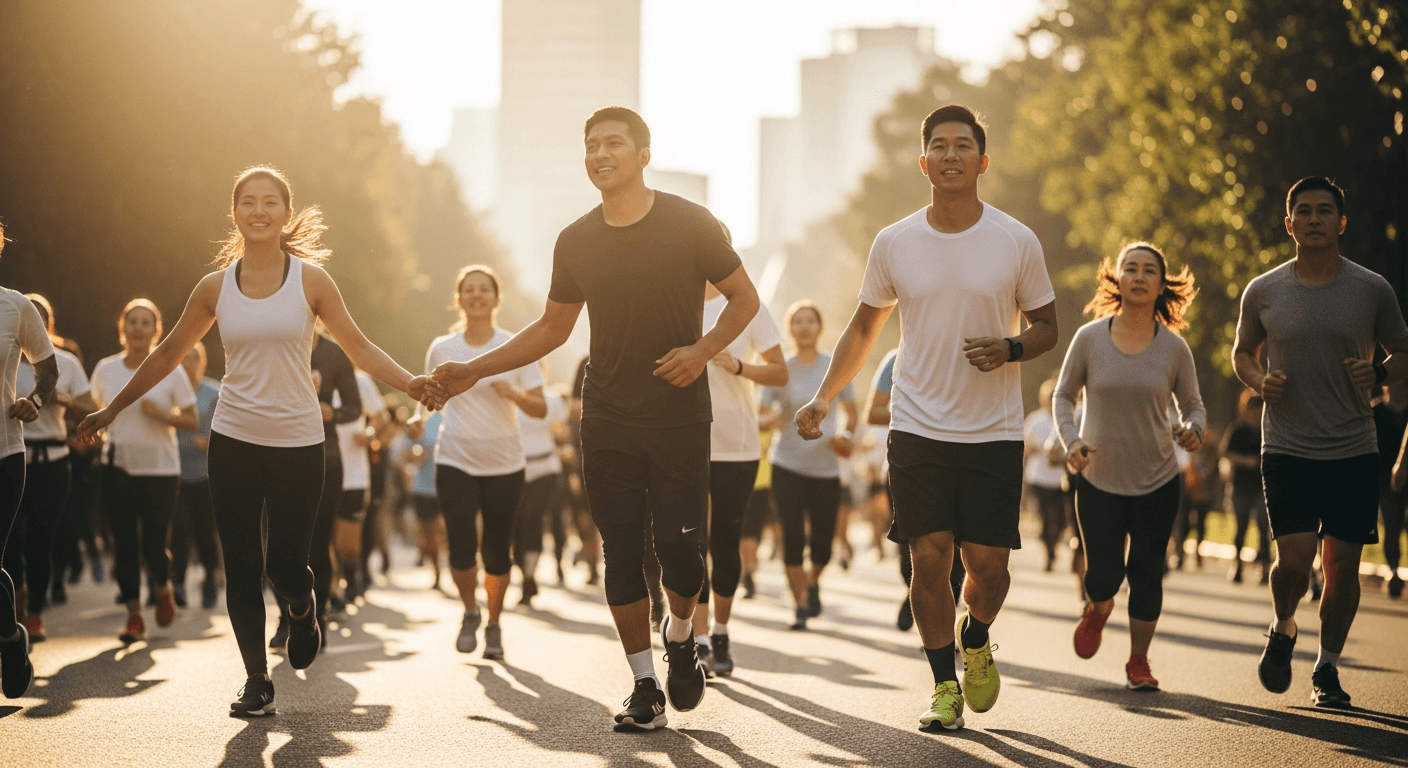
Every year on the first Wednesday of June, millions of people lace up and head out the door together. But Global Running Day 2026, landing on June 3, isn't just another item on the fitness calendar. Something has shifted. The energy around this year's edition feels bigger, more intentional, and more connected than anything the event has produced before.
Whether you logged your first mile last month or you've been running for twenty years, this day was built for you. And in 2026, it's delivering on that promise more fully than ever.
What Global Running Day Actually Is
Global Running Day started as a simple pledge. You commit to running. You share it. You inspire someone else to do the same. That core idea hasn't changed, but the scale has. Millions of participants across more than 100 countries now observe June 3 with everything from organized group runs in city parks to solo challenges logged on fitness apps to fully virtual events that let runners on opposite sides of the world share a finish line.
The event is deliberately non-competitive. There's no prize money. No podium. No qualifying standard. That's not a limitation. That's the entire point. Running gets framed as performance sport for most of the year. Global Running Day reclaims it as something more basic: movement as a human experience.
Research consistently supports that framing. Studies show that even modest, consistent running has measurable effects on cardiovascular health, mood regulation, and longevity. The Exact Fitness Dose That Protects Your Heart, Per New Research breaks down just how little it takes to see real physiological benefit. The barrier to entry is lower than most people assume.
Why 2026 Feels Like a Turning Point
Three things are converging this year that didn't align in the same way before.
First, running's cultural footprint has expanded dramatically. The sport isn't niche anymore. Post-pandemic fitness habits, the rise of run clubs as social infrastructure, and a wave of first-time half-marathon participants have all brought new runners into the fold. Surveys conducted in early 2026 show that recreational running is now among the top three physical activities in the US, UK, Canada, and Australia.
Second, the wellness industry has matured around it. Shoe brands, nutrition companies, wearable tech platforms, and local running clubs are all activating around June 3 in ways that feel coordinated rather than scattered. You're seeing city-wide group runs sponsored by major footwear brands, app-based challenges with millions of registered participants, and local clubs organizing early-morning routes specifically for beginners. The infrastructure has caught up to the ambition.
Third, the conversation around who running is for has shifted. This year's Global Running Day messaging leans hard into access and inclusion. Adaptive athletes, older beginners, and runners from communities historically underrepresented in the sport are being centered in campaign imagery and event programming rather than featured as afterthoughts.
The Community Layer Is What's New
Ask anyone who's been running for a while and they'll tell you the sport changed when it stopped being a solo activity. The explosion of run clubs over the past three years isn't just a trend. It's a structural shift in how people relate to movement.
In cities like New York, London, Toronto, and Sydney, Wednesday morning run clubs have become genuine social institutions. People show up not only to train but to belong somewhere. Global Running Day has plugged into that existing network and amplified it. Clubs that might have organized a casual group jog are now hosting post-run breakfasts, partnering with local businesses, and inviting beginners through their doors for the first time.
Digital platforms are doing the same thing at scale. Strava, Nike Run Club, and Garmin Connect are all running June 3 challenges with badges, community leaderboards, and social sharing built in. The virtual element matters because it lets runners who don't have a local club nearby still feel part of something larger than their neighborhood sidewalk.
It's also worth noting that Global Running Day is landing in the middle of a busy racing season. If you're already thinking about longer distances, Ultramarathons to Watch in June 2026: Summer Race Roundup has a full look at what's on the calendar this month. And if you're training through warmer temperatures, Running in the Heat: Science-Backed Training Strategies is essential reading before you head out for a long effort.
What Brands and Platforms Are Bringing This Year
The commercial activation around Global Running Day 2026 is the most organized it's ever been, and for once, that's a good thing. When industry players align around a single date with consistent messaging, the public awareness effect multiplies. Someone who'd never heard of Global Running Day sees a post from their favorite shoe brand, then a challenge notification from their fitness app, then a text from a friend about a local group run. That combination of touchpoints actually moves people to participate.
Major footwear brands have announced free community runs in flagship cities. Several running apps are offering free premium access through the end of June for new users who log a run on June 3. Local running specialty stores are hosting beginner clinics with free gait assessments. The entry points are wide, and they're designed to convert first-timers into regular participants.
Nutrition brands are also in the mix. Recovery products, electrolyte supplements, and protein-forward snack brands are tying promotions to the event. If you're curious about what the science says on fueling for performance right now, The Nutrition Lab: Protein and Fiber — 2026's Dominant Nutrition Duo covers the research on what's actually working for endurance athletes this year.
Running for Joy, Not Just for Metrics
Here's one of the more interesting tensions in modern running culture. The same technology that makes running more accessible also makes it more quantified. You can track your pace, heart rate, cadence, ground contact time, and vertical oscillation from a $300 watch. That data is useful. It's also, for a lot of people, quietly exhausting.
Global Running Day pushes back against that. The official pledge asks you to commit to running. It doesn't ask you to log a personal best. It doesn't ask you to hit a target pace. It asks you to move, and to do it alongside other people in some form. That's a different relationship with the activity, and for many runners, it's a necessary reset.
There's also a real argument for bringing more people into running regardless of their current fitness level. Research on late-stage fitness adoption shows that starting later doesn't disqualify you from meaningful gains. Fitness Starts Declining at 35, But Late Starters Can Still Recover documents exactly that. The physiology supports the invitation. You don't have to have been running for years to belong on June 3.
How to Make the Most of June 3
You don't need a plan to participate, but a little structure helps. Here's what works:
- Find a local group run. Search your city's running club network or check the Global Running Day website for registered events near you. Going with other people, even strangers, changes the experience.
- Set an honest goal. That might be one mile. It might be ten. Neither is wrong. The point is to run something that feels good rather than something you're forcing.
- Log it and share it. The social element of Global Running Day is part of what makes it work. Posting your run, even just to a small group, contributes to the collective energy of the day.
- Bring someone new. The best outcome of June 3 isn't your own run. It's the person you convinced to try running for the first time who's still doing it in October.
- Let go of pace. If there's one day in the year to run without looking at your watch, this is it.
The Bigger Picture
Global Running Day matters for reasons that go beyond running. It's a moment where millions of people around the world do the same thing on the same day, not for competition, not for money, not because an algorithm pushed them toward it. They do it because movement feels good and because doing it with other people feels even better.
That's genuinely rare. And in 2026, with everything else competing for your attention and energy, a day that simply asks you to run feels less like a niche fitness observance and more like something worth showing up for.
June 3 is your day too. Use it.