
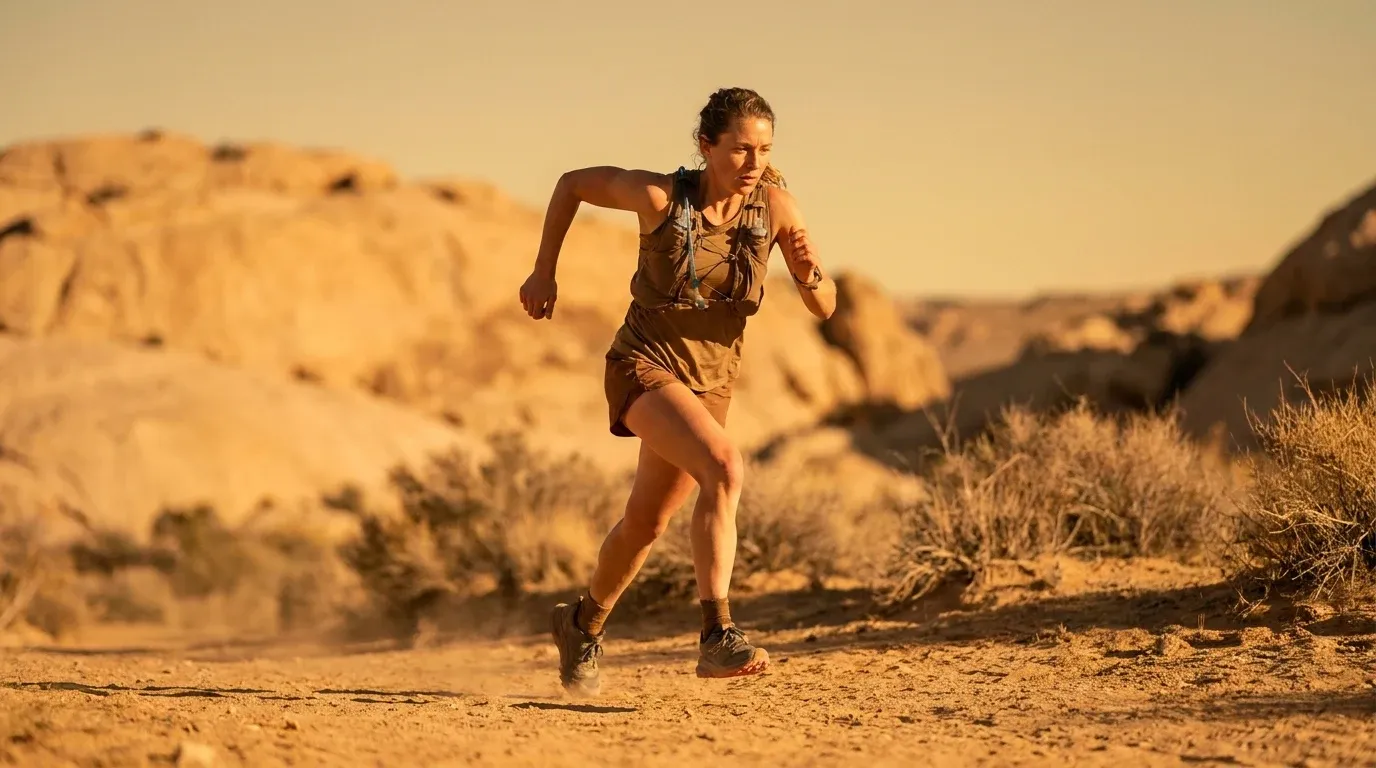
Cassandra de Winter didn't just win the women's race at the 2024 Javelina Jundred 100K. She won everything. De Winter crossed the finish line ahead of every male competitor on the course, posting the third-fastest time in event history and demolishing the women's course record by more than 28 minutes. It was one of the most dominant performances in recent ultramarathon history.
If you follow trail and ultra running, you already know the Javelina Jundred is no ordinary race. What happened this year was extraordinary even by that standard.
What De Winter Actually Did
To be clear about the scale of this: de Winter finished outright first overall. Not first among women. First. She crossed the line before any man did, in a field that included competitive male ultrarunners from across North America and beyond.
Her finishing time placed her third in the all-time records for the Javelina 100K, across all genders. The previous women's course record had stood as a benchmark for elite women's ultra performance at this event. De Winter didn't edge past it. She shattered it by over 28 minutes, one of the largest margins seen in a women's course record improvement at a major North American ultramarathon in recent years.
That kind of margin isn't just fast running. It signals a different level of race execution, pacing discipline, and physical output sustained across more than 62 miles of Arizona desert terrain.
The Javelina Jundred: A Race Worth Knowing
Held annually in the McDowell Mountain Regional Park outside Fountain Hills, Arizona, the Javelina Jundred is one of the most beloved ultramarathon events in North America. It runs every October, timed around Halloween, and the costume culture at the event is as famous as the racing itself. Aid station crews, volunteers, and runners show up in full costume. The atmosphere is carnivalesque, the desert is unforgiving, and the loop course means you pass through the main hub multiple times, which adds to both the spectacle and the mental challenge.
The course is not a sufferfest of technical mountain terrain. It's fast by ultra standards, which is exactly why the times matter. A 100K on this course is a genuine test of raw speed sustained over distance, not just survival instinct. That's what makes de Winter's time so significant. She wasn't running against the mountain. She was running against the clock, and against everyone else on the course.
The event draws a serious international field every year, including runners who have used it as a qualifier and tune-up for longer campaigns. Winning outright here, on a fast course, against a full competitive field, is a result that holds up under scrutiny.
Canada's Moment in the 100-Mile Race
De Winter's performance headlined the day, but Canadian women had a strong presence across both distances. In the Javelina Jundred 100-mile event, Valerie Arsenault and Jade Belzberg both placed in the top 10 overall. That's not a footnote. Two athletes from Canada finishing inside the top 10 of one of North America's premier 100-mile races on the same day represents real depth in Canadian women's ultra running right now.
Arsenault and Belzberg's performances signal something broader happening in the Canadian ultra scene. The country has steadily built a pipeline of competitive long-distance athletes, and results like these at Javelina suggest that's accelerating. For anyone tracking where the next generation of elite ultrarunners is coming from, Canada deserves a close look.
How Do You Run That Fast for That Long
Performances like de Winter's inevitably raise questions about what it takes, physiologically and strategically, to sustain elite pace across 62-plus miles. The short answer is that it's not one thing. It's the compounding of dozens of small decisions made correctly over months of training and hours of racing.
Pacing is the most obvious lever. Ultra runners who go out too hard in the first quarter of a race rarely recover. De Winter's overall winning time implies she executed a disciplined, even aggressive pace strategy without blowing up, which is harder than it sounds when you're running through a desert in late October heat, however mild compared to summer conditions.
Nutrition and fueling during a race of this length is equally critical. The body's ability to absorb and use carbohydrates under sustained aerobic stress, and to avoid gastrointestinal distress over many hours, separates competitive ultrarunners from those who simply finish. If you're building toward your own ultra goals, it's worth understanding the full picture of what goes into race-day nutrition, including supplements that may or may not move the needle. Our breakdown of Magnesium, Biotics, Shatavari: Sorting Hype from Evidence cuts through the noise on what the research actually supports.
Recovery capacity also plays a role over the course of a long campaign. Ultrarunners who race frequently need structured recovery protocols between events. If you're in a heavy training block right now, the guidance in After NYC Marathon: How to Recover Fast Without Losing Fitness applies broadly, not just to road marathoners.
Putting the Record in Context
Women beating men outright in endurance events isn't unprecedented, but it's still rare enough to mark. It's happened in some multi-day events, in a handful of 100-mile finishes, and occasionally in other ultra formats. The physiological case for women's competitive parity or advantage at extreme distances has been studied. Research points to several factors: women tend to pace more conservatively, rely more on fat oxidation at sustained efforts, and may manage the psychological demands of very long efforts differently.
But theory and actual race results are different things. De Winter didn't win because of a broad hypothesis about gender and endurance. She won because she ran faster than everyone else on that course on that day. That's the result. The science is a backdrop, not the headline.
For comparison in elite women's distance running, the ambition and execution required to chase records at the highest level has been on full display across disciplines this season. The Paris Ekiden, where six French women chased a 30-year national record, showed a similar willingness to target historic benchmarks rather than settle for podium finishes. That standard-setting mentality is becoming more common across women's distance running globally.
What This Result Means for Ultra Running's Visibility
Ultra running has been growing steadily in participation and media coverage for the better part of a decade. Events like Western States, UTMB, and the Javelina Jundred have developed genuine followings beyond core running communities. A result like de Winter's, a woman winning outright in a competitive field at a celebrated event, is the kind of story that travels beyond the sport's existing audience.
That visibility matters. It attracts new runners to the sport, raises the competitive bar, and shifts expectations about what's possible. You can see a similar dynamic playing out in other ultra and trail formats this season. The breadth and depth of competitive performances right now is striking, and this roundup of trail running results including a one-second record and a debut 100-mile win gives you a fuller picture of the moment the sport is in.
What Comes Next for De Winter
It's too early to say definitively what de Winter's race calendar looks like beyond Javelina. But a performance of this magnitude tends to open doors. Major ultra invitations, sponsorship attention, and selection conversations for elite fields at events like Western States or UTMB all become relevant when you post a result like this.
The women's ultra field globally is as competitive as it has ever been. Breaking a course record by 28 minutes and winning outright in the same race puts de Winter firmly in the conversation at the highest level. Whether she builds on this with a 100-mile push, targets a specific A-race in 2025, or uses Javelina as the launchpad for a longer ultra career, the trajectory is clear.
You're watching someone at the start of something significant. At Javelina 2024, Cassandra de Winter didn't just win a race. She set a new standard for what winning looks like.
- De Winter's finishing position: First overall, ahead of all male competitors
- Women's course record improvement: More than 28 minutes
- All-time ranking at Javelina 100K: Third fastest ever recorded
- Canadian top-10 finishers in the 100-mile: Valerie Arsenault and Jade Belzberg
- Event location: McDowell Mountain Regional Park, Fountain Hills, Arizona