
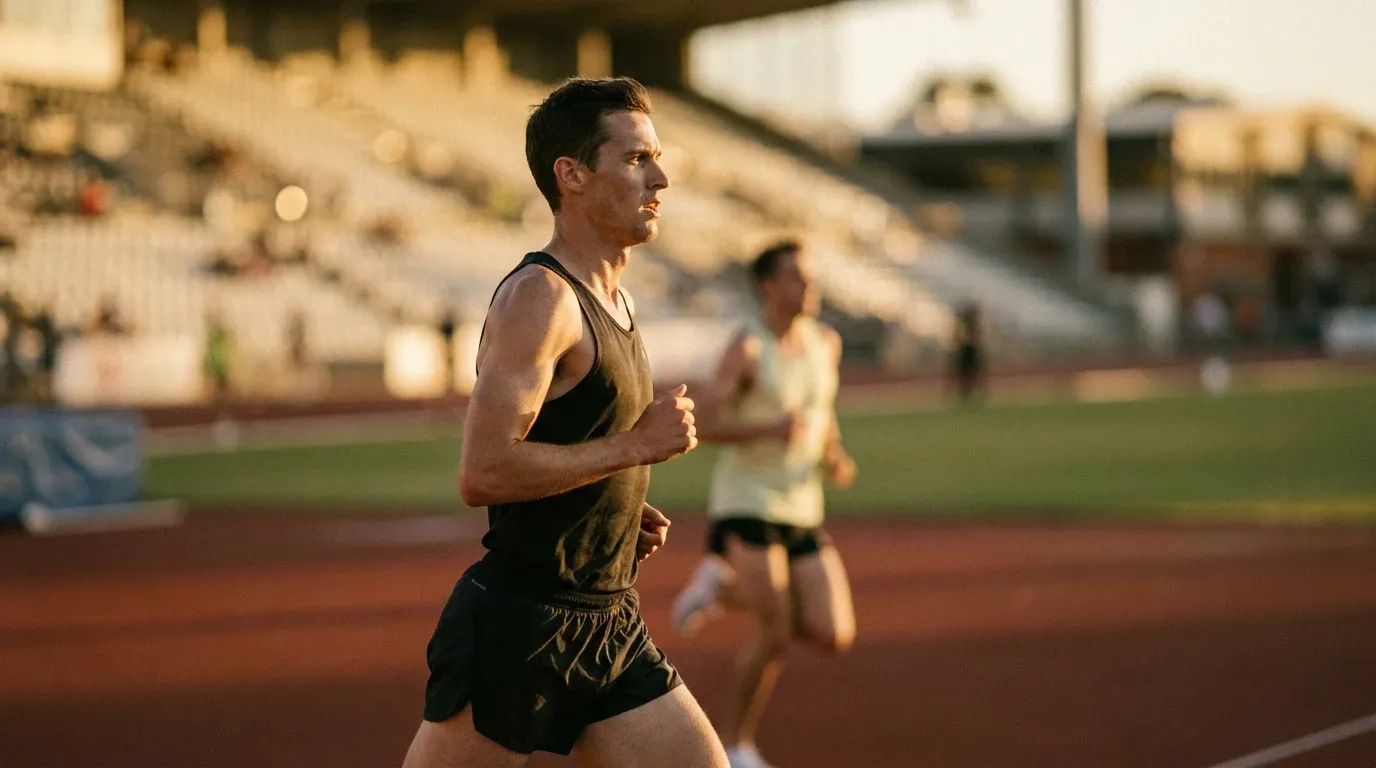
Josh Kerr Is Going After a 27-Year-Old Mile World Record Tonight
Tonight at the London Diamond League, Josh Kerr will attempt something that hasn't been done in nearly three decades. The 26-year-old Scottish middle-distance runner is targeting the mile world record, a mark that has stood since Hicham El Guerrouj ran 3:43.13 in Rome back in 1999. If Kerr pulls it off, it won't just be a personal milestone. It will be one of the defining moments in modern track athletics.
The date is July 18, 2026. This is happening today.
What 'Full Flow' Actually Means for an Elite Athlete
Kerr has been candid about where his head and body are right now. He's described himself as being in "full flow," a phrase that carries real weight when you understand how elite runners think about peak performance. It's not about feeling invincible. It's about everything clicking at the same time: training load, recovery, confidence, and mental sharpness all aligning in a narrow window.
That window doesn't stay open long. Athletes at Kerr's level spend months engineering their preparation specifically to hit that state on a chosen date. The fact that he's using those words publicly, ahead of a world record attempt, signals that his preparation team believes the conditions are right.
Kerr won Olympic gold in the 1500m at Paris 2024 and has consistently shown he performs best when the pressure is highest. A world record attempt at a home crowd event in London is exactly the kind of stage where that mentality matters.
Why This Record Is Such a Big Deal
The mile world record is not just any athletic mark. El Guerrouj's 3:43.13 has survived 27 years of faster tracks, better shoes, more sophisticated training, and an entirely new era of sports science. By comparison, the 100m world record and the marathon world record have both been broken and reset multiple times in the same period.
The mile holds a particular place in running culture, especially in the UK, the US, and Australia, where it carries nostalgic and competitive weight going back to Roger Bannister's sub-4-minute barrier in 1954. Breaking a 27-year-old record in that event isn't just a number. It's a cultural moment.
For context, El Guerrouj set his mark in an era before carbon-plated spikes, before GPS-based pacing systems, and before athletes had real-time biometric data available during training blocks. The fact that his record has survived all of those advances makes it arguably the most durable mark in middle-distance running history.
How Amazfit's Wearable Tech Is Shaping Kerr's Preparation
Kerr's partnership with Amazfit has put data at the center of his training cycle leading into tonight. He's using Amazfit wearable technology to monitor recovery metrics, track training load, and dial in the kind of race-day readiness that removes guesswork from peak performance planning.
For runners at every level, this kind of data-driven approach is increasingly accessible. Wearables now track heart rate variability, sleep quality, oxygen saturation, and pace consistency across sessions, giving athletes a clearer picture of whether they're adapting or simply accumulating fatigue. Kerr's team is applying that same framework at the elite level, just with more precision and more consistent feedback loops.
The shift toward technology-led training isn't unique to track. new injury science is already challenging the foundational rules many runners have relied on for decades, and wearable data is a big part of why coaches are now able to individualize training in ways that weren't possible before.
Amazfit's involvement also signals something broader about where the sport is heading. Performance wearables are no longer just for professionals. They're shaping how everyday runners train, recover, and make decisions about effort and rest.
What Tonight's Attempt Requires
To break 3:43.13, Kerr needs to average roughly 55.8 seconds per 400 meters across four laps. That's a pace most recreational runners couldn't hold for a single 100 meters. At elite level, sustaining that across a full mile requires not just physical capacity but flawless tactical execution and pacing discipline under extreme physical stress.
World record attempts at Diamond League meets are typically structured with pacemakers who lead the field through specific splits before dropping out. The first two laps establish the rhythm. The third lap is where the physiological demand spikes. The final lap is where records are won or lost.
Kerr's finishing kick is one of the most potent in the world. His ability to sustain speed through oxygen debt is what separated him from the field in Paris. That same quality will be critical tonight if he reaches the bell lap in position.
The Role of Recovery and Nutrition at This Level
It's easy to focus on the race itself, but world record attempts are won in the weeks before the start line. Recovery quality, nutrition timing, and training taper all contribute to whether an athlete arrives on the day in genuine peak condition or just close to it.
For Kerr, the final days before a major attempt involve precise control over sleep, hydration, and carbohydrate loading. electrolyte management in warm summer conditions is a detail that separates good race-day execution from great race-day execution, even at the elite level.
Nutrition at this level is also increasingly personalized. Blood biomarkers, iron levels, and inflammation markers all feed into how an athlete adjusts their intake in the final training block. using blood work to personalize nutrition is a practice that's moved well beyond elite sport into the broader performance community, and Kerr's preparation almost certainly involves that kind of detail.
What This Means for Runners Who Aren't Josh Kerr
You're probably not targeting a world record tonight. But Kerr's attempt still matters to you as a runner, and not just because it's compelling to watch.
The principles behind his preparation, data-informed training, structured recovery, individualized nutrition, and deliberate peak timing, are the same principles that apply at every level of the sport. The difference is scale, not philosophy.
If you're training for a 5K, a marathon, or your first half, the question Kerr's team is answering right now is the same one you should be asking. Are you building toward your race date, or just accumulating miles? Are you recovering as deliberately as you're training? Do you know whether your body is adapting or breaking down?
Wearables, even consumer-grade options, can help answer those questions. So can being honest about how you're loading your training week. the conventional wisdom around safe mileage increases has been significantly revised by recent research, and that revision matters whether you're training for a club race or a personal best.
The Bigger Picture for Track Athletics in 2026
Middle-distance running is in an interesting moment. The 1500m and mile have seen an influx of talent, with athletes like Kerr, Jakob Ingebrigtsen, and Cole Hocker pushing the competitive ceiling higher every season. But the world record itself has remained untouched, a stubborn reminder that raw talent and modern training don't automatically translate to historic marks.
A Kerr record tonight would energize the entire event category. It would bring casual fans back to track, generate mainstream media coverage beyond the running press, and give the sport a headline it hasn't had in years. That matters for funding, for visibility, and for the next generation of middle-distance athletes who are watching tonight.
Running has had a strong year for participation and cultural relevance. race participation reached historic levels across the US in 2026, and momentum like that benefits from a marquee performance moment to sustain it.
Watch Tonight and Pay Attention to the Details
When Kerr lines up tonight, watch the pacing structure. Notice when the lead pacers drop off. Pay attention to Kerr's position heading into the final lap and how early he starts his move. These are the tactical decisions that determine whether a world record attempt ends in history or in a very fast near-miss.
If he breaks it, remember that it wasn't just the race that made it happen. It was months of deliberate preparation, smart use of data, and the kind of focused confidence that comes from knowing your body is exactly where it needs to be.
That's the part worth learning from, whatever your distance and whatever your goal.