
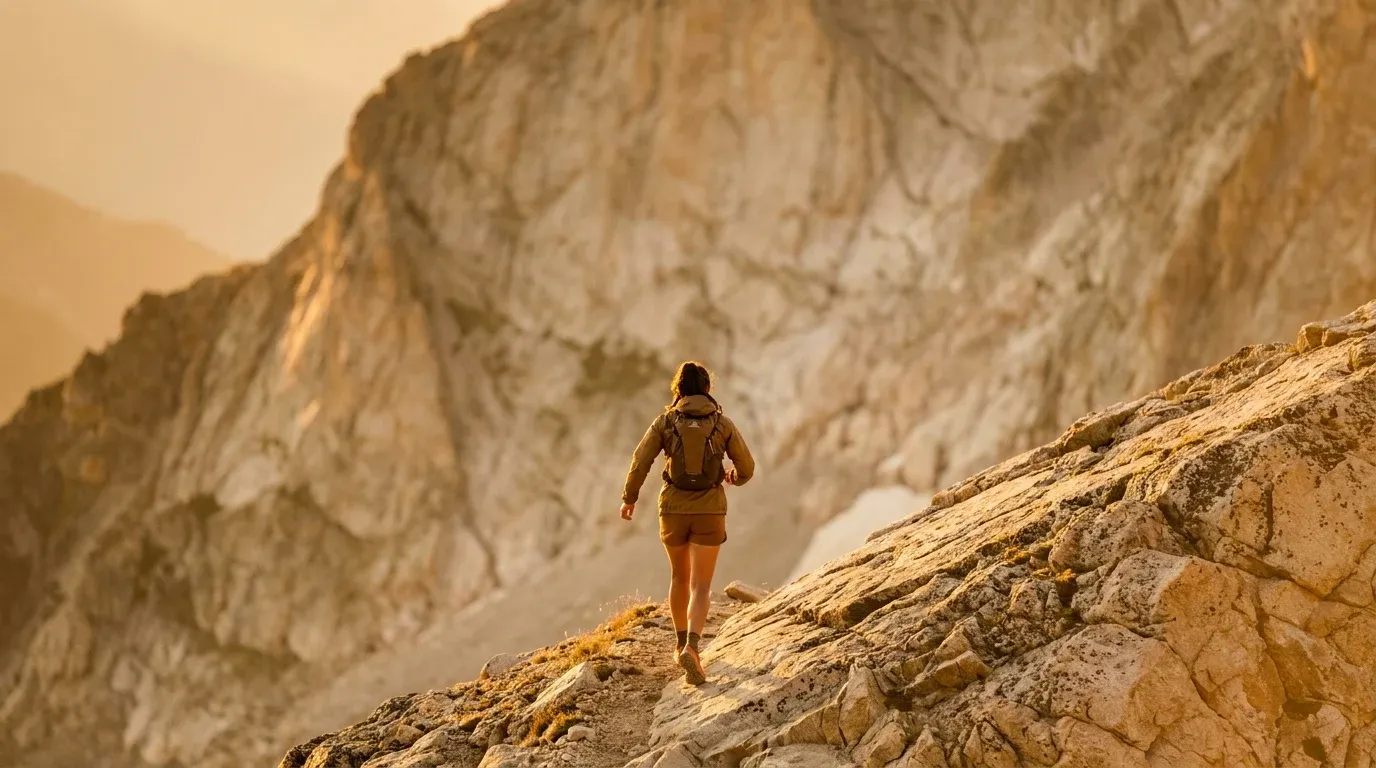
In early September 2026, Canadian skyrunner Kalie McCrystal was reported missing on the Matterhorn, one of the Alps' most iconic and unforgiving peaks. McCrystal, a competitive trail and skyrunning athlete known for her performances across North American and European mountain circuits, had been attempting a solo alpine route when contact was lost. The news spread rapidly through the trail and mountain running community, triggering an outpouring of concern and reigniting a conversation the sport has long struggled to have honestly: how much risk is too much, and who is responsible when things go wrong?
Who Is Kalie McCrystal?
McCrystal built her reputation on steep, technical terrain. A fixture in the Canadian mountain running scene, she had expanded her competition footprint to include European skyrunning events, where athletes race on routes that regularly exceed 3,000 meters in elevation and involve exposed scrambling, glacial crossings, and rapidly shifting weather conditions.
She represented the kind of athlete the skyrunning world quietly depends on. Not a headline name to casual sports fans, but deeply respected within the community for her technical competence and competitive consistency. That reputation made the news of her disappearance hit harder. If someone with her experience level goes missing, the sport has to ask difficult questions about what it asks of its participants.
Trail running has seen significant growth in visibility over the past several years, with athletes like Kaylee Frederick broadening trail running's reach to a new generation of runners who are entering the sport with ambition but sometimes without the alpine-specific knowledge that high-altitude routes demand.
The Matterhorn Is Not a Trail Run
This distinction matters. The Matterhorn sits at 4,478 meters on the border of Switzerland and Italy. It is one of the most technically demanding peaks in the Alps, involving sections of near-vertical rock climbing, unpredictable altitude weather, and exposure that punishes even minor route errors. Mountaineers typically train for years before attempting it. Search and rescue operations on the Matterhorn are among the most complex in Europe, requiring helicopter support, specialized alpine rescue teams, and coordination across two countries.
The rise of skyrunning has blurred the line between trail running and technical mountaineering in ways that are genuinely exciting to watch and genuinely dangerous to do. Skyrunning courses often require athletes to move efficiently on terrain that would take a traditional mountaineer a full day to navigate carefully. Elite competitors do this in hours. The sport rewards speed and boldness, which creates a cultural pull toward underestimating objective hazard on alpine terrain.
The Matterhorn's north face alone records multiple fatalities and rescue operations every season. It's not a controlled race environment. There are no aid stations, no course markings, and no race director watching a GPS tracker. When an athlete goes solo on terrain like this, the margin for error compresses to almost nothing.
Search and Rescue in Alpine Running Contexts
Search and rescue operations in high-alpine terrain operate under constraints that most people outside the mountain community don't fully understand. Helicopter deployment requires weather windows that may not materialize for days. Ground teams moving above 4,000 meters face their own altitude and exposure risks. At the scale of the Matterhorn, a search can involve dozens of rescue personnel over multiple days, and the outcome is never guaranteed.
Switzerland's alpine rescue infrastructure, run primarily through Air Zermatt and the Swiss Alpine Club's rescue networks, is among the most capable in the world. But capability has limits. The Matterhorn's geography. rockfall risk, and micro-weather systems create conditions where even the best-equipped teams have to wait or turn back.
In the wake of McCrystal's disappearance, rescue teams mobilized quickly. Coordination with Italian authorities on the southern face added logistical complexity. As of early September 2026, the search was ongoing, with family and the broader running community waiting for news.
This scenario underscores why the trail running world's approach to safety protocols is increasingly under scrutiny. Organized races have mandatory gear lists, tracking requirements, and formal rescue plans. Solo alpine objectives have none of that. The athlete assumes full responsibility, often without the safety net that even an informal mountain partner provides.
The Conversation the Community Needs to Have
Trail running's culture has long celebrated self-sufficiency and boldness. Those values are central to why people love the sport. But they can also create social pressure to downplay risk, skip safety steps, or take on terrain that exceeds current conditions or preparation.
When a highly experienced athlete goes missing on a solo alpine effort, it's not useful to frame the incident as a failure of judgment. High-altitude terrain introduces genuine objective hazard. A rockfall, a sudden whiteout, a crampon slip on an icy section. These are not problems that training fully eliminates. They're inherent features of the environment. The question isn't whether elite athletes should be on these mountains. It's whether the broader community has the systems, education, and culture to support safer decision-making at every level.
Several skyrunning governing bodies and race organizations have begun pushing for stronger pre-race alpine safety education, mandatory partner policies on certain routes, and clearer communication guidelines for athletes attempting technical objectives outside of sanctioned events. These conversations accelerated following a cluster of serious incidents in the 2024 and 2025 seasons. McCrystal's disappearance brings them back to the surface with renewed urgency.
What Runners Can Do Right Now
If you're a trail runner with ambitions that extend into alpine terrain, there are concrete steps that meaningfully reduce your risk profile. None of them eliminate hazard entirely, but they shift the odds in your favor.
- Carry a personal locator beacon (PLB) or satellite communicator. Devices like the Garmin inReach or SPOT allow rescue teams to locate you even without phone signal. At around $350 for a device plus a subscription plan, it's one of the most cost-effective safety investments available to mountain athletes.
- File a detailed trip plan. Leave a route description, expected timing, and emergency contact information with someone you trust. This is standard mountaineering practice that trail runners often skip.
- Know the difference between objective and subjective hazard. Objective hazards, like rockfall, crevasses, and weather, exist regardless of your skill level. Subjective hazards relate to your own fitness, navigation, and decision-making. Understanding which type you're facing helps you make better real-time choices.
- Take an alpine first aid or wilderness medicine course. Many US-based organizations offer weekend courses starting around $300 to $400 that cover the scenarios most likely to occur on remote mountain terrain.
- Partner up for technical objectives. A partner doesn't eliminate risk, but it dramatically changes the outcome of many common incidents. Someone who can call for help, apply pressure to a wound, or make a decision when you can't is worth more than almost any gear upgrade.
A Sport Facing Its Own Growth Pains
Trail and mountain running are drawing more participants than at any previous point in the sport's history. That growth is largely positive. It builds community, drives investment in gear and infrastructure, and produces athletes who push what's possible in stunning ways. But growth also means more people attempting terrain that demands experience they may not yet have.
The skyrunning community, in particular, has wrestled with how to honor the tradition of boldness that defines the sport while communicating honestly about what preparation truly looks like. The sport is not just about fitness. It's about navigation, alpine meteorology, technical movement skills, and the judgment to turn around when conditions change. Physical conditioning is necessary but not sufficient for high-elevation terrain. You can be in extraordinary shape and still make a fatal error on a glaciated ridge at 4,200 meters.
Kalie McCrystal's disappearance is a reminder that the mountains don't negotiate. They don't adjust for experience, reputation, or how well-prepared you were at the trailhead. The community owes it to her, and to every athlete who follows, to take the safety conversation seriously rather than treating it as an obstacle to the sport's spirit.
What Comes Next
As search operations continued into mid-September 2026, the trail running world held its breath. Tributes, fundraising efforts for the search, and calls for formal alpine safety standards circulated across social media and within race communities. Organizations that govern skyrunning at the international level faced renewed pressure to establish clearer frameworks for athlete safety outside of sanctioned race environments.
The outcome of the search will shape some of those conversations. But the larger questions don't depend on the result. They're already here, and the sport is overdue in answering them directly. If trail running wants to grow responsibly, it has to be willing to talk honestly about what it asks of the people who love it most.