
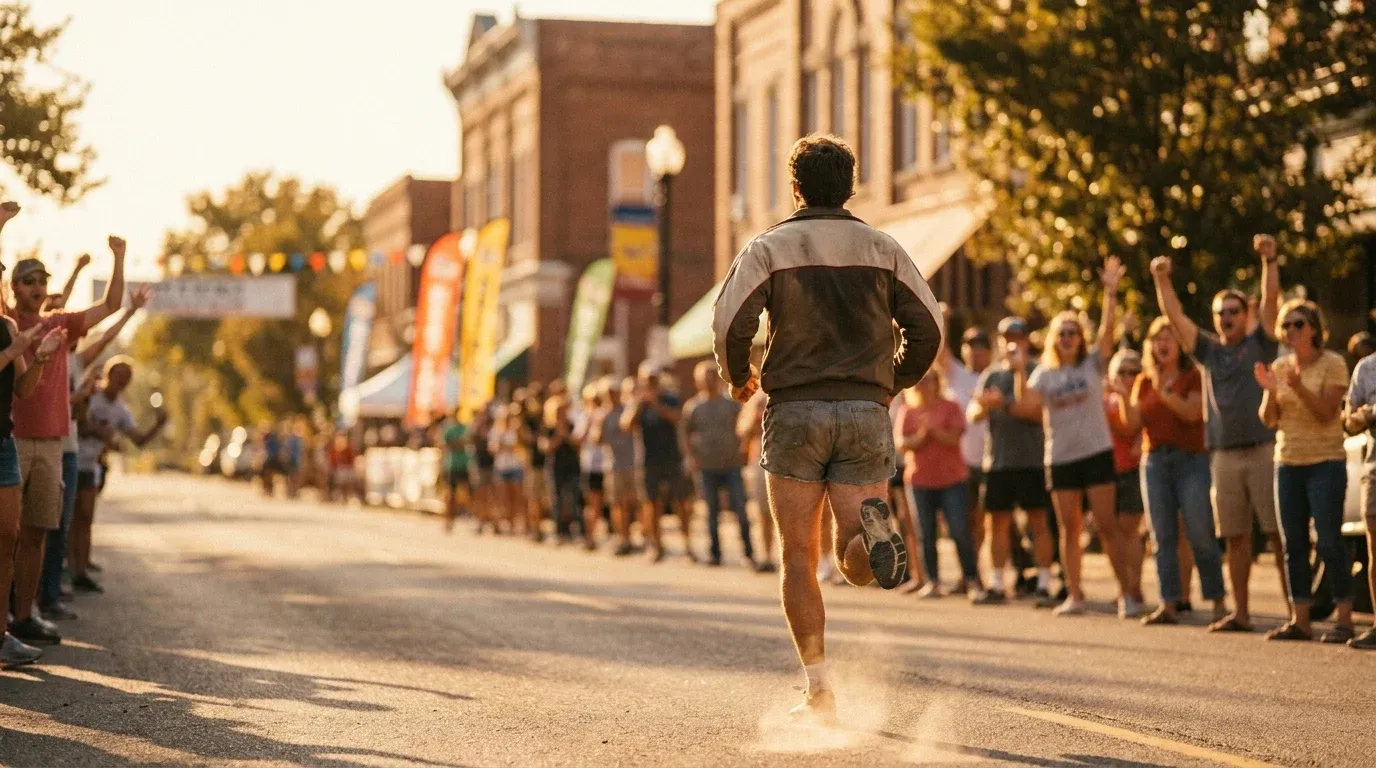
The elite runners at the front of the pack get the cameras. They get the prize money, the sponsor logos, and the post-race interviews. But ask any race director what actually builds a loyal event, and they'll tell you the same thing: it's the runner from three streets over who crossed the finish line crying, surrounded by neighbors holding handmade signs.
Local running heroes aren't a feel-good sideshow. They're the structural backbone of running culture, and the sport's fastest-growing events are finally starting to treat them that way.
Hometown Moments Are Driving Race Culture Forward
A wave of inaugural running festivals is proving that the most memorable race moments don't require world-record pace. When a new local event launches and a familiar face from the community takes the top spot, something shifts. The result stops being a number on a leaderboard and starts being a story that gets repeated at school pickups, office lunches, and neighborhood barbecues for months.
Events like the Colmar Marathon 2026, which drew 8,400 runners in a record edition, show what happens when a race earns genuine local investment. Record turnouts don't come from marketing spend alone. They come from communities that feel represented in the event itself.
When local athletes are celebrated on the same platform as elites, the message to every recreational runner watching is clear: this race belongs to you too. That sense of ownership is extraordinarily difficult to manufacture and nearly impossible to buy.
Community Connection Is Why Recreational Runners Stay
The research on this is consistent. Studies on long-term exercise adherence show that social belonging and community identity rank among the strongest predictors of whether recreational athletes stick with a sport past the initial motivation phase. Motivation gets people to the start line once. Community brings them back for years.
Running specifically has a retention problem at the individual level. Many runners drop off after completing a goal race. They hit the finish line, the structure disappears, and without a social anchor, training quietly fades. But runners embedded in a community, whether through a club, a local race scene, or even an informal group of colleagues who run together, show dramatically better long-term adherence.
This isn't just good for runners. It's good for the broader case that regular physical activity saves lives. Research has shown that even small amounts of consistent movement matter significantly. Three minutes of daily activity can cut heart risk substantially, which means anything that keeps people moving, including a race culture that feels welcoming and personal, has real public health weight behind it.
Local Heroes Lower the Barrier for First-Timers
Here's the psychological reality of signing up for your first race: it feels enormous. The distance feels impossible. The logistics feel overwhelming. And when you look at race imagery dominated by lean, elite athletes, the implicit message can be that this sport isn't really for you.
Local heroes dismantle that story in a way no marketing campaign can. When you see your coworker who used to take the elevator now crossing a half marathon finish line, the goal shifts from abstract to tangible. When your neighbor who was open about struggling with fitness last year posts their race medal, your brain recalculates what's possible for someone like you.
Research in behavioral psychology consistently shows that observational learning, watching people similar to yourself succeed, is one of the most powerful triggers for adopting new behaviors. Elite runners are inspiring in an abstract way. Local runners are inspiring in a way that moves people to register.
Race organizers who understand this actively invest in spotlighting non-elite participants. That might mean a dedicated social media series on local runners in the weeks before an event, a "hometown hero" category in results coverage, or simply making sure that finish-line commentary acknowledges the middle-of-the-pack runners just as warmly as the winners. These are small operational decisions with outsized cultural effects.
Spotlighting Local Runners Pays Off for Race Organizers
There's a clear business case here, not just a feel-good one. Race organizers who make local participants feel genuinely seen, rather than just tolerated behind the elite field, consistently report stronger repeat registration rates and more organic word-of-mouth growth.
Word-of-mouth is the dominant acquisition channel in the running event industry. Runners talk to other runners. A first-timer who had a meaningful, community-embedded race experience doesn't just come back next year. They bring three friends with them. That compounding effect is worth more than almost any paid acquisition strategy.
Contrast this with large-scale events that prioritize elite performance and spectacle at the expense of the recreational participant experience. They can attract big initial numbers, but they often struggle with the kind of deep loyalty that sustains an event across decades. The Paris Marathon's 2027 accessibility pledge under its new organizer is a signal that even the world's largest events are waking up to this gap. Accessibility and local relevance aren't just ethical commitments. They're retention strategies.
Smaller events that were built from the ground up around community, often by runners themselves, tend to outperform expectations because their participants are emotionally invested in the event's success. They volunteer. They promote it unprompted. They show up even when the weather is bad.
The Rise of Community-Built Events Is Not an Accident
The running event landscape has shifted noticeably over the past decade. Smaller, community-organized races are proliferating at a rate that reflects something real about what runners want. It's not that people are rejecting big events. It's that they're actively seeking meaning alongside competition.
Runners are pushing back against the commodification of race experiences. Entry fees for major urban marathons have climbed well above $150 to $250 in many markets, and yet surveys repeatedly show that price isn't the primary driver of satisfaction or dissatisfaction. What runners report missing is connection: to a place, to an organizing community, to a story that feels bigger than a logistical transaction.
Movements reshaping running at the structural level reflect the same values. ATHLOS is rethinking women's track from the ground up, centering athlete ownership and community investment as core principles rather than afterthoughts. The appeal of that model isn't limited to elite track. It resonates because it reflects what recreational runners have been asking for all along: events where participants have genuine stake and visibility.
Community-built events also tend to be more responsive to what their runners actually need. Training support, local course knowledge, culturally relevant touches in the race experience, these details matter more than most large event organizers have historically acknowledged.
What You Can Do With This
If you're a runner, the most powerful thing you can do for your local race scene is show up and be visible about it. Share your training. Talk openly about your goals and your struggles. When you cross a finish line, let people see it. You might be someone else's local hero without knowing it.
If you're involved in organizing or promoting a running event, the investment in local storytelling should be treated as seriously as course logistics. Identify the runners in your community whose stories deserve to be told. Feature them before race day, not just after. Let your event feel like it belongs to the place it runs through.
And if you're newer to running and still on the fence about entering a race, look for the community signals in the events near you. A race that celebrates its local participants, that feels embedded in its place rather than dropped into it, is a race worth your time and your entry fee.
Running's longevity as a sport, both for individual runners and for events, is deeply tied to the strength of its community infrastructure. Runners show measurable differences in brain connectivity, which hints at why the sport builds such durable habits and social bonds. But neuroscience aside, the simpler truth is that people stay in things that make them feel like they belong.
Local heroes aren't a nice extra layer on top of race culture. They're what race culture is actually made of. The events that understand that don't just survive. They grow, year after year, because the community keeps showing up for itself.