
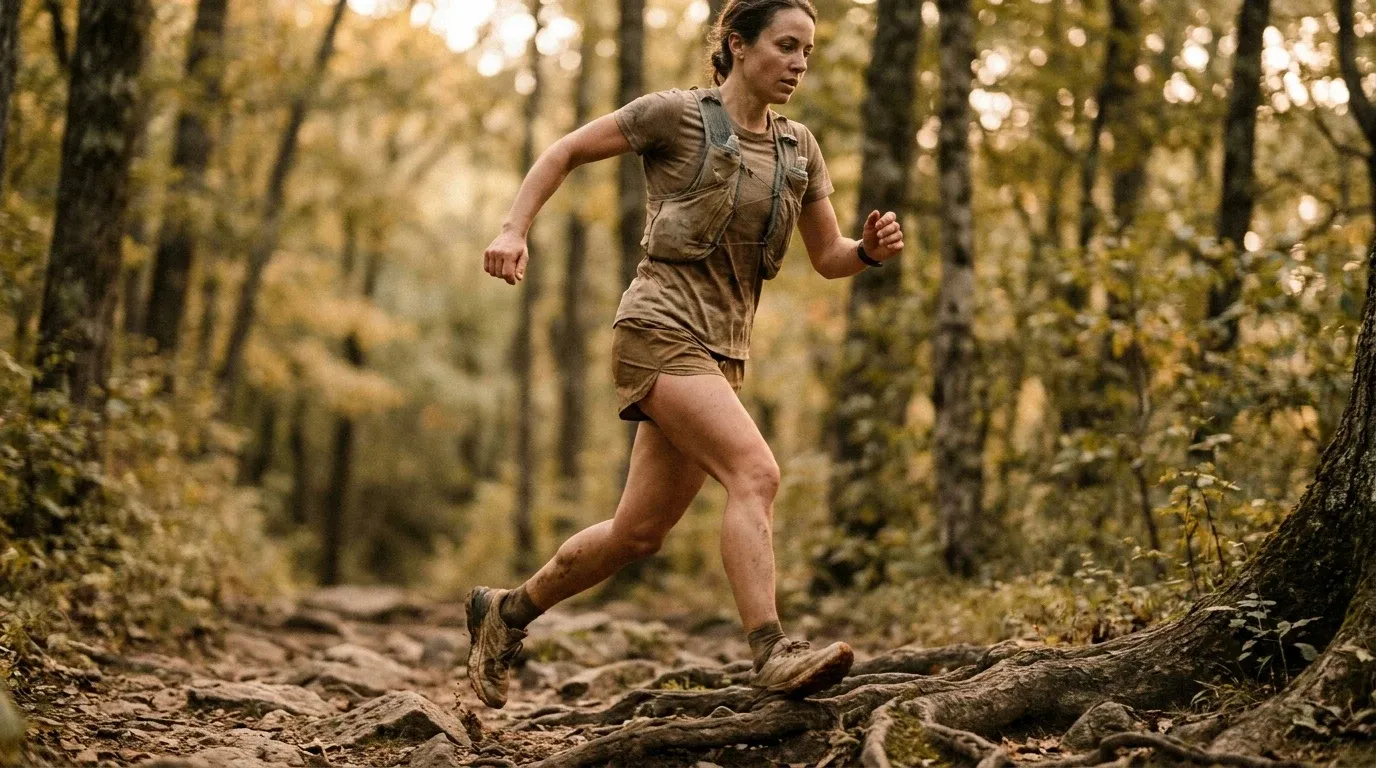
Trail running has always rewarded those who earn their place on the mountain. But the way the sport recognizes and develops emerging talent is changing fast. When Maya Rayle was spotlighted as a Trail Team Elite athlete in September 2026, it wasn't just a roster announcement. It was a signal about where trail running is heading and who gets to lead it there.
Rayle's profile fits a new archetype that's emerging at the top of the sport: technically accomplished, community-rooted, and genuinely compelling off the trail as much as on it. That combination is no accident. It reflects deliberate choices by brands and race organizers who understand that trail running's next growth chapter depends on more than podium finishes.
What "Trail Team Elite" Actually Means in 2026
Elite rosters in trail running used to be relatively simple. You ran fast, you got noticed, you got sponsored. The metrics that mattered were finish times, age-group rankings, and major race results. That model still applies, but it's no longer sufficient on its own.
Trail Team Elite designations now function as more layered endorsements. They signal competitive credibility, yes. But they also signal storytelling value. Brands building these rosters are thinking about who can carry a narrative across social platforms, local race communities, and the broader cultural conversation about what trail running is and who it belongs to.
Rayle's recognition lands in the middle of a broader boom. Running's biggest participation surge in a decade is pulling new athletes into the sport at every level, including trail. The pipeline feeding elite trail running is wider than it's ever been, which makes the selection of emerging voices more meaningful, not less.
Performance Credibility Is Still the Foundation
None of this cultural framing works without genuine athletic substance underneath it. Rayle's trajectory makes that clear. She's not a social media personality who happens to run. She's a competitor whose results have earned her a place in elite-level conversations, and whose visibility follows from that rather than preceding it.
That sequence matters. The trail running community has a sharp radar for authenticity. Athletes who achieve media presence before competitive credibility tend to lose standing quickly in a sport where the mountain is an objective judge. Rayle's profile avoids that trap entirely.
Her emergence also connects to a wider pattern of women reshaping what elite trail and ultra performance looks like. Women are rewriting ultra-endurance running at the highest levels right now, pushing performance ceilings and redefining what's considered possible across distance and terrain. Rayle is part of that wave, even at this early stage of her elite trajectory.
The Grassroots-to-Elite Pipeline Is Closing Its Gap
One of the most interesting structural shifts in trail running over the past few years is how much closer the grassroots and elite worlds have gotten. That gap used to feel significant. Local runners did local races. Elites existed in a different stratum. The two communities overlapped but didn't fully integrate.
That's changing. Part of it is demographic. Young runners flooding back into road and trail races are bringing with them a set of expectations shaped by social media, community-first culture, and a more fluid sense of what "elite" means. They don't see elite athletes as remote figures. They expect accessibility, relatability, and shared values.
Trail brands have responded by assembling rosters that can speak to both ends of that spectrum simultaneously. An athlete like Rayle competes at a level that commands respect from performance-focused runners while presenting a human, community-embedded story that resonates with newer participants. That dual function is genuinely hard to find, which is exactly why it's valued so highly.
The model also supports local race culture in ways that matter. Local running heroes shape the character of race communities in ways that national-level marketing never can. Elite athletes who maintain genuine connections to specific places, trails, and local running scenes carry that community credibility with them as they rise. It compounds rather than dilutes.
How Brands Are Building Rosters Differently
The Trail Team Elite designation reflects a deliberate strategy that's become more common across trail running's major brands. Rather than signing a handful of marquee names with proven elite status, brands are building wider rosters that include athletes at different stages of development.
The logic is straightforward. A developing athlete whose rise you've supported creates a deeper brand alignment than a finished champion you've simply signed. The audience grows with the athlete. The story has arc, tension, and payoff in a way that a pre-established elite doesn't offer.
This approach also distributes marketing reach more effectively. A roster of athletes embedded in different communities, geographies, and trail cultures reaches more of the sport's participant base than a few dominant names ever could. Trail running's audience is global and fragmented across thousands of local communities. Matching that structure with a distributed elite roster makes strategic sense.
It's worth noting that nutrition and training support are increasingly part of these elite relationships too. Brands understand that helping athletes perform well over a long career requires investment in the whole athlete, not just race-day visibility. Understanding how to actually level up inside the running boom means paying attention to recovery, training load, and fueling, areas where supported athletes have genuine advantages over self-funded competitors.
What Rayle's Moment Says About the Sport's Direction
Zoom out from Rayle's individual story and the pattern becomes clear. Trail running is in a period of active identity formation. The sport is large enough now to have institutional infrastructure but young enough that its culture isn't fully fixed. The voices that get amplified right now will shape what the next decade of trail running looks and feels like.
That's not hyperbole. Sports at inflection points are genuinely shaped by the athletes who become visible during that window. The stories told about trail running in 2026 will influence who shows up to trail races in 2030 and what they expect when they get there.
Rayle's elevation to Trail Team Elite status, alongside athletes like Katharina Hartmuth, whose TOR330 podium represents more than a single result, signals a sport that's consciously choosing to center athletes who carry meaning beyond the timing mat. That's a cultural choice as much as a commercial one.
What This Means for You as a Trail Runner
If you're training on trails right now, whether you're a seasoned ultrarunner or someone who just traded road miles for dirt, Rayle's story is relevant to your experience of the sport. The investment in emerging elite athletes raises the quality of the field you're racing in, the content you're consuming, and the community you're part of.
It also raises the bar for what you might expect from trail brands that are asking for your gear dollars. Brands that invest seriously in athlete development and community storytelling are signaling something about their values. That's worth paying attention to as a consumer.
On the training side, if you're building toward your own trail goals, the fundamentals that underpin elite development aren't out of reach. Fueling is one area where the gap between recreational and elite approaches has narrowed considerably. Getting serious about what and when you eat around workouts can meaningfully change how you recover and how you perform across consecutive hard days on trail, which is exactly the kind of stress trail racing applies.
The sport is investing in its future. Athletes like Rayle are part of that investment. And the broader community, including you, benefits from the kind of culture that investment helps build.
The Bigger Picture for Trail Running's Elite Ecosystem
September 2026 will likely be remembered as a period when trail running's talent development infrastructure matured in visible ways. Trail Team Elite designations, expanded race circuits, growing prize purses, and a more professionalized approach to athlete support are all converging at once.
Rayle's spotlight is one data point in a larger story about a sport finding its feet at scale. She won't be the last emerging voice to get this kind of institutional recognition, and the template her story represents will almost certainly multiply. The sport needs more athletes who can hold the tension between elite ambition and grassroots authenticity.
Trail running's identity has always been built on the idea that the mountain doesn't care who you are. What's new is that the brands, communities, and media platforms surrounding the sport are getting much better at caring in ways that are thoughtful, strategic, and genuinely invested in the sport's long-term character. Maya Rayle is one clear sign of that.