
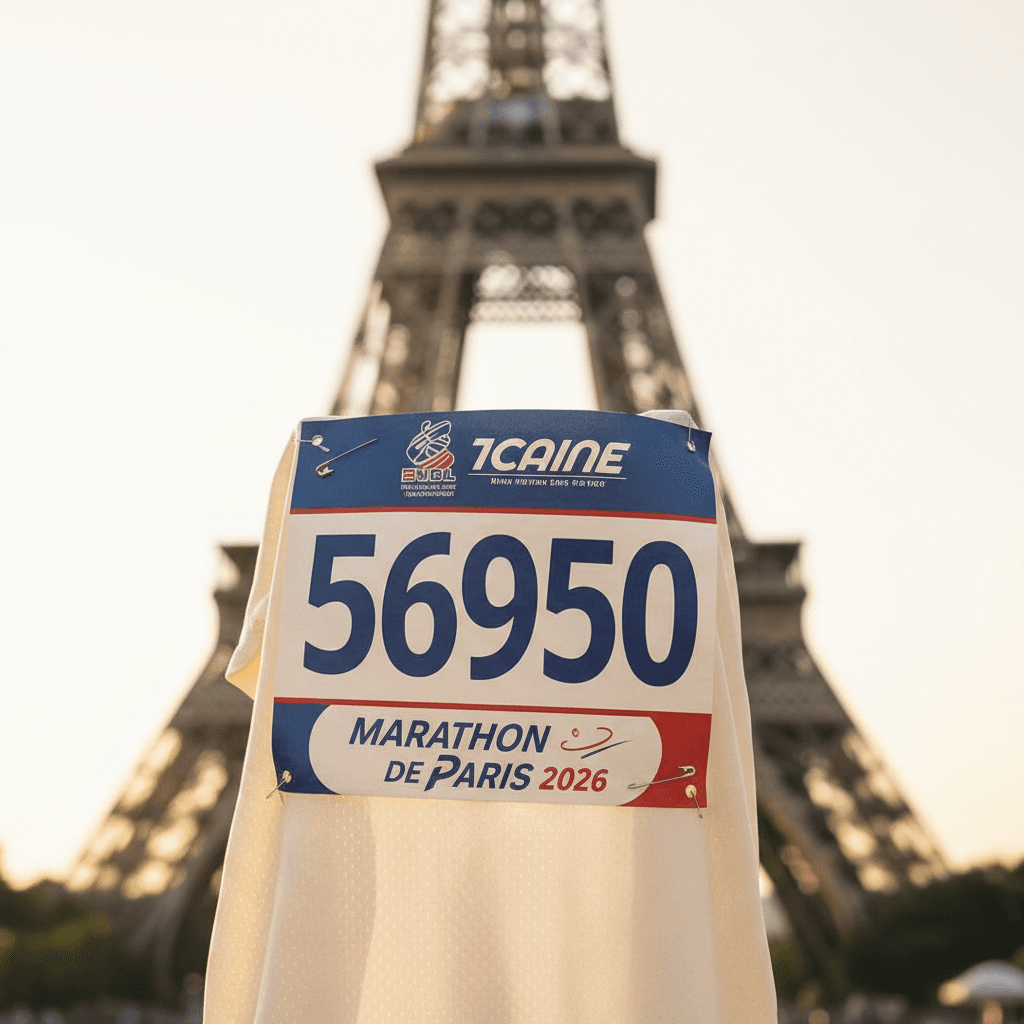
Race week is finally here. After months of training, long Sunday runs, and early morning sessions you didn't always feel like doing, the Paris Marathon 2026 is just around the corner. On April 12, 56,950 runners will line up on the Champs-Élysées for the 49th edition of the Schneider Electric Marathon de Paris. That's a new participation record, making this officially the largest marathon field ever assembled for this race.
Key Takeaways
- The 2026 Paris Marathon takes place on April 12 through historic landmarks
- Over 50,000 runners are expected for this edition
- The course is known as fast with only about 100m of total elevation gain
Whether it's your first marathon or your tenth, the final week follows its own logic. Here's everything you need to know before you toe that start line.
The 2026 Course: What Changed and Why It Matters
The classic Paris Marathon route stays largely intact: starting on the Champs-Élysées, sweeping through the Bois de Boulogne, following the Seine riverside, and finishing through the Bois de Vincennes. It's one of the flattest big-city marathons in the world, with only about 200 meters of elevation gain across the full 42.195 km.
What's new this year is in the second half, specifically after the 30 km mark. Organizers have added more aid stations in the post-30 km section along the Vincennes stretch. This is a direct response to years of runner feedback: the gaps between aid stations in that zone were simply too long, especially for legs that are starting to break down. If you've run Paris before, you know exactly what stretch they're talking about.
Practically speaking, this changes your fueling strategy slightly. If you've been planning your gel and hydration intake around the original aid station positions, take a few minutes to update your plan. You don't need to carry as much going into Vincennes, and you have more frequent opportunities to take in fluids and energy in the hardest part of the course.
Race Weekend Logistics: Sort These Out Now
A few things need to be sorted before Sunday. Don't leave them until Saturday morning.
Bib pickup. Bibs are picked up exclusively at the Paris Le Bourget Expo, north of the city. There's no race day pickup. If you don't have your bib before Sunday morning, you don't run. Check the available time slots now and block out enough time for it. The expo gets extremely busy in the final days.
Race morning shuttles. Shuttles run from Châtelet to the Champs-Élysées start area from 6:30 am on race morning. With the first waves going off at 8:45 am, aim for one of the early shuttles. Lines grow quickly after 7:30 am. Once you arrive in the start zone, allow at least 45 minutes for bag drop and getting into your correct wave corral.
Medical certificate. Foreign participants don't need a medical certificate in 2026. This regulatory change significantly simplifies the process for international runners. French participants follow the usual rules depending on how they registered.
Weather. Early April in Paris can go either way. Current forecasts point to 8 to 14 degrees Celsius at the start, with moderate wind. That's excellent running weather, but cold enough to feel it in the corrals. Pack an old long-sleeve you're happy to toss at the start line.

The Final Week: What to Do and What to Skip
This is where a lot of runners make mistakes. The week before a marathon isn't for building fitness. That work is already done. The goal of the final seven days is to recover without losing your sharpness.
Nothing longer than 30 minutes. Long runs are over. A few easy 20 to 30-minute jogs are enough to keep your legs ticking over. A lot of runners make the mistake of squeezing in one last long session the week before, worried they haven't done enough. It doesn't help. Muscle fatigue doesn't clear in three days, but it definitely accumulates.
Sleep is your biggest performance lever right now. Go to bed early starting Monday. The night before the race will likely be restless from pre-race nerves — that's normal and manageable as long as you've slept well in the preceding nights.
Carb-loading starts 48 hours out, not the night before. This is the most common race-week mistake. The Saturday pasta dinner doesn't fill your glycogen stores on its own. Effective carb-loading starts Friday: increase your complex carbohydrate intake (pasta, rice, potatoes) at every meal on Friday and Saturday. Race night dinner should be normal, not excessive.
Steady hydration all week. Drink consistently throughout the week without overdoing it. On race morning, 500 ml of water in the hour before your start is a solid baseline. Don't over-hydrate in the last 30 minutes. It won't help and you'll spend the start-area wait looking for port-a-potties.
Don't try anything new. No new shoes. No new gels. No new pre-race foods. Everything you eat and wear on Sunday should already have been tested in training. A 42-km race day is not the time to discover that a new gel brand doesn't agree with you.
Race Morning: Quick Practical Notes
Eat breakfast 2 to 3 hours before your wave's start time. With first waves at 8:45 am, that means eating between 5:45 and 6:00 am. Keep it familiar: oatmeal, toast, a banana. No heavy meals, nothing you haven't done before.
In the start corrals, the atmosphere is going to be electric. 56,950 runners spread across the Champs-Élysées is something you need to experience to understand. Take a second to actually take it in before the gun goes off.
Also read: 2026 London Marathon: The Fastest Elite Field Ever? and Boston Marathon 2026: Final 3-Week Prep Checklist.
Good luck out there.
Related articles
- Boston Marathon 2026: Your Last 3-Week Prep Checklist Before Race Day
- TCS London Marathon 2026: Your Final 4-Week Prep Checklist
- Creatine: everything you need to know before taking it