
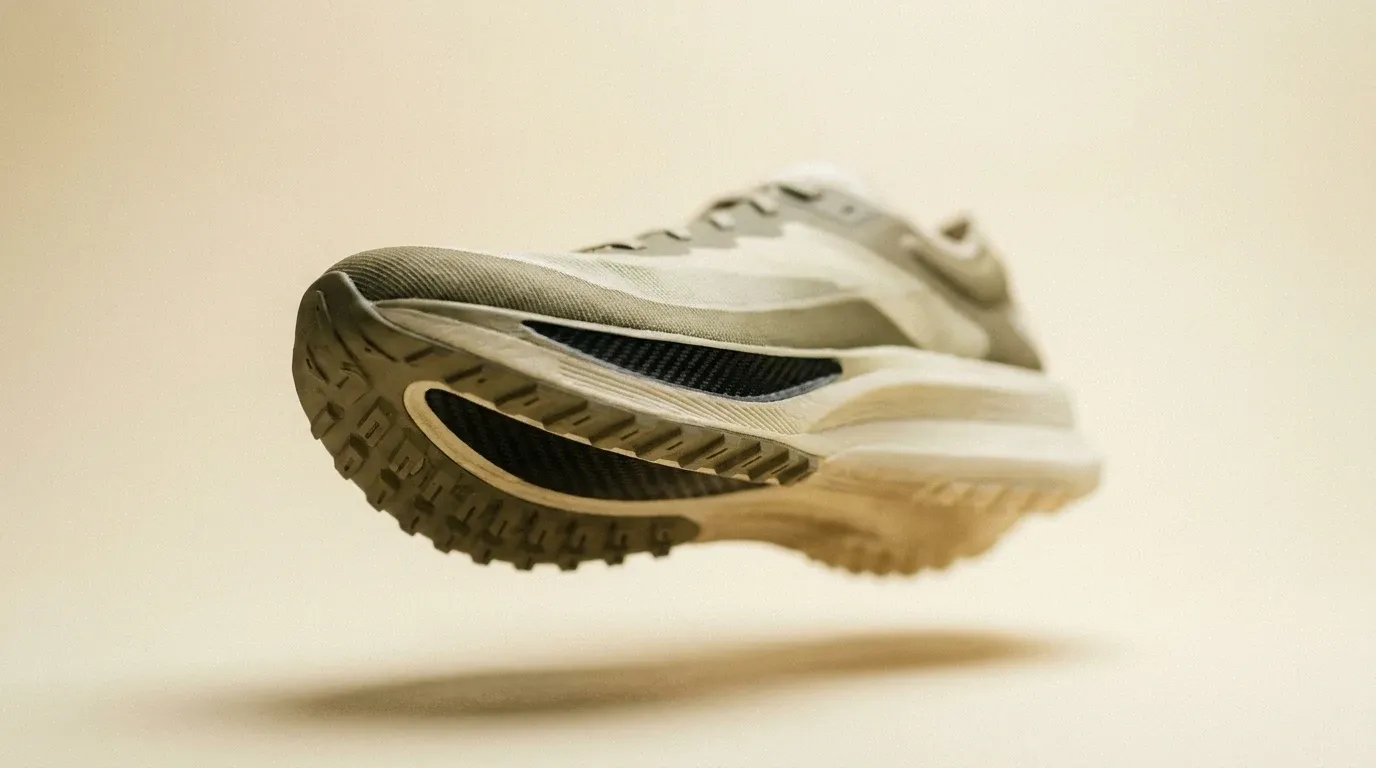
Two major shoe launches. A few days apart. That's not a coincidence. When Nike pulled back the curtain on the Vaporfly 5 almost simultaneously with ASICS dropping the Trabuco MAX 6, the running industry sent a clear signal: the innovation cycle is accelerating, and no surface is off-limits anymore.
For years, the super-shoe story was essentially a road story. Carbon plates, low-density foam stacks, and aggressive rocker geometry were tools reserved for marathon runners chasing podiums or personal bests on flat tarmac. That era is ending. The same philosophy is now being engineered into trail platforms, and the competitive pressure between brands is driving changes faster than most runners can keep up with.
Here's why all of this actually works in your favor.
Two Launches, One Message
The Nike Vaporfly 5 arrives as a direct evolution of one of the most studied racing shoes in history. Nike's ZoomX foam has been refined again, with the brand claiming improved energy return and a geometry adjustment to the carbon plate designed to reduce the energy cost of toe-off. The fit system has also been updated, addressing a persistent complaint from runners who found earlier Vaporfly models narrow through the forefoot under race conditions.
Meanwhile, ASICS launched the Trabuco MAX 6 with a focus on trail-specific foam architecture. The shoe stacks FF BLAST MAX compound underfoot. a material ASICS has been developing for road platforms for several seasons, and applies it to uneven terrain. The result is a trail shoe that prioritizes cushion depth and energy return in a category that historically rewarded grip and protection above everything else.
The timing of these two releases within the same news cycle wasn't accidental marketing. It reflects how compressed the development windows have become. Brands are watching each other closely, and the pressure to respond is now measured in months, not years.
Trail Running Enters the Arms Race
The move onto trail is significant. Road racing has been defined by super-shoe performance since roughly 2017, when carbon-plated foam platforms began reshaping finishing times at major marathons. World record progressions at the marathon distance have been extraordinary in that period, and research consistently attributes a meaningful portion of that improvement to footwear energy return efficiency.
Trail running has largely existed outside that conversation, partly because the technical demands of variable terrain make simple plate-and-foam solutions harder to execute, and partly because trail culture has historically been skeptical of heavily engineered gear. That's changing. As prize money and professional structures grow in the sport. a trend covered in depth in our piece on how prize money is turning ultra-running professional. competitive stakes have risen, and athletes want every advantage available.
The Trabuco MAX 6 isn't the only trail shoe pushing in this direction, but it's the clearest statement yet from a major brand that trail performance footwear deserves the same engineering investment as road racing flats. When ASICS commits its best road foam to a trail platform, everyone else in the category has to respond.
What the Competition Means for Your Wallet and Your Times
When brands compete hard, prices on previous generations drop. That's the most immediate practical benefit for recreational runners. The Vaporfly 4 and earlier Trabuco MAX versions will be discounted as inventory clears. Super-shoes that cost $250 or more at launch routinely fall to $150 or below within six to twelve months of a successor release.
Beyond price, competition drives genuine performance improvement across the entire market. The technologies Nike and ASICS are refining at the premium end eventually filter down into everyday training shoes. The foam compounds in your current daily trainer likely wouldn't exist in that form without the R&D pressure created by the racing shoe arms race above it.
For trail runners specifically, this is a moment to pay attention. If you've been running technical courses in shoes that prioritize grip exclusively, the new generation of cushioned trail platforms may offer a meaningfully different experience on less severe terrain. High-mileage trail runners who run a mix of packed dirt, fire road, and moderate single track stand to benefit the most.
The Selection Problem You Now Have to Solve
More innovation creates a harder decision. That's the honest trade-off. If you're targeting a personal best at a road race or a trail ultra, understanding what you're buying matters more than ever.
Three factors now define a performance running shoe in a way that recreational runners need to actually understand:
- Foam stack height and compound: More stack doesn't always mean better performance for your body type or gait. High-stack shoes redistribute load in ways that can increase ankle instability risk, particularly for runners who haven't trained specifically in that geometry. Transition gradually if you're moving from a low-stack to a high-stack platform.
- Plate geometry and stiffness: A carbon plate isn't a single specification. Plate shape, placement within the midsole, and stiffness rating all affect how the shoe behaves at different paces. Some plates are optimized for marathon pace. Others perform better at shorter, faster efforts. Matching the plate design to your target event matters.
- World Athletics compliance: If you're running a road race where your time will be used for age group rankings, qualification standards, or any form of certified result, World Athletics shoe regulations apply. Currently, the maximum stack height for road racing shoes is 40mm. Most major brand racing flats are engineered right up to that limit. Trail has different rules, and that distinction matters if you're running a certified trail course.
The compliance question isn't just for elites. Alexander Burks' 2026 USATF 50-mile road national championship is a reminder that certified results at every level of competition depend on legal footwear. If your race issues a certified result, check your shoe against current World Athletics guidelines before race day.
Recovery and Fueling Still Matter More Than Your Shoes
It's worth saying plainly: no shoe will compensate for poor recovery or inadequate nutrition. The performance gains from elite footwear are real but relatively modest compared to the gains available from optimizing your training load, sleep, and fueling.
If you're spending $250 on a racing shoe but under-fueling your long runs or eating in ways that slow down tissue repair, the shoe's contribution will be marginal. Research on how ultra-processed foods affect exercise recovery makes clear that dietary quality has a direct and measurable impact on how well your body absorbs training stress. That's an area where the return on attention is significantly higher than the return on gear upgrades for most recreational runners.
The same logic applies to protein timing. Getting your fueling strategy right across a training week will do more for your race-day performance than which specific foam compound sits under your foot. The fundamentals don't become less important because the shoes get better.
How to Make the Right Call for Your Next Shoe
Given the volume of launches and marketing noise right now, here's a practical framework for evaluating your next shoe purchase:
- Define your primary use case first. A shoe optimized for a road half marathon isn't the right choice for a 50K trail race with 6,000 feet of elevation gain. The expanding trail super-shoe category makes this distinction more important, not less.
- Wait for independent testing data. Brand claims are a starting point, not a conclusion. Independent biomechanics research and long-term durability data from running publications typically emerge within three to four months of a major launch.
- Consider the full training cycle cost. Racing shoes are not training shoes. If you're buying a Vaporfly 5 or a Trabuco MAX 6, budget for a separate daily trainer. Using a super-shoe for all your miles accelerates wear and defeats the purpose of its racing-specific design.
- Test before committing at full price. Many specialty running retailers offer treadmill demos or short return windows. Use them. How a shoe feels for you at your specific cadence and gait pattern matters more than how it tested for someone else.
The arms race between Nike, ASICS, and every brand chasing them is genuinely good for runners. The innovation is real, the trickle-down economics work, and the expansion into trail opens new performance possibilities for a rapidly growing segment of the sport. The fast times and prize money at events like Tunnel Hill 2026 reflect a sport where equipment and athlete development are both moving forward quickly.
Your job is to stay informed enough to cut through the launch noise and make choices that actually fit your running. The brands will keep competing. That part is taken care of.