
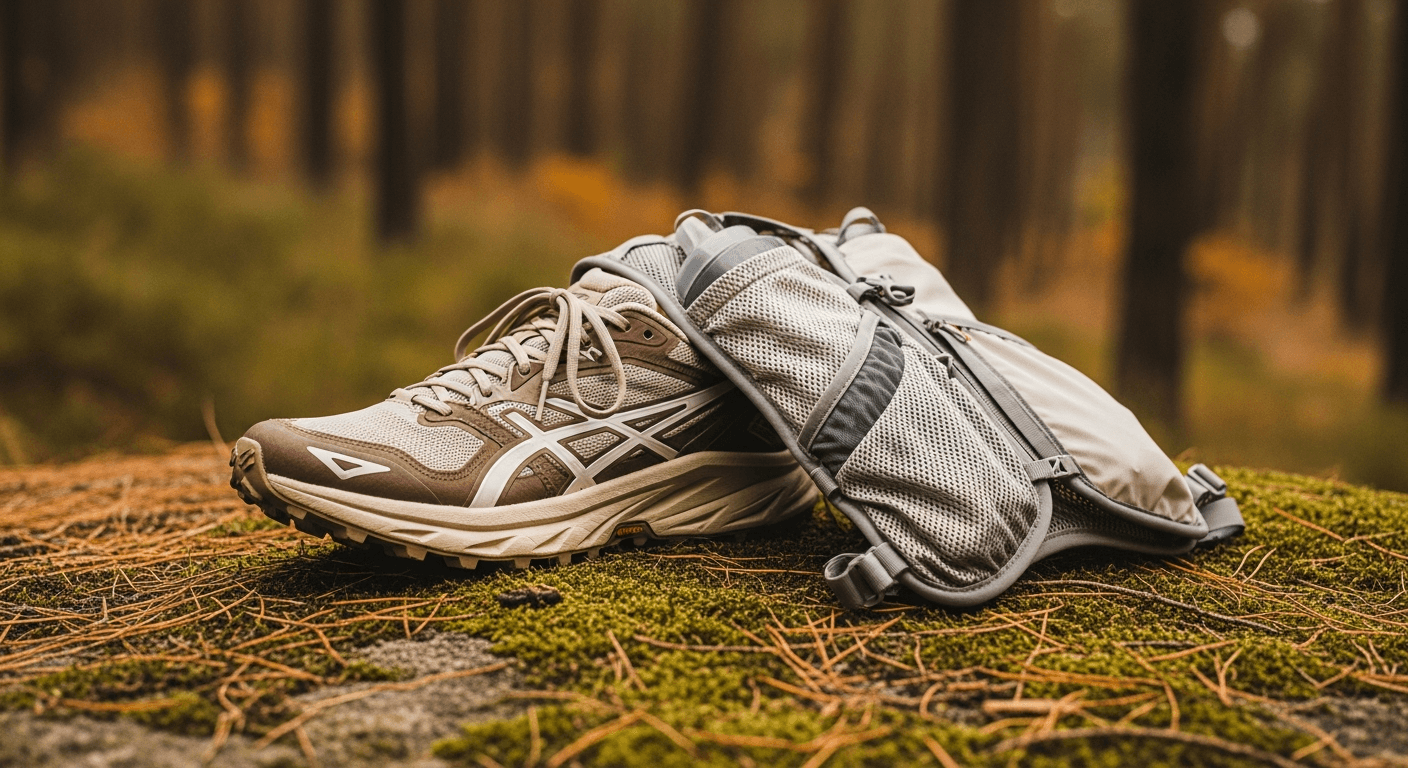
Trail running participation has grown sharply over the past three years, and 2026 shows no sign of slowing that trend. More people are leaving the roads behind, drawn by the mental reset and full-body challenge that off-road running offers. The problem is that the gear market has grown just as fast, and if you walk into a running specialty store without a plan, you can easily drop $800 on kit you don't need for your first few months on the trails.
This guide is built for true beginners. That means runners who are doing day hikes turned short runs, road runners crossing over, or newer athletes who've caught the bug after watching a friend finish a local trail race. Here's what you actually need, what can wait, and how to put together a functional starter kit without wrecking your budget.
Start With the Shoes. Everything Else Is Secondary.
If there's one non-negotiable in trail running, it's the shoe. A proper trail shoe does two things that road shoes simply can't: it grips unpredictable terrain and protects your feet from rocks and roots. For beginners, that means looking for a shoe with moderate lugs (around 4 to 6mm in depth) and a built-in rock plate.
Aggressive lugs are tempting because they look purposeful, but on packed dirt trails or mixed surfaces, they create instability and fatigue your lower legs faster than necessary. A moderate lug pattern gives you traction without punishing you on harder ground. The rock plate, a thin layer of semi-rigid material in the midsole, acts as a shield against sharp objects underfoot. Without it, a single bad step on a pointed rock can end your run early and leave you bruised for days.
You don't need to spend $200 on your first trail shoe. Reliable entry-level options from Brooks, Salomon, Hoka, and Saucony now sit in the $130 to $160 range and deliver everything a beginner needs. It's worth noting that super shoes carry a specific injury risk profile that's well documented in road running. Trail shoes tend to be more conservative in their stack heights and geometry, which is actually an advantage for new runners still building foot and ankle strength.
Get fitted in person if you can. Trail shoes fit differently than road shoes, and sizing up by a half size is common due to foot swelling on longer efforts.
Hydration: The Threshold You Shouldn't Ignore
The rule here is simple. If your trail run is going to exceed 60 minutes in any terrain that isn't a groomed park loop, you need a hydration solution on your body. Not a handheld bottle. A vest or pack that lets you carry a minimum of 1.5 liters of fluid.
Dehydration on trails compounds quickly because you're working harder than on roads, sun exposure is often more direct, and there's no corner store to duck into. Running out of water on a remote trail isn't just uncomfortable. It's genuinely dangerous, particularly in summer conditions or at elevation.
The good news is that soft flask systems have become dramatically lighter and better-fitting in recent years. Entry-level hydration vests from brands like Nathan, Salomon, and Ultimate Direction now start around $60 to $80 and include one or two 500ml soft flasks. The vest design has evolved to reduce bounce and chafing, two complaints that used to put beginners off wearing them. Look for a vest with a chest strap system that can be adjusted on the move, and check that the flask pockets sit at the front for easy access without breaking stride.
If you want to go deeper on what proper hydration strategy actually looks like versus the myths most runners carry into their training, 5 Hydration Myths That Are Wrecking Your Performance is a useful reference point before your first longer effort.
Apparel, Navigation, and Safety: Building the Rest of Your Kit
Once your shoes and hydration are sorted, the remaining essentials can be grouped into three categories: clothing that doesn't hurt you, a watch that tells you where you are, and a layer that keeps you alive if conditions change.
Chafe-resistant apparel
Trail running involves more lateral movement, incline, and duration than most people expect from their first few sessions. Seams, waistbands, and fabric blends that work fine for a 5K on the road will destroy your skin on a 90-minute trail run. Look for shorts or tights with flatlock seams, and shirts made from merino-synthetic blends or brushed polyester that doesn't bunch. Women's-specific fits matter here too. A generic unisex top with a loose hem will chafe under a hydration vest within the first 30 minutes.
Brooks has made a significant push into head-to-toe running apparel in 2026, expanding its trail-specific line beyond shoes into shirts, shorts, and base layers designed to work together as a system. That's a meaningful shift for beginners because it reduces the guesswork around compatibility. You can walk into a Brooks retailer and build a functional outfit without needing to cross-reference five different brands.
GPS watch with breadcrumb navigation
You don't need a $600 multisport watch for your first trail runs. What you do need is a watch that can load a basic route and show you a breadcrumb trail on a simple map display. Getting turned around on a trail costs time and energy, and even mild disorientation on an unfamiliar route adds unnecessary stress to what should be an enjoyable experience.
Entry-level GPS watches from Garmin, Coros, and Polar now sit in the $150 to $200 range and include the navigation features that matter for beginners. Battery life is worth prioritizing over screen quality at this price point. A watch that dies at the two-hour mark on a three-hour run is worse than a watch with a dim display that lasts the full effort.
Pairing your navigation habits with a structured approach to training data will pay off as you progress. Why Most Runners Never Actually Get Faster breaks down how most athletes misread their own effort data, a mistake that's even more common when trail terrain is skewing your pace metrics.
Emergency layer
Weather on trails changes faster than forecasts suggest. A lightweight emergency layer doesn't mean a full waterproof jacket. For most beginner-level trail runners doing runs under two hours, a packable wind shell that weighs under 100 grams and fits in the back pocket of your hydration vest is enough. Options from Patagonia, Montane, and Arc'teryx start around $100. If you're in a consistently wet climate like the Pacific Northwest or the UK, step up to a proper waterproof shell, but for the majority of conditions, a wind layer is your first purchase.
What This All Costs, and Where to Buy It
A functional beginner trail kit breaks down roughly like this:
- Trail shoes with rock plate: $130 to $160
- Hydration vest with soft flasks: $60 to $80
- Chafe-resistant shorts and shirt: $60 to $90
- Entry-level GPS watch: $150 to $200
- Packable wind shell: $80 to $100
That's a total range of $480 to $630 at full retail. To hit the sub-$400 target, prioritize shoes and a hydration vest first, wear road running apparel you already own, and hold off on the watch until your second or third month. A downloaded trail map on your phone with offline access via AllTrails or Komoot will serve you adequately in the early stages.
Access to quality gear has also improved significantly in 2026. Salomon's major retail expansion means their trail-specific range is now available through more mainstream sports retailers rather than only in specialty outdoor stores. For beginners who want to try on multiple shoes and compare vests in person before buying, that expanded footprint makes a real difference. REI, Running Room, and independent running specialty stores remain excellent options across the US, Canada, and Australia for knowledgeable staff fitting.
Fueling Your First Trail Runs
Gear decisions get a lot of attention, but beginners consistently underestimate how much nutrition matters on trail runs longer than 45 minutes. The increased effort of climbing and descending burns more fuel than equivalent time on the road, and bonking on a trail is a far worse experience than bonking on a familiar street loop.
For runs under 90 minutes, pre-run nutrition matters more than mid-run fueling. What to Eat Before Training: The No-Nonsense Guide gives you a practical framework that applies directly to trail efforts. For anything longer, carry simple carbohydrate sources in your vest pockets. Gels, chews, dates, or rice cakes all work. The goal is 30 to 45 grams of carbohydrate per hour at beginner intensities.
The Honest Starter Checklist
Here's the short version of what a beginner trail runner actually needs before heading out on their first proper off-road effort:
- Essential now: Trail shoe with moderate lugs and rock plate, hydration vest for runs over 60 minutes, chafe-resistant base layers
- Add within three months: Entry-level GPS watch with breadcrumb navigation, packable wind shell
- Skip for now: Poles (useful on technical terrain, not for beginners), GPS-enabled hydration packs with full mapping (overkill at this stage), carbon-plated trail shoes (not appropriate for entry-level use)
Trail running is one of the most accessible forms of endurance sport once you strip away the gear noise. The barrier to entry is lower than it looks. Start with what actually protects you and keeps you on the trail, and add the rest as your runs get longer and your terrain gets more serious.