
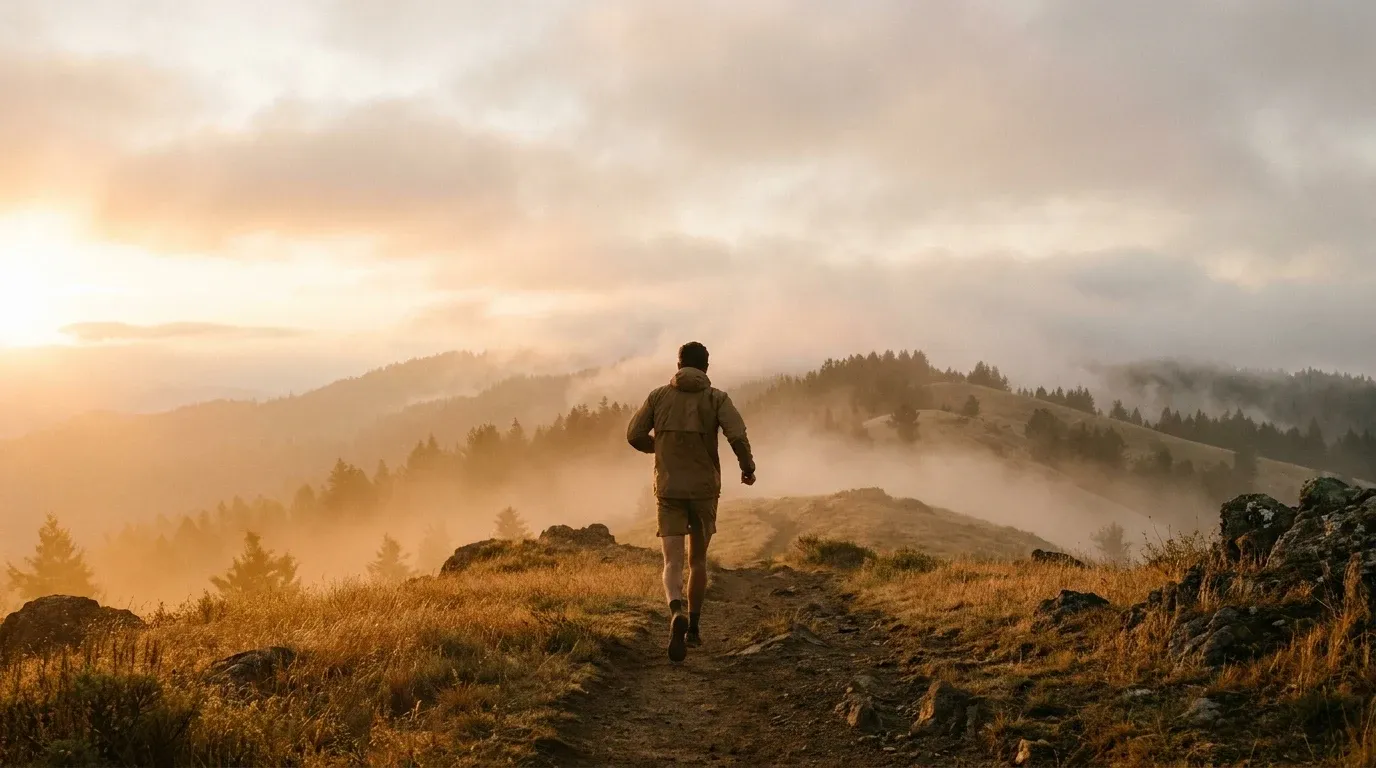
The August 23 weekend delivered exactly what the trail and ultra community runs on: big mountains, unexpected breakthroughs, and the kind of racing stories that never make it onto mainstream sports pages. Here's your full recap of the performances, course records, and community moments that defined the weekend.
If you've been following the Ultra Running: What's on This Weekend, August 22 preview we published heading into the weekend, you already had a sense of how stacked the calendar was. What actually played out exceeded most expectations.
Grindelwald Ultra: A Course Record Nobody Saw Coming
The Grindelwald Alpine Ultra, set across 65 kilometers of technical Swiss terrain, saw its open men's course record shattered by nearly eleven minutes. The previous mark had stood for four years, which made the margin of the new record even harder to process in real time.
What made the performance notable beyond the raw time was the conditions. Temperatures in the upper valley sections dropped to near-freezing overnight, and a section of the course above 2,800 meters was rerouted due to late-season snowpack. On a shortened alternative line, the record still fell. Race officials confirmed the adjusted course was certified for record purposes before the start.
On the women's side, the podium came down to a final descent, with the top three finishers separated by less than four minutes after nine-plus hours of racing. That kind of finish in a mountain ultra at this distance is genuinely rare, and it reflects the deepening talent pool at the elite level of the European circuit.
Cascade Crest 100: PNW Running Does What It Does
Out of Washington State, the Cascade Crest 100 Mile Endurance Run produced one of the weekend's most compelling finishes. The race, which has been a fixture of the Pacific Northwest ultra scene for over two decades, runs through the Wenatchee National Forest and covers terrain that punishes anyone who goes out even slightly too hard in the first 40 miles.
The men's winner came through in a time that ranked among the five fastest in the event's history, despite reports of significant trail damage from summer storms requiring additional technical navigation in the back half. Crew and pacer support was cited by multiple finishers as a critical factor in the final 30 miles, which aligns with what experienced ultrarunners consistently report about managing effort across 100-mile efforts.
If you're working on the mental side of long-distance running, the Mental Strategies to Get Through Long Runs and Races resource is worth bookmarking before your next long effort. What happens between miles 60 and 80 in a 100-miler is almost entirely psychological, and that's not an exaggeration.
The DNF rate at Cascade Crest this year was reported at approximately 34 percent, which is on the higher end historically. Race organizers attributed it partly to the revised sections and partly to a field that may have underestimated the course after a dry, fast summer on other regional courses.
Penyagolosa Trails: Late-Season Mediterranean Form
Spain's Penyagolosa Trails, running through the Castellon interior, drew strong international participation across its 115-kilometer and 55-kilometer formats. The longer event, the CSP, is an ITRA-points-qualifying race and has grown significantly in field size over the past three seasons, reflecting a broader global interest in races outside the traditional Alpine circuit.
This weekend's results feed directly into the expanded data visibility that the RacePace and ITRA partnership is making possible for fans and athletes. The collaboration, announced earlier this season, means results from qualifying events like Penyagolosa are now integrated into athlete performance profiles with greater depth, allowing runners to track progression and compare across international fields more meaningfully than before. For the broader ultra community, that's a structural shift in how race data gets consumed.
The CSP women's winner ran the course in conditions described by local media as unseasonably humid, adding an extra layer of difficulty to the technical limestone trails that define the Penyagolosa experience. Her finish time came in above last year's winning mark, but adjusted for conditions, coaches and analysts in the ITRA community noted it was an objectively strong performance.
Local and Regional Races: The Weekend's Hidden Depth
Beyond the headliner events, Saturday and Sunday saw dozens of local and regional trail races across North America, the UK, and Australia that collectively brought thousands of runners to the start line. These are the races where the sport actually lives for most people who love it.
In the UK, the Peak District saw multiple fell running fixtures draw competitive fields despite a rainy forecast. Fell racing has its own classification and timing culture that operates largely separately from ITRA-style trail running, but the community overlap is growing. Several finishers from Saturday's Peak District events have ITRA race histories, reflecting the sport's increasingly porous category boundaries.
In Australia, the Blue Mountains Ultra Trail series continued its winter-season programming. The region's trail network is legitimately world-class, and the races that use it consistently punch above their weight in terms of field quality relative to their size and profile. If you've been thinking about why grassroots events are shaping the future of the sport, Why Local Trail Races Are the Future of the Sport makes the case in detail.
Across North America, the weekend also saw several 50K and 50-mile events complete their summer season finales, with some offering final lottery qualifying spots for major 2025 races. Registration pressure for events like Western States, UTMB, and Hardrock continues to push runners toward building ITRA points across a wider range of qualifying events, which is one reason regional race attendance is holding strong even as the sport matures.
Gear and Nutrition: What the Weekend Reminded Everyone
Every major ultra weekend generates a wave of post-race conversation about what worked and what didn't, and the August 23 weekend was no different. Blister management came up repeatedly in post-race reports from the Cascade Crest and Grindelwald fields, which is predictable given the wet trail conditions both races dealt with.
Sock choice matters more than most newer runners assume, and it's one of the details that separates a strong finish from a painful survival march in the back half of a long race. The science behind blister prevention is more developed than the sock marketing industry gives it credit for. The breakdown in Running Socks: What Actually Prevents Blisters is worth reviewing before your next long outing.
On the nutrition side, gel and electrolyte strategy dominated the Penyagolosa post-race threads given the heat and humidity. A recurring theme was athletes realizing mid-race that the supplements they'd relied on in training weren't delivering consistent results under race conditions. This is often a formulation and quality issue rather than a timing or dosage mistake. It's worth knowing the red flags to watch for on any supplement label before race day, not after.
What the Weekend Means for the Rest of the Season
With August wrapping up, the trail and ultra calendar shifts into its autumn phase, which is historically the deepest part of the racing year in terms of field quality and course prestige. UTMB week is in the rearview mirror, but events like the Transgrancanaria Autumn Edition, the Andorra Ultra Trail, and several North American 100-mile finales are still ahead.
For athletes who raced this weekend, the recovery window before the next target becomes critical. The compounding fatigue of a late-summer racing block is real, and the athletes who manage the transition from race mode to recovery mode intelligently are the ones who show up to autumn starts in shape to compete rather than just finish.
The RacePace and ITRA integration continuing to build throughout the season means more of these results will be visible and searchable in ways that benefit both serious competitors tracking their rankings and casual fans trying to follow athletes across events. That transparency is good for the sport, and it's good for the community that drives it.
Next weekend's calendar is already taking shape, with several notable events scheduled across the US Mountain West and central Europe. Keep this page in your rotation. The trail running world moves fast, and the best stories don't always wait for Monday morning.