
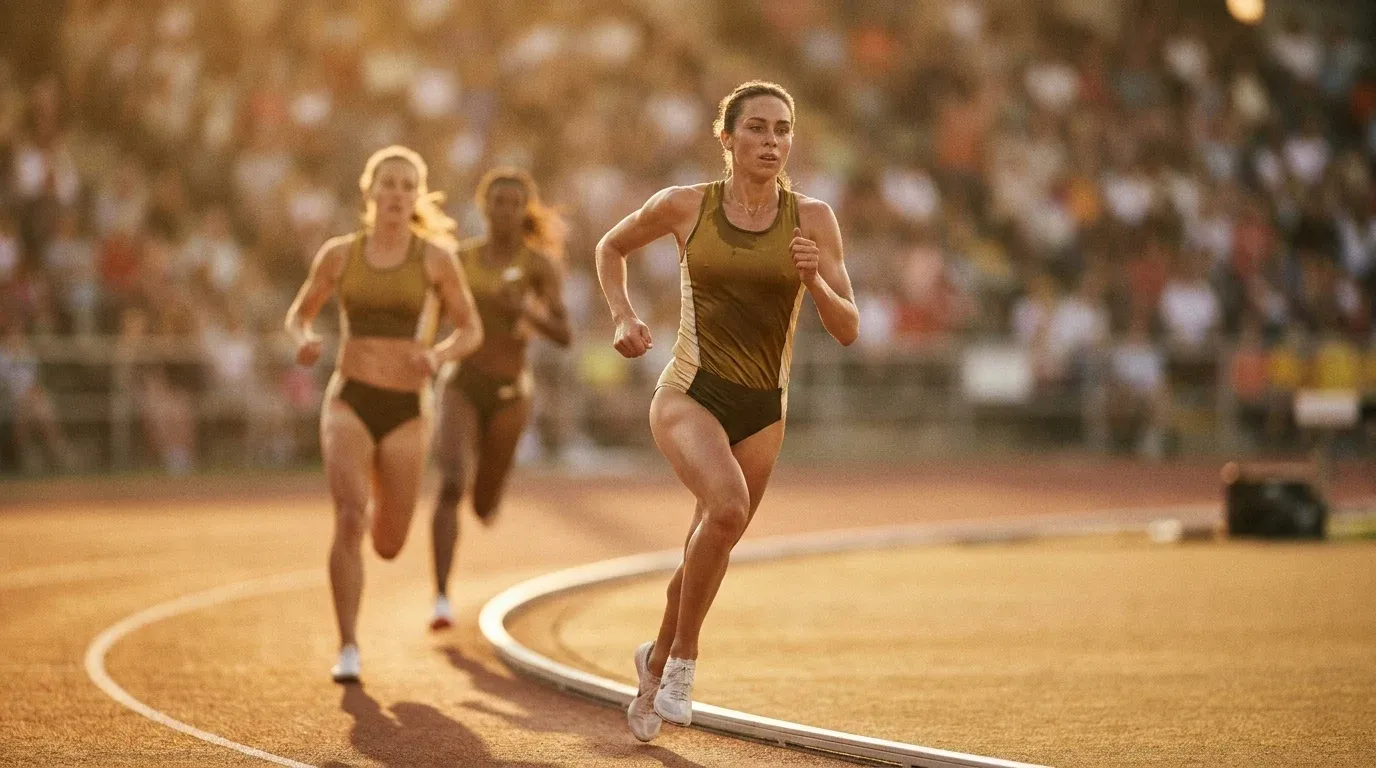
There are track races, and then there are events. The women's 800m at the 2026 Zurich Diamond League finale falls squarely into the second category. With a start list that reads like a who's who of global middle-distance running, this isn't a race you watch passively. It's the kind of showdown that reminds you why you fell in love with the sport in the first place.
Here's everything you need to know about the field, the stakes, and why this race could define the entire 2026 season.
A Field That Earns the Word "Loaded"
The Zurich Diamond League finale consistently attracts the deepest fields of the season, and this year's women's 800m is no exception. Athing Mu Hunter Bell, Lore Hoffmann Werro, and Femke Bol headline a lineup that covers nearly every tactical style the event has to offer. Front-runner. Kicker. Tactical grinder. They're all here.
Athing Mu Hunter Bell remains the most complete 800m runner on the planet when she's healthy and in rhythm. Her ability to control a race from the front while leaving enough in reserve for a devastating final 150 meters is unmatched. In 2026, she's shown the kind of consistency that makes rivals uncomfortable before the gun even fires.
Lore Hoffmann Werro is the Swiss contender who has steadily built toward this moment. Her progression over the past two seasons has been methodical and impressive, with personal bests that signal she belongs not just in the conversation but in the lead pack. The Zurich crowd will almost certainly be loud for her from lane draw to finish line.
Femke Bol brings a dimension that complicates every race plan on the track. The Dutch superstar is primarily a 400m and 400m hurdles force, but her sheer speed endurance means she can neutralize a slow-burn 800m with a single move. Don't count her out simply because this isn't her primary event.
Why Zurich Carries More Weight Than a Regular Diamond League Meet
The Diamond League finale isn't just another stop on the circuit. It's the event that effectively crowns the world No. 1 in each discipline. Points have been accumulating all season, but the finale carries a disproportionate share of ranking weight. Win here, and your 2026 season is defined. Finish fifth, and the entire circuit suddenly needs a reframe.
That pressure filters down into every tactical decision on the track. Athletes and their coaches know that competitors who might normally take risks in a regular season race will be more conservative early. That doesn't mean slow. It means calculated. Expect a race where the first 400 meters are deceptively controlled before it fractures entirely in the back straight.
The Diamond League has also formalized prize money at a level that makes each final genuinely consequential. The overall Diamond League champion in each event takes home $30,000. That's not the primary motivator for athletes of this caliber, but it signals the seriousness of the platform and the investment the series makes in elite performance.
The Tactical Breakdown: How This Race Could Unfold
In an 800m with multiple athletes capable of running sub-1:57, no single tactical approach is guaranteed to work. But here's how the race shapes up based on each athlete's known preferences and 2026 form.
- Hunter Bell will want a moderate opening 400 in the 57-second range. Too fast and she risks burning the field's kickers out of their comfort zone, which paradoxically benefits them. Too slow and she loses the race on the final curve.
- Werro is likely to sit in the top three through the bell lap and rely on her closing speed over the final 200. Her strength is in not panicking. If she's on Hunter Bell's shoulder at 600 meters, this race is genuinely open.
- Bol thrives in attrition scenarios. If the pace surges early and the field strings out, her superior speed endurance could drag her past athletes whose legs have turned over one time too many.
- The remainder of the field will include athletes looking to disrupt the favorites' rhythm. A ragged, physical race benefits the grinders. A smooth, fast race benefits the pure runners. The first 200 meters will tell you almost everything.
Middle-Distance Running Is Having a Moment
It's not a coincidence that this race is generating serious pre-event attention. Middle-distance running has experienced a surge in mainstream fan interest through 2026, with live viewership for Diamond League broadcasts hitting record numbers across streaming platforms in North America and Europe. The 800m and 1500m have driven a meaningful share of that growth.
Part of that is generational. A new cohort of athletes has arrived with genuine star power. Part of it is platform. Short-form video has made the dramatic final 200 meters of an 800m race one of the most shareable sports moments online. The combination of athletic drama, brevity, and genuine unpredictability makes the event a near-perfect fit for how fans consume sport in 2026.
If you've been tracking the broader fall race calendar, you've already seen how the energy is building across all distances. This Week in Running: Fall Race Season Heats Up captures the full scope of what's happening on the roads and track right now, and the Zurich finale sits at the center of that momentum.
What Runners Can Take From Elite 800m Racing
Watching races at this level isn't just entertainment. It's education. The 800m is one of the most physiologically demanding events in athletics, requiring athletes to operate at the intersection of aerobic capacity and anaerobic tolerance for roughly two minutes. That's a zone most recreational runners rarely train deliberately.
If you're heading into a fall training block, the tactical pacing you'll see in Zurich offers a live case study in effort distribution. Recreational runners consistently go out too hard in the first half of a race and pay for it over the back end. Elite 800m runners make the same mistake look catastrophic at their level, which makes it easier to internalize.
For runners building toward fall events, dialing in your nutrition strategy is just as important as the session log. How to Adjust Your Nutrition as Fall Training Ramps Up breaks down exactly how your fueling needs shift as your mileage and intensity increase heading into race season.
And if you're using September to rebuild a more complete fitness base rather than chase a single race, the September Strength Reset: Rebuild Your Program Right is worth your time. The best endurance athletes in the world are not one-dimensional, and the strength work you do now compounds directly into your running economy.
The Contenders Beyond the Headlines
Every stacked race has athletes outside the top three names who are capable of reshaping the narrative. The Zurich 800m is no different. The start list includes athletes who have run personal bests in 2026 and entered this finale on form curves that favor them specifically in a high-pressure, championship-style environment.
Watch for athletes who have performed well at major championships rather than purely at regular Diamond League meets. The psychological calibration required to run a fast 800m in front of a full stadium crowd is genuinely different from running fast at a smaller meet. Some athletes elevate. Others contract. The ones who elevate in Zurich are the ones worth tracking across the rest of the season.
The women's 800m has also historically produced some of the Diamond League's most dramatic finishes, with margins of less than a tenth of a second separating podium places. That's not a prediction. It's a pattern worth keeping in mind as you watch.
How to Watch and What to Look For
The Zurich Diamond League finale is broadcast live across multiple streaming platforms depending on your region. In the US, Peacock and NBC Sports handle Diamond League coverage. In the UK, BBC Sport and Eurosport share rights. Australian viewers should check DAZN and the official World Athletics streaming options.
When you're watching the women's 800m, focus on three moments: the initial positioning battle in the first 100 meters, the pace shift that typically arrives between 300 and 400 meters, and the final 150 meters where the race is actually decided. Everything in between is context. The start and the finish are the story.
Also watch body language in the final 200 meters. Athletes who are suffering show it in their shoulders and head position before they show it in their splits. You'll be able to read the race before the commentators can finish their sentences.
This is one of the best 800m fields assembled in 2026. Make sure you see it live.