
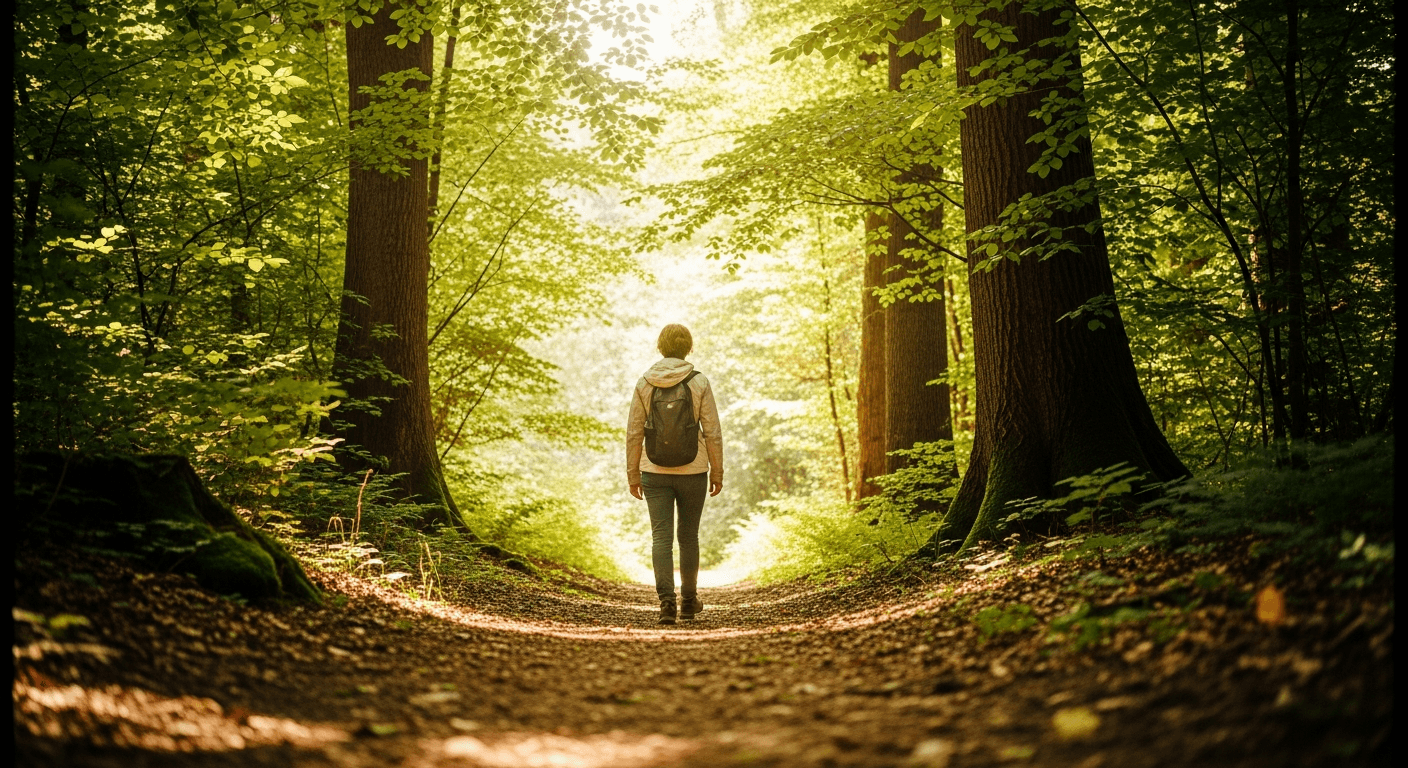
Stress management has a surprisingly low minimum effective dose. According to research cited in Manulife's 2026 global stress report, spending just 20 minutes outdoors while moving your body, three times per week, produces measurable reductions in perceived stress and physiological stress markers. No gym. No equipment. No overhaul of your schedule.
That's a remarkably accessible prescription. And for a world where cost-of-living pressures are driving stress levels higher across every income bracket, accessible is exactly what people need right now.
Why the Combination of Movement and Nature Works
Exercise alone reduces stress. Nature exposure alone reduces stress. But research increasingly shows that combining the two produces effects neither delivers independently at the same dose.
Outdoor physical activity lowers cortisol more effectively than the same movement performed indoors. It also produces faster reductions in heart rate variability markers associated with acute stress. The working theory involves multiple systems firing at once: the physiological response to movement, the attentional restoration that natural environments trigger, and the sensory inputs from light, green space, and ambient sound that together down-regulate the nervous system.
In controlled studies, participants who walked outside reported significantly lower stress and anxiety than those who walked on a treadmill, even when intensity and duration were matched. The outdoor group also showed lower rumination scores, meaning fewer looping, intrusive thoughts after the session ended. That cognitive benefit matters enormously if stress for you looks less like tension headaches and more like an inability to switch off.
If chronic stress is quietly undermining your recovery and fitness progress, the outdoor movement combination addresses the cortisol side of that equation more directly than most indoor protocols.
What the Research Actually Measured
The Manulife 2026 stress data drew from a large international sample across multiple regions, making it more applicable to a global population than single-country studies. Participants who met the 20-minute, three-times-per-week outdoor activity threshold reported stress levels that were significantly lower than those who exercised only indoors, or who spent time in nature without moving.
Key physiological markers tracked included salivary cortisol, resting heart rate trends, and self-reported stress scores on validated scales. All three improved meaningfully in the outdoor activity group. The minimum threshold held across age groups, fitness levels, and urban versus suburban environments, which suggests the intervention is robust rather than context-dependent.
Three sessions per week also appears to be the point at which stress reduction becomes cumulative rather than episodic. One outdoor walk produces a temporary mood lift. Three per week, sustained over four to six weeks, restructures your baseline.
Nature Prescriptions Are Going Mainstream
Health professionals are paying attention. The concept of "green prescribing," where clinicians formally recommend time in nature as a wellness intervention, has been growing in the UK, Canada, Australia, and the US. In some regions, general practitioners now issue written nature prescriptions alongside or instead of low-dose anxiety interventions.
This shift is partly driven by efficacy and partly by economics. As cost-of-living stress rises globally, there's pressure to identify interventions that work without adding financial burden. A 20-minute walk in a local park costs nothing. That makes it unusually scalable as a public health tool.
The data also supports frequency over intensity. You don't need a challenging outdoor workout to get the benefit. A moderate-pace walk through a tree-lined street, a slow jog along a waterfront, or even a standing outdoor meeting all qualify. The research doesn't demand elevation gain or breaking a sweat. It demands consistency and the presence of natural elements, even modest ones.
Building Your Three-Session Weekly Routine
The best routine is the one that actually fits your current life. Here are practical formats that work across different schedules, locations, and fitness levels.
Option 1: The Walk Break
If you work from home or have a flexible midday window, step outside for a brisk 20-minute walk immediately after a high-stress meeting or before your afternoon focus block. Timing it as a buffer between demands maximizes both the stress relief and your subsequent cognitive performance.
If you're in an office, a lunch walk works just as well. The key is leaving the building, not eating at your desk in slightly fresher air. A destination helps: a nearby park, a quieter street, a green space within walking distance of your workplace.
Option 2: The Commute Adjustment
If you commute by public transit, getting off one or two stops early creates a built-in outdoor session without requiring additional time in your day. Walking 20 minutes from a train or bus stop to your office, three mornings per week, satisfies the full research threshold. This approach works particularly well because it removes the scheduling friction that kills most wellness intentions.
Cycling part of your commute achieves the same effect with added cardiovascular benefit. You don't need a high-end bike. A used hybrid or a docked city bike scheme covers the distance and the dose.
Option 3: The Outdoor Workout
If you already exercise regularly, moving one or two of your sessions outdoors is the simplest possible adjustment. Bodyweight circuits in a park, outdoor yoga, trail running, or even a structured outdoor interval session all qualify. And if you're curious about how outdoor movement fits alongside strength work, the research on daily step counts and mortality risk reduction gives you additional motivation to prioritize that volume of movement consistently.
No gym membership required. No equipment needed beyond comfortable shoes. The research makes no distinction between a structured workout and a purposeful walk. Both count.
Option 4: Social Outdoor Time
Walking with someone. An outdoor coffee before work. A weekend morning in a park or along a trail with a friend or family member. Social connection compounds the stress-reduction effect of outdoor movement, and it makes the habit far more likely to stick.
The social element also addresses the isolation component of modern stress, which cost-of-living pressures tend to worsen. Combining physical movement, natural environment, and human connection in a single 20-minute session is genuinely efficient wellness.
What to Pair With It for Compounding Results
Outdoor movement works well as a standalone intervention, but it works better when it's part of a slightly broader approach to stress management.
Sleep is non-negotiable. Poor sleep raises baseline cortisol, which makes the stress-reduction benefits of outdoor activity harder to maintain. Protecting your sleep quality is the single biggest lever you can pull alongside your outdoor sessions.
Recovery matters more than most people expect. On the days between your outdoor sessions, low-intensity activity like stretching or light mobility work keeps your nervous system in a recovery-positive state rather than swinging between high effort and complete inactivity. Even five minutes of daily mobility work produces measurable physical and recovery benefits when done consistently.
Rest days also deserve intentional structure. What you do on rest days shapes how well you recover, and the science increasingly favors gentle outdoor movement over full sedentary rest for cortisol management.
Who This Works For
This protocol is genuinely low-barrier. It doesn't require fitness experience, a specific body type, a gym, or a particular schedule. The research showed benefits across sedentary populations, active populations, urban dwellers, and suburban ones.
For people who feel too stressed to start a fitness program, that's precisely the point. This isn't a fitness program. It's a stress intervention that happens to involve light movement. The 20-minute outdoor session doesn't ask you to be fit. It asks you to be outside and moving, three times per week.
If you have a more established training routine and you're looking at where stress reduction fits, outdoor sessions can serve as active recovery slots, supplementing your main training without competing with it. You're not replacing your strength work or your structured cardio. You're adding a targeted stress tool that operates through a different mechanism.
The Minimum Effective Dose Is Already Low Enough
Most wellness interventions fail because the entry point feels out of reach. Sixty minutes of exercise daily. Meditation apps you need to build a habit around. Supplements that cost $80 a month. Nature time costs nothing and asks for 20 minutes.
The research behind the Manulife 2026 findings doesn't suggest this is the ceiling. More outdoor time produces greater benefits. But it does confirm that the floor is low enough for almost anyone to step over. Three sessions per week. Twenty minutes each. Outside, moving at whatever pace works for you.
Start this week. Pick three days. Find 20 minutes. Go outside. That's the entire protocol.