
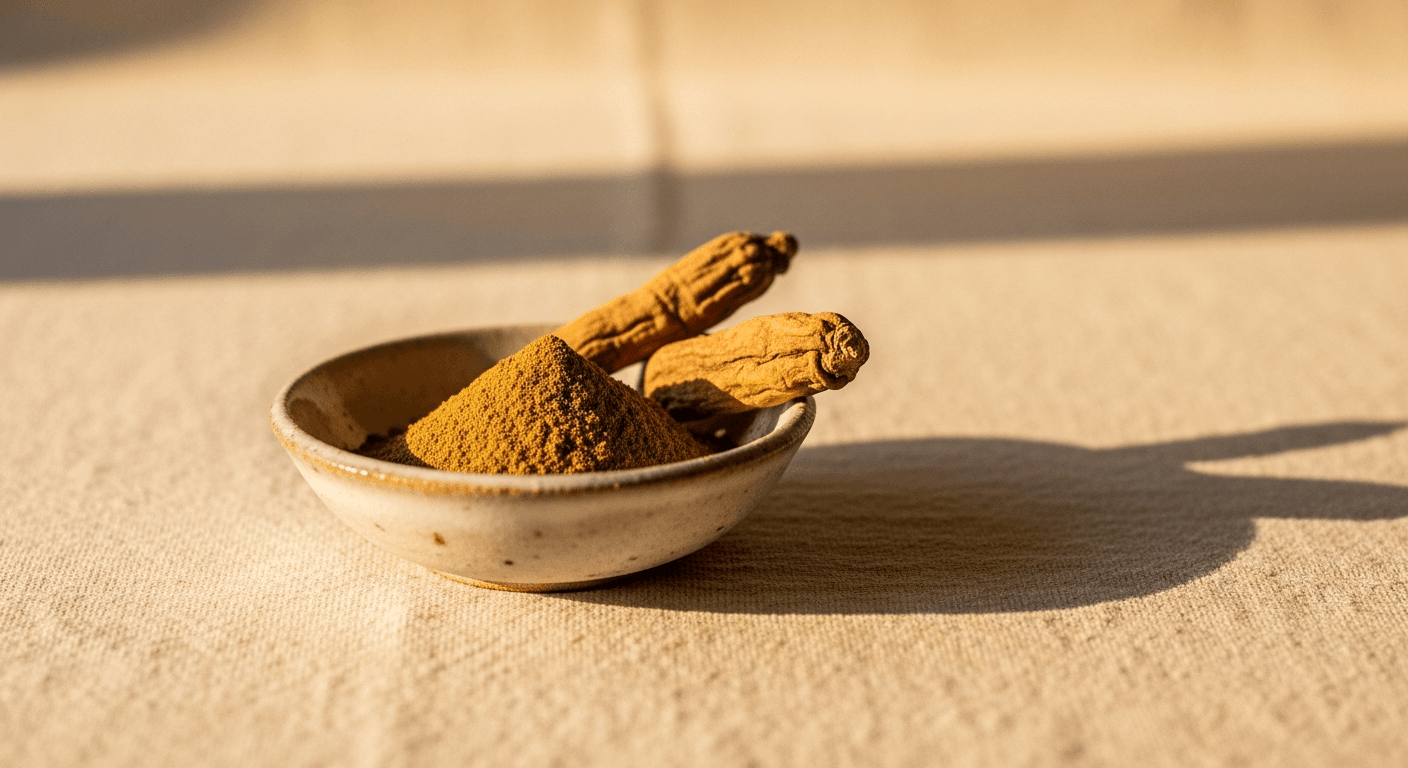
Cortisol has become one of wellness culture's favorite villains. And while the conversation around it has sometimes drifted into oversimplification, there's genuine science worth understanding, especially if you're living with the kind of low-grade, relentless stress that modern life tends to produce. Ashwagandha sits at the center of that conversation, and the research is more nuanced than most supplement labels would have you believe.
Here's what the current evidence actually supports, and where it still falls short.
What Ashwagandha Is and Why It's Getting Research Attention
Ashwagandha (Withania somnifera) is an adaptogenic herb that has been used in Ayurvedic medicine for thousands of years. Adaptogens are broadly defined as substances that help the body resist physical and psychological stress without causing major side effects. That category covers a wide range of plants, but ashwagandha has attracted more rigorous clinical interest than most.
The active compounds most studied are withanolides, a group of steroidal lactones concentrated in the root. These compounds appear to interact with multiple biological pathways involved in stress regulation, inflammation, and hormonal signaling. The herb's rise in mainstream wellness isn't purely trend-driven. It's backed by a growing body of randomized controlled trials, most of which have focused on cortisol, the body's primary stress hormone.
How It Interacts With Your Stress Response System
To understand why ashwagandha might matter for everyday stress, you need to understand the hypothalamic-pituitary-adrenal axis, commonly called the HPA axis. This is the body's central command system for stress response. When you perceive a threat, whether a deadline, a difficult conversation, or a sleepless night, the HPA axis triggers a cascade that ends with cortisol being released from the adrenal glands.
Short-term cortisol spikes are normal and necessary. The problem arises when stress is chronic. Persistently elevated cortisol is associated with disrupted sleep, increased appetite, cognitive fog, mood instability, and over time, a broader hormonal imbalance. As chronic stress quietly wrecks your fitness gains, the downstream effects extend well beyond the gym.
Ashwagandha appears to work by modulating HPA axis activity. Several double-blind, placebo-controlled trials have found that supplementation with standardized ashwagandha root extract significantly reduces serum cortisol levels in adults reporting chronic stress. One frequently cited 60-day trial found reductions in cortisol of approximately 27 to 30 percent in the supplementation group compared to placebo. Other studies have corroborated these findings, though effect sizes vary based on the population studied, the extract used, and the dose administered.
What the Research Actually Shows for Non-Athletes
Much of the earlier ashwagandha research was conducted in athletic populations, where the focus was on recovery, testosterone, and physical performance. The wellness picture looks somewhat different and arguably more relevant to the majority of people considering the supplement.
Studies targeting adults with self-reported chronic stress and no elite athletic background have shown meaningful improvements in perceived stress scores, sleep quality, and energy levels alongside cortisol reductions. One 2019 study published in Medicine found that 240 mg daily of a standardized ashwagandha root extract significantly reduced morning cortisol, improved sleep onset, and lowered scores on validated stress assessment tools compared to placebo over eight weeks.
A 2021 trial examined the effects specifically in adults experiencing work-related stress and burnout. Participants taking ashwagandha reported greater reductions in anxiety and fatigue, and blood markers of cortisol aligned with those subjective improvements. These aren't dramatic transformations, but they're statistically significant signals that the herb does something real in this population.
It's also worth noting that ashwagandha's effects on energy don't appear to be stimulant-driven. It doesn't appear to spike alertness artificially. Instead, the proposed mechanism is that by reducing the burden of HPA axis overactivation, the body's natural energy regulation becomes less dysregulated. That distinction matters if you're sensitive to stimulants or already dealing with poor sleep. And if poor sleep is part of your stress picture, it's worth understanding how sleep disruption carries risks that extend well beyond fatigue.
Dosage, Timing, and Form: This Is Where Most People Go Wrong
The supplement market is flooded with ashwagandha products, and they are not equivalent. The clinical research has largely been conducted on specific standardized extracts, most notably KSM-66 and Sensoril, both of which are branded, patented root extracts with defined withanolide concentrations. Generic ashwagandha root powder sold in bulk or in underdosed blends is not what the trials tested.
Here's what the research-supported parameters tend to look like:
- Dose: Most effective trials used between 300 mg and 600 mg of standardized root extract daily. Some protocols split this into two doses; others used a single daily dose.
- Duration: Benefits in cortisol and stress markers typically emerge after four to eight weeks of consistent use. Don't expect week-one results.
- Timing: Some evidence supports taking ashwagandha in the evening given its potential to improve sleep quality, though morning or split dosing is also used in trials with positive results.
- Form: Root extract standardized to at least 5 percent withanolides is the target. Whole root powder is less concentrated and less studied for these specific outcomes.
- With food: Most protocols recommend taking it with meals to reduce the chance of gastrointestinal discomfort, which is the most commonly reported side effect.
Price is also a signal, though not a perfect one. Quality standardized extracts in standalone supplements typically run $25 to $50 per month in the US market. Products sitting well below that threshold often use lower-grade ingredients or insufficient doses. That said, expensive doesn't automatically mean effective. Read the label and verify the extract type and withanolide percentage.
Hormonal Balance Beyond Cortisol
Cortisol doesn't operate in isolation. Chronically elevated cortisol suppresses thyroid function, disrupts sex hormone production, and interferes with insulin sensitivity. This is why people under sustained stress often report a cluster of symptoms: low libido, irregular cycles, stubborn weight gain, and persistent exhaustion, even when they think they're doing everything right.
Ashwagandha's effects on hormonal balance beyond cortisol are less conclusively proven but worth acknowledging. Some trials have found modest improvements in thyroid hormone markers (particularly T3 and T4) in adults with subclinical thyroid dysfunction. A few studies in women have noted improvements in sexual function and hormone-related wellbeing. These findings are preliminary and shouldn't be used to position ashwagandha as a hormonal treatment, but they're consistent with what you'd expect from a compound that reduces HPA axis overactivation.
For women specifically, the intersection of stress hormones and broader health is significant. Understanding how body composition and metabolic health interact is increasingly relevant context. Research into proteins like FABP-4 and its links between body fat and disease risk illustrates how metabolic stress and hormonal dysregulation can have consequences that reach further than mood and energy.
What Ashwagandha Cannot Do
No supplement eliminates chronic stress. If the structural causes of your stress, whether they're work, sleep deprivation, poor nutrition, or a sedentary lifestyle, remain unchanged, ashwagandha will not compensate for them. The clinical trials that show positive results typically acknowledge that participants made no major lifestyle changes during the study period, which is actually useful context. The herb appears to have an independent effect. But that effect is modest, and it's amplified or diminished by the environment you create around it.
Sleep is the single most powerful lever for cortisol regulation. Movement matters too. Even consistent low-intensity activity like walking has measurable effects on HPA axis function. Research on daily step counts and their impact on mortality risk continues to reinforce that consistent movement, not heroic exercise, is what protects long-term health. And resistance training, particularly for women navigating hormonal changes, carries its own benefits for metabolic and hormonal health that no supplement can replicate. There are still too many persistent myths around strength training for women that prevent people from accessing one of the most effective tools available to them.
Breathwork, mindfulness, and structured rest also directly influence HPA axis activity. Ashwagandha works best as one layer in a stack of habits, not a shortcut around them.
Who Should Be Cautious
Ashwagandha is generally well-tolerated in healthy adults, but it's not appropriate for everyone. Pregnant women should avoid it. People with autoimmune conditions, thyroid disorders under active treatment, or those taking immunosuppressants or sedatives should consult a healthcare provider before use. Rare cases of liver injury have been reported in the literature, though causality hasn't always been clearly established. The signal is enough to warrant caution with very high doses or prolonged use without monitoring.
It's also not a compound to layer carelessly into a long list of supplements. More is not better, and combination products that include ashwagandha alongside multiple other adaptogens haven't been tested with the same rigor as standalone extracts.
The Honest Bottom Line
Ashwagandha is one of the better-evidenced supplements in the wellness space. The research supporting its effects on cortisol, perceived stress, and energy in non-athletic adults experiencing chronic everyday stress is credible and growing. But it's not a treatment, and it's not magic.
If you're considering it, choose a standardized extract (KSM-66 or Sensoril), use an evidence-supported dose of 300 to 600 mg daily, give it at least six to eight weeks, and treat it as a complement to the foundational habits that matter most. Sleep. Movement. Nutrition. Stress management practices that address root causes rather than symptoms. Ashwagandha can support those efforts. It can't replace them.