
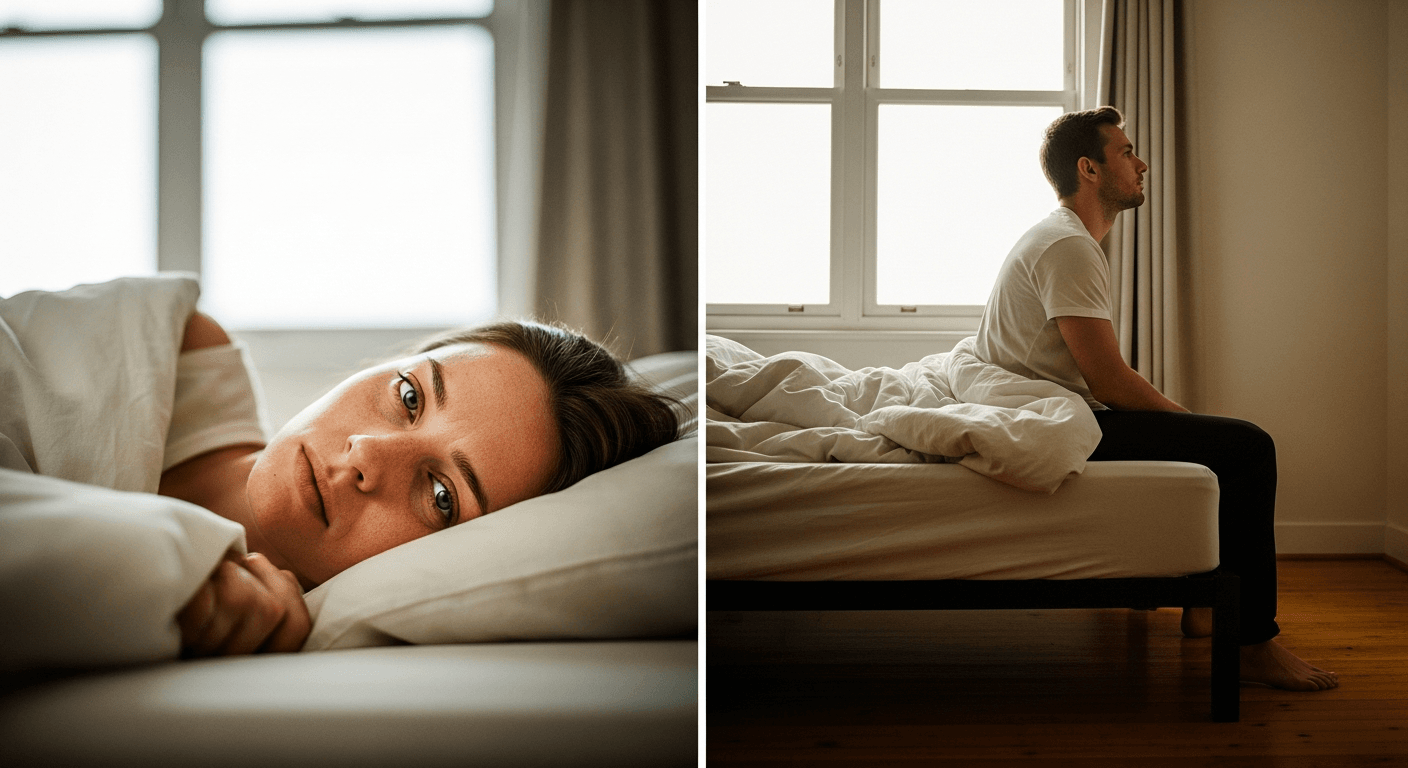
Here's a finding that's harder to explain than it first appears: women sleep more hours than men on average, yet men consistently report waking up feeling more rested. If total sleep time were the whole story, the numbers would point the other direction. They don't. And that gap tells you almost everything about why obsessing over hours alone is the wrong way to think about sleep.
New 2026 survey data is bringing this paradox into sharper focus, and the implications stretch well beyond bedtime habits. Sleep research is quietly becoming one of the most sophisticated areas of health science, with AI now entering the picture in ways that could reframe how you understand your own recovery entirely.
Where Americans Actually Stand on Sleep in 2026
The average American reports sleeping around seven hours per night in 2026. That figure sits right at the lower boundary of what most health authorities recommend for adults, which is typically seven to nine hours. On paper, that sounds adequate. In practice, a significant portion of the population is still falling short of even that baseline.
Surveys suggest that roughly one in three adults regularly gets fewer than seven hours, a number that has remained stubbornly consistent despite years of public messaging around sleep hygiene. The problem isn't that people don't know sleep matters. It's that knowing and doing are different things, particularly when work schedules, caregiving responsibilities, and screen habits all compete with the hours available for rest.
For a fuller breakdown of what current research says about optimal sleep duration by age and lifestyle, How Much Sleep Do You Actually Need in 2026? is worth reading alongside this piece.
The Paradox: More Hours, Less Rest
Here's where the data gets genuinely interesting. Women in the United States sleep an average of roughly 11 minutes more per night than men. Across a week, that adds up. Across a year, it's meaningful. Yet in self-reported measures of sleep quality, daytime alertness, and feeling refreshed after waking, men consistently score higher.
This isn't a small or statistically marginal finding. It appears across multiple surveys and population studies, and researchers have identified several converging explanations for why it happens.
First, women are significantly more likely to experience insomnia. Estimates suggest women face insomnia at roughly 1.5 times the rate of men, a disparity that's tied to hormonal fluctuation across the menstrual cycle, pregnancy, perimenopause, and menopause. These hormonal shifts directly affect the body's ability to initiate and maintain sleep, meaning the hours spent in bed don't always translate to hours of restorative rest.
Second, sleep architecture differs by sex. Women spend more time in lighter sleep stages and experience more frequent nighttime awakenings. Men tend to enter and stay in deeper slow-wave sleep for longer stretches, which is the phase most associated with physical recovery, immune function, and feeling genuinely rested the next morning.
Third, the mental load factor is hard to quantify but impossible to ignore. Research consistently finds that women report higher rates of pre-sleep cognitive arousal, meaning they're more likely to lie awake processing stress, planning, or worrying. That rumination fragments sleep even when the total duration looks fine on a tracker.
Why Quality Beats Quantity Every Time
The quality-over-quantity argument isn't new in wellness, but sleep science is making it harder to dismiss. Two people can both log seven hours and have profoundly different physiological outcomes depending on how much of that time was spent in slow-wave and REM sleep versus lighter, more fragmented stages.
Slow-wave sleep is where your body does the bulk of its physical repair work. Growth hormone secretion peaks during this phase. Muscle tissue rebuilds. The lymphatic system clears metabolic waste from the brain. If you're consistently shortchanged on this stage, it doesn't matter that your total hours look acceptable. You're not getting what those hours are supposed to provide.
REM sleep, on the other hand, handles memory consolidation and emotional regulation. Disrupted REM is associated with increased anxiety, reduced stress resilience, and impaired decision-making the following day. This is particularly relevant if you're using exercise as a recovery and stress management tool, since poor REM undermines the cognitive and emotional benefits of physical training just as much as it affects the physical ones.
Sleep and stress form a two-way relationship that's worth understanding clearly. Chronic stress degrades sleep quality, and poor sleep amplifies stress sensitivity. If you're looking for a practical framework to address that cycle from the stress side, The 4 A's of Stress Management: A Practical Framework offers a structured approach that holds up under scrutiny.
The Role of Exercise in the Sleep Equation
Physical activity is one of the most well-supported behavioral interventions for sleep quality, particularly for slow-wave sleep. Regular aerobic exercise has been shown to increase the proportion of time spent in deep sleep stages and reduce the time it takes to fall asleep. Resistance training produces similar benefits, with some evidence suggesting it has a particular advantage for older adults whose deep sleep naturally decreases with age.
The timing question is more nuanced than it used to be presented. The older advice to avoid exercise in the evening has largely been walked back. Moderate exercise two to three hours before bed doesn't impair sleep for most people, and for some it actively improves it. High-intensity training very close to bedtime can delay sleep onset for some individuals, but this varies significantly by person.
What matters more than timing is consistency. Regular exercisers report better sleep quality across virtually every population studied, regardless of age, sex, or fitness level. If you're building a recovery-oriented training routine, 5 Free Ways to Recover From Running That Actually Work covers evidence-based recovery practices that support both physical repair and sleep quality without requiring expensive equipment or supplements.
There's also growing evidence that workout variety contributes to long-term health outcomes in ways that extend beyond fitness itself. Mixing Up Your Workouts Could Help You Live Longer explores what the research says about diversifying your training, an approach that may also help prevent the overtraining and physical stress that can disrupt sleep patterns.
AI, Sleep Data, and the Shift Toward Predictive Wellness
The most significant development in sleep science in 2026 isn't a new supplement or mattress technology. It's the application of artificial intelligence to sleep data at scale.
Consumer wearables have been collecting sleep data for years, but the analysis layer has historically been crude. Basic trackers could tell you roughly how long you spent in each sleep stage. What AI is beginning to do is something considerably more ambitious: identify patterns in that data that correlate with disease risk, years before symptoms appear.
Several research programs are now using machine learning models trained on large sleep datasets to flag early indicators of conditions including cardiovascular disease, type 2 diabetes, and neurodegenerative disorders. The logic is straightforward. Sleep disruption is not just a symptom of poor health. It's also a contributing cause, and the specific patterns of disruption appear to carry diagnostic signal that standard clinical assessments have historically missed.
This is shifting how wellness culture frames sleep. The conversation is moving away from "are you getting enough hours?" toward "what is your sleep data actually telling you about your long-term health trajectory?" That's a meaningful reframe. It positions sleep not as a passive recovery activity but as an active data stream with clinical implications.
This mirrors what's happening in nutrition science, where personalization based on biological data is also accelerating. Epigenetics and Supplements: How Personal Can Nutrition Get? looks at how individual biological profiles are beginning to shape supplement and nutrition recommendations in ways that population-level averages simply can't.
What You Can Actually Do With This Information
If you're a woman reading this, the data isn't a verdict. It's context. Understanding that hormonal cycles affect sleep architecture means you can track your own patterns more intelligently, notice when your sleep quality changes across your cycle, and avoid the trap of assuming that logging seven hours means you've done the job.
If you're a man reading this, the fact that you may feel more rested on average doesn't mean your sleep is optimized. Men are statistically more likely to have undiagnosed sleep apnea, a condition that severely disrupts sleep quality without necessarily making you feel tired in the obvious ways. Snoring, morning headaches, and difficulty concentrating are worth taking seriously rather than normalizing.
For both, the practical priorities are similar:
- Protect deep sleep by keeping a consistent sleep schedule, even on weekends. Irregular sleep timing fragments slow-wave stages more than most people realize.
- Manage pre-sleep stress actively. Cognitive arousal before bed is one of the most common drivers of fragmented sleep and is addressable with consistent wind-down routines.
- Use exercise strategically. Regular physical activity is one of the few lifestyle interventions with strong, consistent evidence for improving sleep architecture, not just duration.
- Take your wearable data seriously but not literally. Trends matter more than single nights. If your deep sleep is consistently low, that's a signal worth investigating, not averaging away.
The 2026 data makes one thing clear: sleep duration was never the right scoreboard. The hours you log are a starting point. What happens inside those hours is the actual question.