
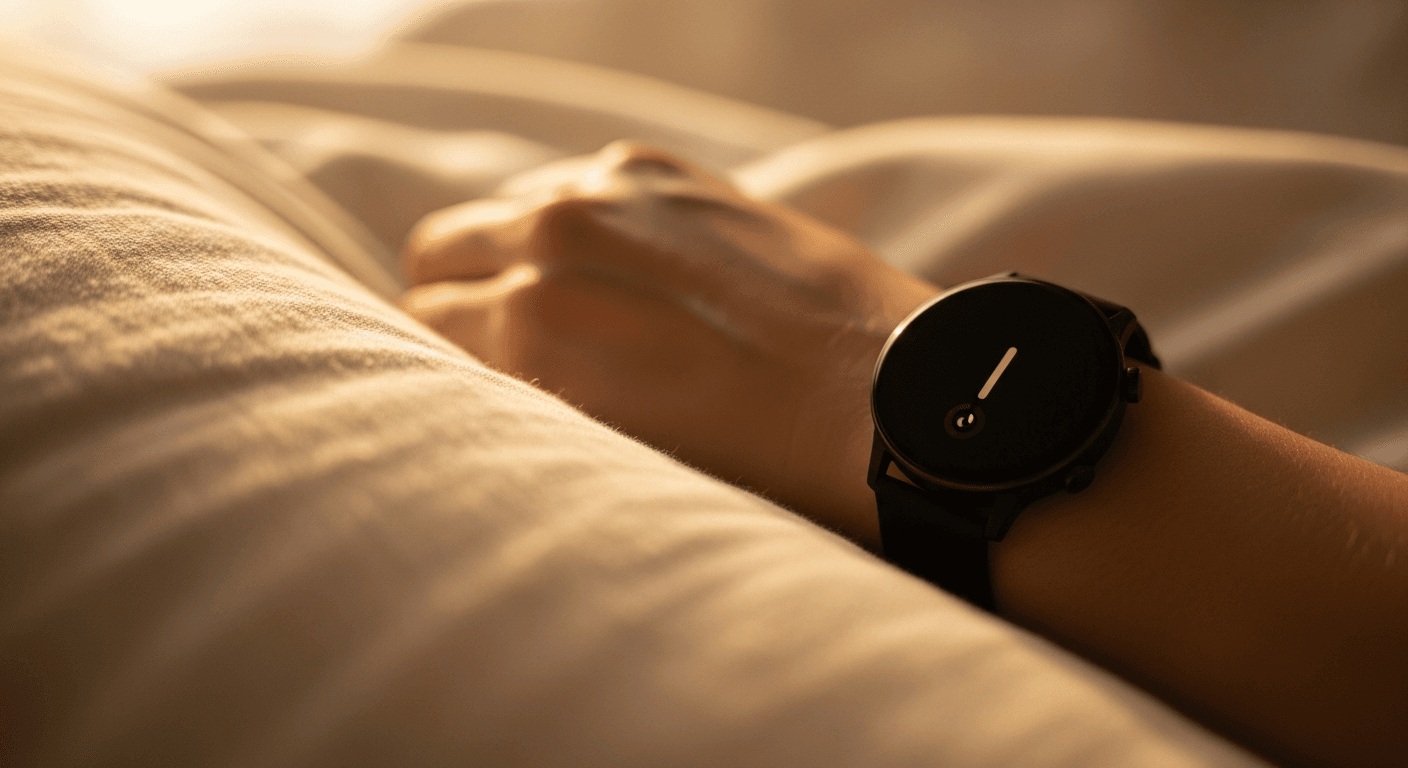
AI models trained on sleep study data can predict cardiovascular and neurological disease risk by analyzing physiological signals recorded during sleep. That's the conclusion of a 2026 Stanford University study. The practical implications are closer than they might seem.
How sleep reveals your deep health state
During sleep, the body generates physiological signals the conscious brain can't perceive. Stanford researchers found that fine features of respiratory cycles — specifically airflow pauses — track hippocampal network dynamics, microarousals, and noradrenergic fluctuations that define sleep architecture.
These signals, processed by AI models, reveal patterns associated with cardiovascular and neurological disease well before clinical symptoms appear. Sleep becomes a predictive biomarker, not just a recovery metric.
What this means for your wearable
Consumer wearables — Oura, WHOOP, Fitbit, Apple Watch — already capture parameters directly tied to these signals: heart rate variability (HRV), blood oxygen (SpO2), deep sleep stages. This data is becoming increasingly clinically meaningful.
Today's wearable algorithms remain recovery indicators, not diagnostic tools. But the Stanford research points clearly in one direction: the next generation of wearables won't just tell you if you recovered well. They'll flag early cardiovascular and neurological patterns worth discussing with your doctor.
The melatonin signal for night-shift workers
A May 2026 study adds a complementary finding. Melatonin supplementation appears to help night-shift workers boost their body's DNA repair processes during sleep — potentially offsetting some of the oxidative damage linked to working overnight.
Disrupted sleep biology produces real cellular damage. Melatonin doesn't fully reverse it, but the data suggests it attenuates the DNA repair deficit during daytime sleep for night workers. For a population that consistently shows elevated cardiovascular and metabolic disease risk, that's a meaningful signal.
What you can act on now
- Prioritize 7 to 9 hours of quality sleep — duration and architecture both matter
- Track HRV and SpO2 trends over weeks, not individual nights — the pattern is the signal
- If you work night shifts: melatonin is one of the few supplementations with real data behind it for mitigating biological night-work impact
Sleep isn't passive downtime. It's where the body does the work you can't do awake — and where technology is finally starting to pay attention.