
Most people finish a hard workout, reach for a protein shake, and call it recovery. That's not wrong, exactly. But it's incomplete. Protein synthesis is only one piece of a much larger biological process, and relying on a single supplement means you're leaving real recovery gains on the table.
A registered dietitian's approach to post-exercise nutrition looks beyond macros. It considers inflammation pathways, glycogen resynthesis, electrolyte balance, and oxidative stress. The good news: whole foods handle all of that simultaneously, often better than any supplement stack. Here's what the science actually supports.
Why Recovery Nutrition Is More Than Protein
When you exercise hard, your muscles experience micro-tears, glycogen depletion, and an acute inflammatory response. All three need to be addressed for you to come back stronger. Protein handles the repair side. But inflammation, if left unchecked, prolongs soreness and delays your next quality training session. And without adequate carbohydrate, your muscles stay fuel-depleted no matter how much protein you consume.
That's why the most effective recovery approach is food-first and broad-spectrum. Specific compounds found in whole foods, including polyphenols, omega-3 fatty acids, and potassium, work through distinct mechanisms that protein supplements simply don't address. If you're serious about training consistently, 5 Simple Recovery Habits That Actually Work is worth reading alongside this guide for a full-picture approach.
Tart Cherries: The Antioxidant You're Probably Not Using
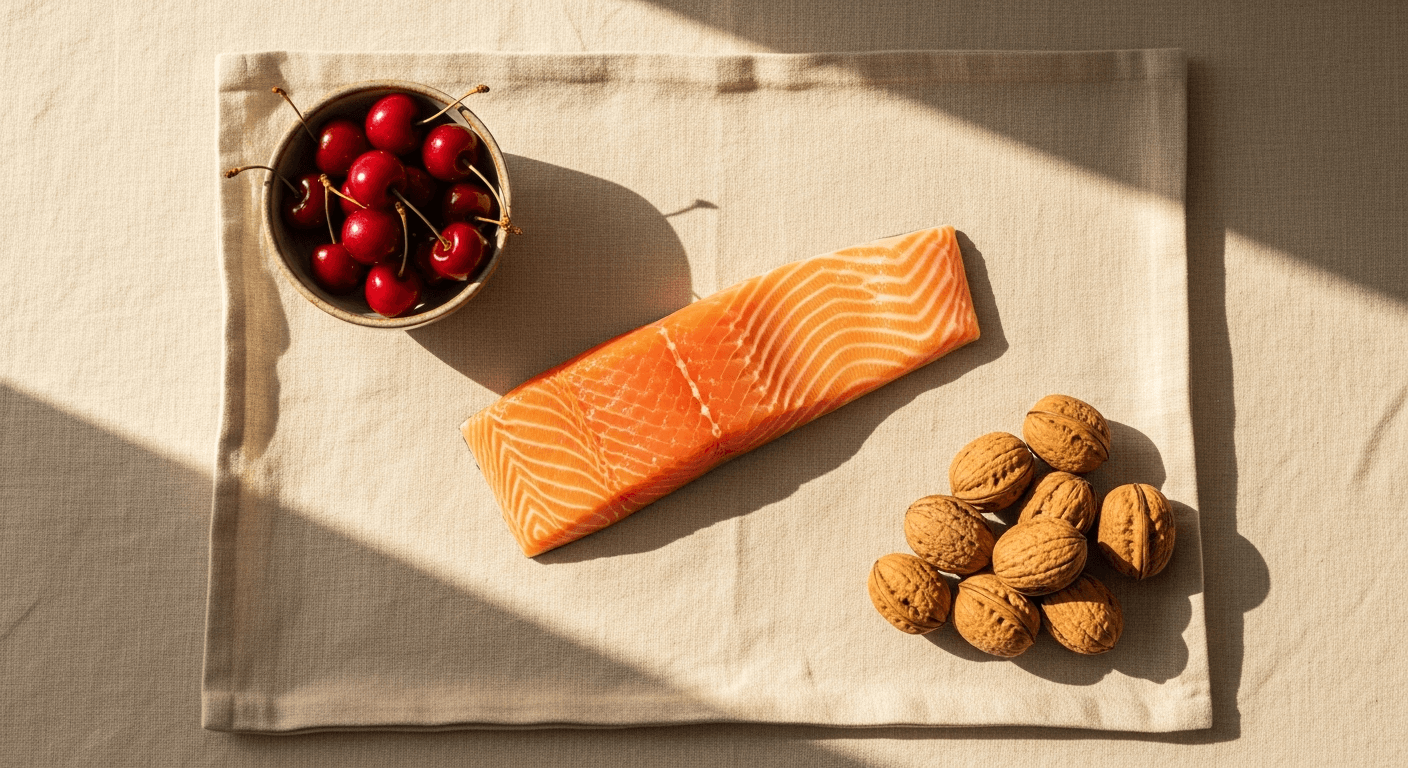
Montmorency tart cherries have become one of the most studied foods in sports nutrition, and the evidence is surprisingly strong. They contain a high concentration of anthocyanins and other polyphenolic compounds that act on multiple inflammatory pathways simultaneously.
Published research consistently shows that tart cherry juice or concentrate reduces delayed-onset muscle soreness (DOMS), accelerates strength recovery after intense exercise, and lowers circulating markers of inflammation like C-reactive protein and interleukin-6. In several trials, athletes consuming tart cherry products before and after resistance or endurance exercise recovered measurably faster than control groups.
The practical application is straightforward. Eight to twelve ounces of 100% tart cherry juice, or a concentrated supplement form, consumed in the 48 hours surrounding a hard session appears to be the effective window. Fresh Montmorency cherries work too, though they're highly seasonal. Frozen tart cherries are a reliable year-round option that retains most of the bioactive compounds.
One caveat worth mentioning: the supplement market is inconsistent. If you opt for capsules or powders over whole fruit or juice, what's actually on a supplement label isn't always what's in the product, so sourcing from reputable, third-party-tested brands matters.
Salmon: Omega-3s That Work at the Cellular Level
Dietary fat has a complicated history in sports nutrition. For decades it was minimized in favor of carbohydrates and protein. But omega-3 fatty acids, specifically EPA and DHA found in fatty fish like salmon, have an increasingly well-documented role in reducing post-exercise inflammation.
Here's how it works at the cellular level. EPA and DHA are incorporated into muscle cell membranes and compete with arachidonic acid, which is the precursor to pro-inflammatory eicosanoids. Higher omega-3 status essentially shifts your cell membranes toward an anti-inflammatory baseline. Over time, this means your body's acute inflammatory response after exercise resolves faster.
Studies in both trained athletes and recreational exercisers show that regular omega-3 intake, typically 2 to 3 grams of EPA plus DHA daily from food or supplements, reduces muscle soreness, attenuates strength loss following eccentric exercise, and may support muscle protein synthesis in older adults. A three-to-four ounce serving of wild Atlantic or sockeye salmon delivers roughly 1.5 to 2 grams of combined EPA and DHA, making it one of the most efficient whole-food omega-3 sources available.
Sardines, mackerel, and trout are strong alternatives if salmon isn't accessible or affordable in your area. All three provide similar fatty acid profiles at generally lower price points.
Potatoes: The Most Underrated Recovery Food
Potatoes have spent years being dismissed by fitness culture as a "bad carb." That reputation is not supported by evidence, and it costs athletes a genuinely excellent recovery food.
After intense exercise, your primary carbohydrate goal is glycogen resynthesis. Your muscles are essentially a depleted fuel tank, and carbohydrates are what refill it. Potatoes offer a high glycemic load in a whole-food format, meaning they deliver glucose rapidly to muscle tissue without the processing, additives, or cost of most sports nutrition products.
What separates potatoes from refined carbohydrate sources is the micronutrient profile. A medium baked potato with skin provides around 900 milligrams of potassium, roughly 20% more than a banana. Potassium is critical for electrolyte balance, muscle contraction, and fluid retention in the post-workout period. Sodium often gets more attention in sports nutrition discussions, but potassium is equally essential, particularly after prolonged or high-sweat sessions. For a deeper look at electrolyte dynamics around training, understanding what your body actually needs from electrolytes clarifies why potassium belongs in the conversation.
Sweet potatoes offer a similar profile with additional beta-carotene and slightly lower glycemic impact. Both are solid choices depending on your preference and your timing relative to your next session.
Greek Yogurt: Two Recovery Macros in One Bowl
Greek yogurt earns its place on this list by addressing two recovery priorities at once. A standard serving, around 170 to 200 grams, delivers 15 to 20 grams of high-quality protein alongside 8 to 12 grams of carbohydrates, depending on the brand and whether it's plain or flavored.
The protein in Greek yogurt is predominantly casein, which digests more slowly than whey. That slower release may actually be advantageous in a recovery context, particularly if you're eating it as a post-workout meal rather than immediately post-exercise. Research on protein timing suggests that sustained amino acid availability over several hours supports muscle protein synthesis more effectively than a single rapid spike.
Greek yogurt also contains calcium, phosphorus, and in live-culture versions, probiotics that support gut integrity. There's growing research interest in the gut-muscle axis, with early evidence suggesting that gut microbiome health influences both nutrient absorption and systemic inflammation, two factors directly relevant to recovery quality.
Pair it with frozen tart cherries or a handful of berries and you've built a recovery snack that covers antioxidants, protein, carbohydrates, and beneficial bacteria in a single bowl.
Why Whole Foods Consistently Outperform Single-Ingredient Supplements
The supplement industry is built on the idea that you can isolate a beneficial compound, concentrate it, and deliver superior results. For a small number of well-researched products like creatine monohydrate, that logic holds. For most recovery products, it doesn't.
Whole foods contain compounds that work synergistically. The polyphenols in tart cherries don't operate in isolation. They interact with other antioxidants, fiber, and micronutrients in ways that research is still mapping. The same is true for salmon's omega-3s, which come packaged with vitamin D, selenium, and complete protein. Isolating EPA and DHA in a capsule removes the broader nutritional context.
This doesn't mean supplements are useless. It means they work best as additions to a strong dietary foundation, not as replacements for it. If you're curious about building that foundation systematically, the diet changes that actually move the needle tend to be less dramatic than most people expect.
There's also a consistency argument. Whole foods are repeatable, affordable, and don't carry the labeling inconsistencies that affect many supplements. Your nutritional strategy should be something you can sustain across weeks and months, not just optimize around race day or a single hard block of training.
Putting It Together: A Practical Recovery Template
You don't need to eat all four foods every day. What you're building is a rotation of recovery-oriented meals that covers the key bases: anti-inflammatory compounds, complete protein, fast-absorbing carbohydrates, and electrolytes. Here's a simple structure to start from:
- Within 30 to 60 minutes post-workout: Greek yogurt with tart cherry juice or frozen tart cherries mixed in.
- Recovery meal, 1 to 2 hours later: Baked salmon with roasted potatoes and a leafy green side for additional antioxidants.
- On non-training days: Continue prioritizing omega-3s and colorful produce to maintain the anti-inflammatory baseline that makes your training days more productive.
Recovery also extends beyond nutrition. Sleep quality directly affects muscle repair and hormone regulation, and it's one of the most commonly neglected variables in athletic performance. If you're optimizing your diet but sleeping poorly, you're working against yourself.
Nutrition is one input. Training structure, sleep, stress management, and progressive programming are the others. If you're unsure whether your current approach to training is actually matching your recovery capacity, recognizing when you need professional coaching support can prevent months of stalled progress.
The bottom line: recovery nutrition is not complicated, but it does require more than one ingredient. Build your meals around foods that do multiple jobs at once, prioritize consistency over optimization, and treat supplementation as a complement rather than a foundation.