
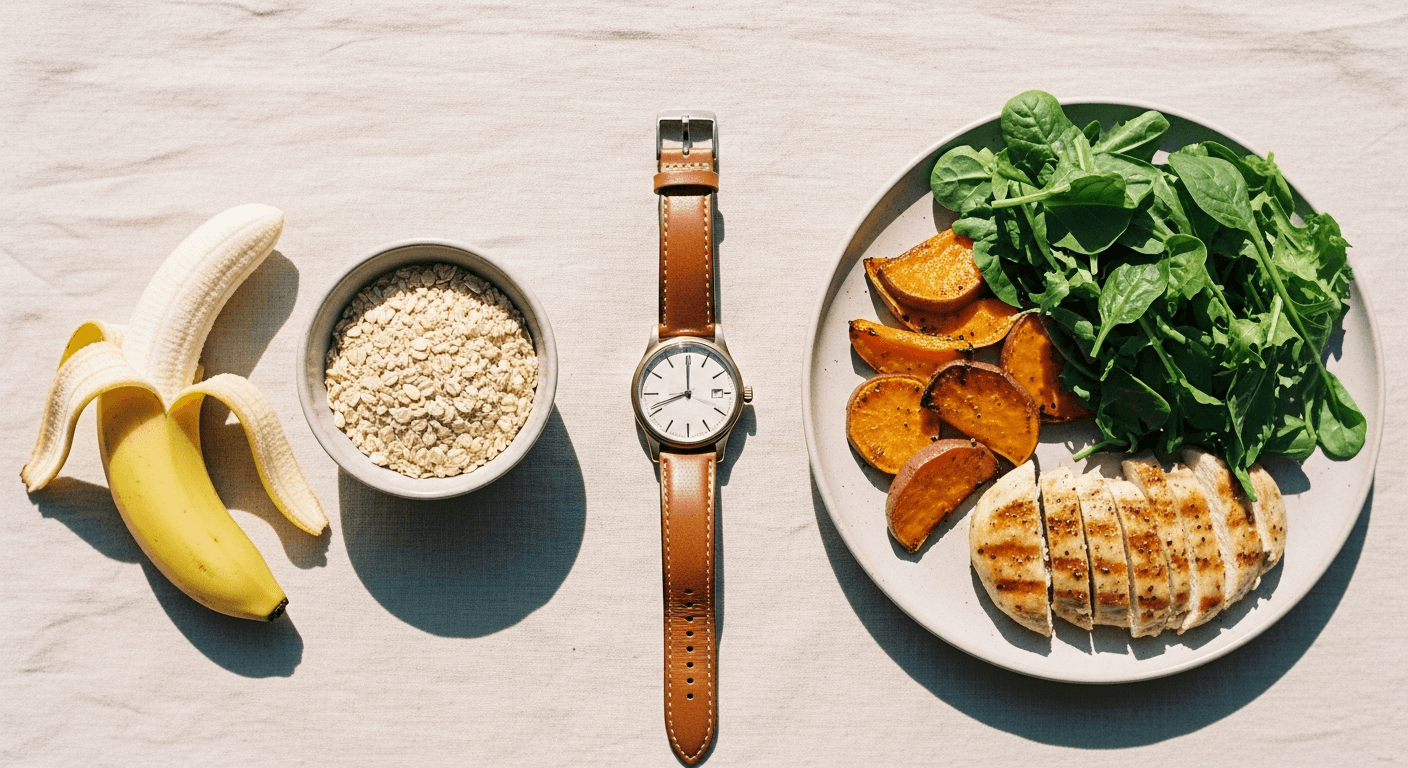
Scroll through any fitness forum and you'll find contradictory advice about meal timing. Eat before. Don't eat before. The anabolic window is everything. The anabolic window is a myth. Most of it is noise, and sorting through it without a framework wastes both your time and your results.
Here's what the evidence actually supports, broken down by workout type, duration, and intensity. No guesswork. Just clear decision rules you can apply starting today.
Why Timing Matters (But Not in the Way You Think)
Meal timing isn't the most important nutrition variable. Total calorie intake, protein distribution across the day, and food quality matter more. But once those foundations are in place, timing becomes a legitimate lever, especially for athletes training more than four days a week or pushing into higher intensities.
The goal of pre- and post-workout nutrition is simple: give your body the fuel it needs to perform, then give it the materials it needs to recover. Getting that sequencing right reduces fatigue during training, limits muscle protein breakdown, and supports adaptation over time.
Pre-Workout Nutrition: What to Eat and When
The 60 to 90 minute window before training is your most useful pre-workout nutritional zone. Within that range, your priority is easily digestible carbohydrates. Carbs are your muscles' preferred fuel source during moderate to high-intensity work, and having them available in your bloodstream and glycogen stores directly affects how hard and how long you can train.
Good pre-workout carbohydrate sources include white rice, oats, bananas, toast, or low-fiber fruit. These digest quickly and won't sit heavily in your stomach. High-fiber vegetables, legumes, and whole grain products with significant fat content slow gastric emptying and are better timed earlier in the day.
Protein plays a secondary role pre-workout for sessions under 90 minutes. A small amount, roughly 15 to 25 grams, helps limit muscle breakdown and can improve muscle protein synthesis post-exercise, but it's not the star of this meal. Fat should be minimal before training because it slows digestion and can cause discomfort at higher intensities.
A practical pre-workout meal might look like this:
- A banana with a small serving of Greek yogurt
- Two slices of toast with a thin layer of nut butter and a drizzle of honey
- A bowl of oatmeal with a handful of berries and a scoop of protein powder stirred in
For sessions longer than 90 minutes, such as long-distance runs, cycling, or extended strength circuits, the nutritional calculus shifts. Carbohydrate intake becomes critical both before and during the session. In those cases, bump your pre-workout meal to two hours out, increase carbohydrate volume, and consider a mid-session carbohydrate source like a sports drink or a piece of fruit.
The Hydration Variable Most Athletes Underestimate
Here's a finding that surprises most people: for recreational athletes, hydration and electrolyte status going into a workout has a larger impact on performance than the macronutrient split of the pre-workout meal. Even mild dehydration, defined as a 1 to 2 percent loss in body weight, measurably reduces endurance output, strength, and cognitive function during exercise.
Electrolytes, particularly sodium, potassium, and magnesium, govern fluid retention and muscle contraction. A pre-workout meal that contains sodium (something as simple as salted rice or a small portion of lean protein with seasoning) can improve fluid absorption during and after training compared to eating plain, unseasoned food.
The practical rule: drink 16 to 20 ounces of water in the two hours before training and include at least a small amount of sodium in your pre-workout meal. If you train in heat, sweat heavily, or exercise in the morning after overnight fasting, add a pinch of salt to your meal or use a low-sugar electrolyte drink. This single adjustment often produces more noticeable performance improvements than switching protein sources or adjusting carbohydrate ratios.
The Post-Workout Window: Wider Than You've Been Told
The idea of a 30-minute anabolic window, after which your gains disappear, has been walked back significantly by sports nutrition research. The actual window for post-workout protein synthesis elevation is closer to two hours, and for athletes who ate a solid pre-workout meal, it may extend further because muscle protein synthesis is already elevated going into the session.
This means you don't need to choke down a protein shake in the locker room parking lot. If you ate well before training and you're home within an hour, a full meal is a completely effective recovery option. The urgency only becomes real when you trained fasted, when your pre-workout meal was minimal, or when you're doing two sessions in the same day.
What matters more than hitting a precise post-workout minute is how your protein is distributed across the full day. Research consistently shows that spreading protein intake across three to four meals of 25 to 40 grams each produces better muscle protein synthesis outcomes than consuming the same total amount concentrated in one or two sittings. If you're hitting your daily protein target and eating within two hours of training, you're covering the bases that actually move the needle.
For post-workout meals, include both protein and carbohydrates. The carbohydrates help restore glycogen and create an insulin response that supports protein uptake. A ratio of roughly 3:1 or 4:1 carbohydrates to protein works well for endurance athletes. For strength training, a more even split around 2:1 is appropriate. If you're exploring convenient protein sources, it's worth understanding what the science says about format and absorption. Protein shots that promise 24g in one sip have different absorption characteristics than whole food sources, and the evidence on their efficiency is worth reviewing before making them a habit.
Adjusting for Workout Type
Not all sessions have the same nutritional demands, and treating every workout the same is one of the most common timing mistakes everyday athletes make.
Strength training: Pre-workout carbohydrates matter, but not as much as during cardio. Glycogen depletion is real in hypertrophy-focused sessions with high volume, but shorter, heavier strength work draws more from phosphocreatine stores. Post-workout protein is the priority here. Don't skip it or push it past two hours if you trained fasted.
Cardio and endurance: Carbohydrate dependence increases with intensity and duration. For low-intensity steady-state cardio under 45 minutes, fasted training is generally well-tolerated. For anything above that, pre-workout carbs matter. There's also a compelling case for strategic cardio programming as part of a broader fitness plan. Cardio doesn't kill muscle gains when timed and fueled correctly, and the nutritional strategy here differs meaningfully from a pure strength approach.
Short, high-intensity sessions: HIIT, sprint intervals, and circuit-style training spike demand quickly. Even a 20-minute HIIT session can create meaningful glycogen depletion and elevate muscle protein breakdown. Don't underestimate these sessions nutritionally. Pre-workout carbs and a solid post-workout meal are both warranted. Research on short exercise bouts building real muscle reinforces that duration alone doesn't determine nutritional need. Intensity does.
Evening training: If you train within two hours of bed, prioritize a lighter, protein-forward post-workout meal. A heavy carbohydrate load late at night can disrupt sleep quality, and poor sleep undermines recovery more than any timing variable. Recovery is a full-system issue, and sleep is central to it.
Special Considerations for Athletes Over 35
Protein timing becomes more consequential as you age. Muscle protein synthesis response to protein intake decreases with age, a phenomenon called anabolic resistance. Older athletes need a higher per-meal protein dose, often 35 to 40 grams rather than 25, to trigger the same synthesis response as younger athletes. They also benefit more from evenly distributing that intake rather than concentrating it at dinner.
Post-workout nutrition should be treated with more urgency in this population. The two-hour window still applies, but erring toward the earlier end of that window produces better outcomes. If you're noticing strength changes with age, the physiological reasons behind strength decline after 35 include factors that nutrition timing can partially offset but not fully override without consistent resistance training.
A Practical Decision Framework
Here's how to apply all of this without overcomplicating your life:
- 60 to 90 minutes before training: Eat easily digestible carbs with a small amount of protein. Keep fat low. Drink 16 to 20 ounces of water and include sodium in your meal.
- Session under 60 minutes, moderate intensity: A light snack (banana, rice cake, small yogurt) is enough. Full meals aren't necessary.
- Session over 90 minutes or high intensity: Full pre-workout meal two hours before, mid-session carbohydrates for sessions over 60 minutes, and a complete post-workout meal within two hours.
- Post-workout, within two hours: Protein plus carbohydrates. Don't obsess over the exact minute. Obsess over hitting your daily protein target first.
- Fasted training: Fine for low-intensity sessions under 45 minutes. Post-workout nutrition becomes more urgent when the pre-workout meal was skipped entirely.
Meal timing is a refinement, not a foundation. Build your total nutrition first. Then use timing to sharpen the edges of your performance and recovery. That's the order that actually produces results.