
Constant connectivity has become a kind of background noise most people have stopped noticing. You're reachable at all hours, notifications arrive in clusters, and the line between work time and rest time has largely dissolved. What's becoming clearer in research is that this isn't just inconvenient. It's a chronic, low-grade stressor that accumulates across the day and undermines sleep, focus, and emotional regulation in ways that are easy to underestimate.
The good news is that protecting your mental health from digital overload doesn't require a dramatic retreat. No week-long phone ban, no silent monastery. What it requires is intention. Specific, well-placed boundaries built around your actual life tend to hold far longer than any all-or-nothing protocol.
What Chronic Connectivity Actually Does to Your Brain
The problem isn't screens themselves. It's the nature of modern screen use: reactive, fragmented, and nearly continuous. Each notification your phone sends triggers a small alert response in your nervous system. Individually, these interruptions feel trivial. Cumulatively, they keep your cortisol baseline elevated throughout the day.
Research on notification fragmentation, the pattern of receiving multiple short interruptions rather than fewer longer ones, consistently links it to reduced ability to enter deep focus or genuine rest. Your brain doesn't return to baseline the moment the ping stops. It stays primed, scanning for the next one. Over weeks and months, that priming starts to feel like anxiety even when there's nothing objectively threatening in your environment.
Sleep is where the cost becomes most measurable. Studies in sleep science show that smartphone use within 30 minutes of bedtime delays sleep onset by an average of 10 minutes and reduces REM sleep duration. Blue light suppresses melatonin production, but that's only part of the story. The cognitive arousal that comes from scrolling, checking messages, or reading anything emotionally loaded keeps your brain in an alert state that directly competes with the wind-down process sleep requires.
REM sleep is where emotional processing and memory consolidation happen. When you consistently cut it short, you wake up not just tired but less emotionally resilient, less able to handle stress the following day. It becomes self-reinforcing.
The Case Against Reactive Notification Checking
Most people check their phones dozens of times per day without a clear intention to do so. It's a habit loop driven by variable reward. You don't know if the next notification will be urgent, interesting, or meaningless, and that uncertainty is exactly what makes it hard to stop.
Batching your communication into two or three fixed windows per day, say mid-morning, early afternoon, and end of work, breaks that loop. Research on scheduled message-checking consistently shows it lowers self-reported stress without reducing productivity. In fact, some studies suggest productivity improves, because uninterrupted blocks of time allow for deeper work that reactive checking prevents.
This isn't about being less responsive. It's about being responsive on your terms. Most messages that feel urgent in the moment are not. Colleagues, friends, and family adjust quickly when you communicate your pattern clearly. Setting an auto-reply or a note in your email signature that you check messages at specific times manages expectations without requiring ongoing negotiation.
If you're working on recovery optimization alongside your mental health, it's worth knowing that stress management and physical recovery are tightly linked. Adaptogens for Stress: What the Science Actually Says covers how compounds like ashwagandha and rhodiola interact with cortisol regulation, which is relevant when you're also trying to lower your baseline stress through behavioral changes like these.
Two Physical Anchors That Make Boundaries Stick
Abstract rules are hard to maintain. "Use my phone less" has no clear trigger, no endpoint, and no natural stopping point. Physical anchors work differently. They attach a boundary to a specific moment or location, which makes the habit easier to build and easier to resume after a slip.
The first anchor: no phone for the first 30 minutes after waking. This one is more powerful than it sounds. Most people reach for their phone within minutes of waking, often before getting out of bed. That immediately hands the first cognitive real estate of your day to other people's agendas: emails, news, social feeds. Starting instead with something internal, whether that's movement, a quiet breakfast, or simply sitting with your thoughts, establishes a psychological tone that tends to carry forward.
The second anchor: no phone during meals. Eating while scrolling is one of the most common ways screen time creeps into time that could otherwise feel genuinely restorative. Meals are natural breaks. Protecting them from device use doesn't require willpower once you've made it a default. Leave your phone in another room. The physical barrier matters more than you'd expect.
These two anchors work because they're bounded. They have a clear start and end point. You're not committing to anything open-ended, which is precisely why they're easier to maintain than broader restrictions.
Building a Wind-Down Routine That Actually Works
Your pre-sleep window is where digital boundaries pay the biggest dividends. The 30 to 60 minutes before bed are neurologically significant. Your body is preparing a hormonal and physiological shift toward sleep, and screen use actively disrupts that shift.
The most effective approach is to give that window a competing activity, not just a prohibition. Reading a physical book, light stretching, a shower, or a short breathing practice all help accelerate the transition. Breathwork Apps That Actually Reduce Anxiety outlines some of the more evidence-backed options if you want a structured practice that doesn't involve opening a social feed.
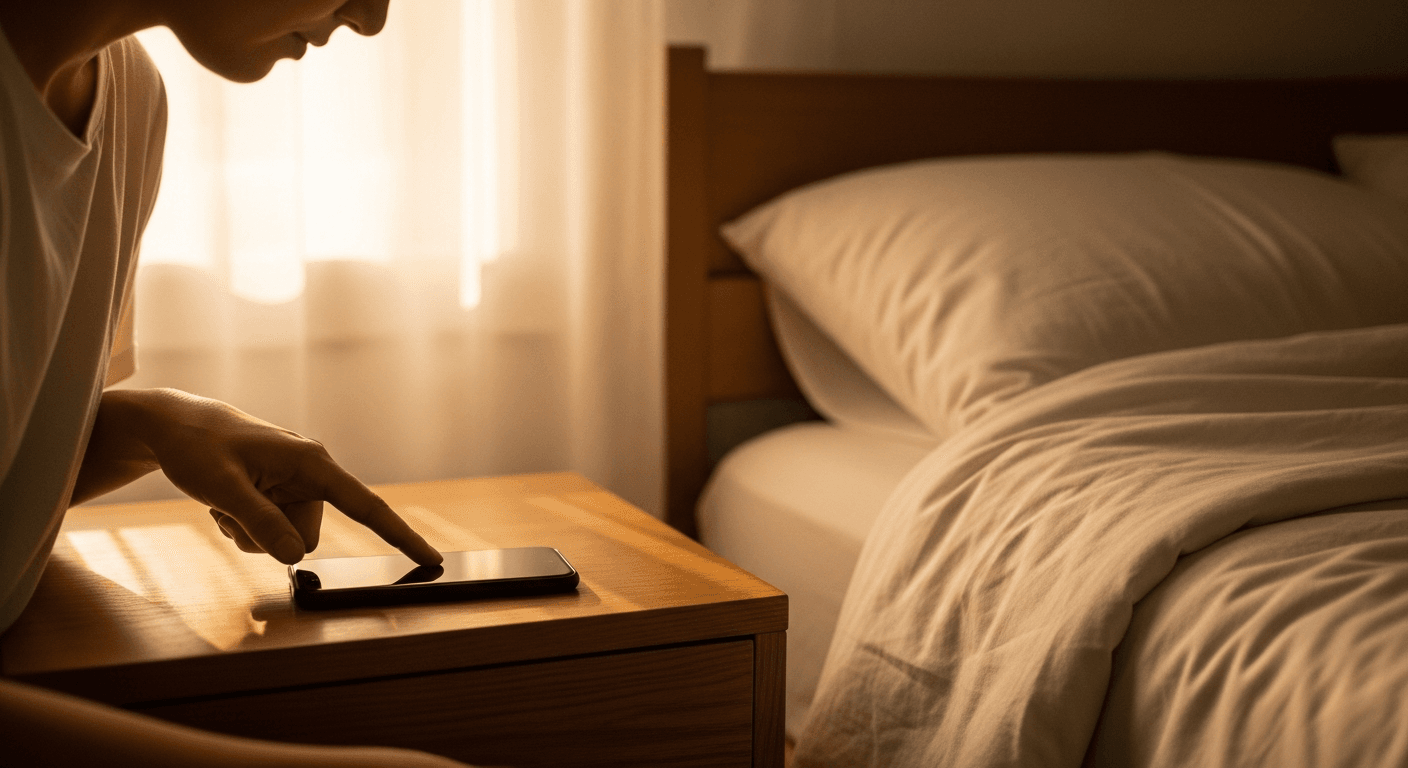
Charging your phone outside the bedroom is the single highest-leverage environmental change you can make. When your phone is in the room, even face-down and silent, its presence increases the likelihood you'll check it. When it's not physically accessible, the temptation disappears. A basic alarm clock solves the "but I need it to wake up" problem for around $15.
If you find sleep quality is still suffering after addressing screen use, it's worth looking at the full picture. Physical training stress, nutrition timing, and recovery quality all interact with how well you sleep. Understanding how structured recovery days fit into your week can help you address sleep from multiple angles at once.
Intentionality Over Elimination
Digital detoxes spike in popularity every January and then quietly fail for most people within weeks. That's not a willpower problem. It's a design problem. Eliminating something that's genuinely woven into your work, your relationships, and your daily logistics is an extreme intervention that creates its own friction.
Intentionality is a more realistic and more durable goal. That means designing your phone use around your actual values rather than reacting to whatever the device defaults to. Ask yourself what you actually want from your connected time. Connection with specific people? Information on specific topics? Entertainment in bounded doses? When you're clear on that, the gaps become obvious.
You're not trying to use your phone less for the sake of it. You're trying to protect the things that matter: focused work, quality sleep, real-time presence with the people around you, and a nervous system that gets genuine downtime. The boundary is in service of something, which is why it holds.
This principle applies more broadly to wellness. Sustainable habits, whether around training, nutrition, or mental health, are built on understanding why they work, not just following a protocol. If you're building out your fitness alongside your mental health practice, resources like Progressive Overload Applies to Cardio Too offer the same approach: clear reasoning behind the method, so you can adapt it as your circumstances change.
Practical Steps to Start This Week
- Set two or three fixed message-checking windows and communicate them to the people who regularly contact you.
- Move your phone charger out of the bedroom tonight. Buy a standalone alarm clock if you need one.
- Keep your phone off the table during meals, not just face-down. Physical distance breaks the habit loop more effectively.
- Create a 30-minute morning buffer before checking any messages or social feeds. Use that time however you want, as long as it doesn't involve a screen.
- Audit your notifications. Turn off everything that isn't genuinely time-sensitive. Most apps request notification access by default, not because you need it.
- Build a pre-sleep replacement habit. Decide in advance what you'll do in your last 30 minutes before bed so the phone doesn't fill a vacuum.
None of these steps require you to leave your phone behind. They just require you to decide when it serves you and when something else serves you better. That distinction, made consistently, is where real change happens.