
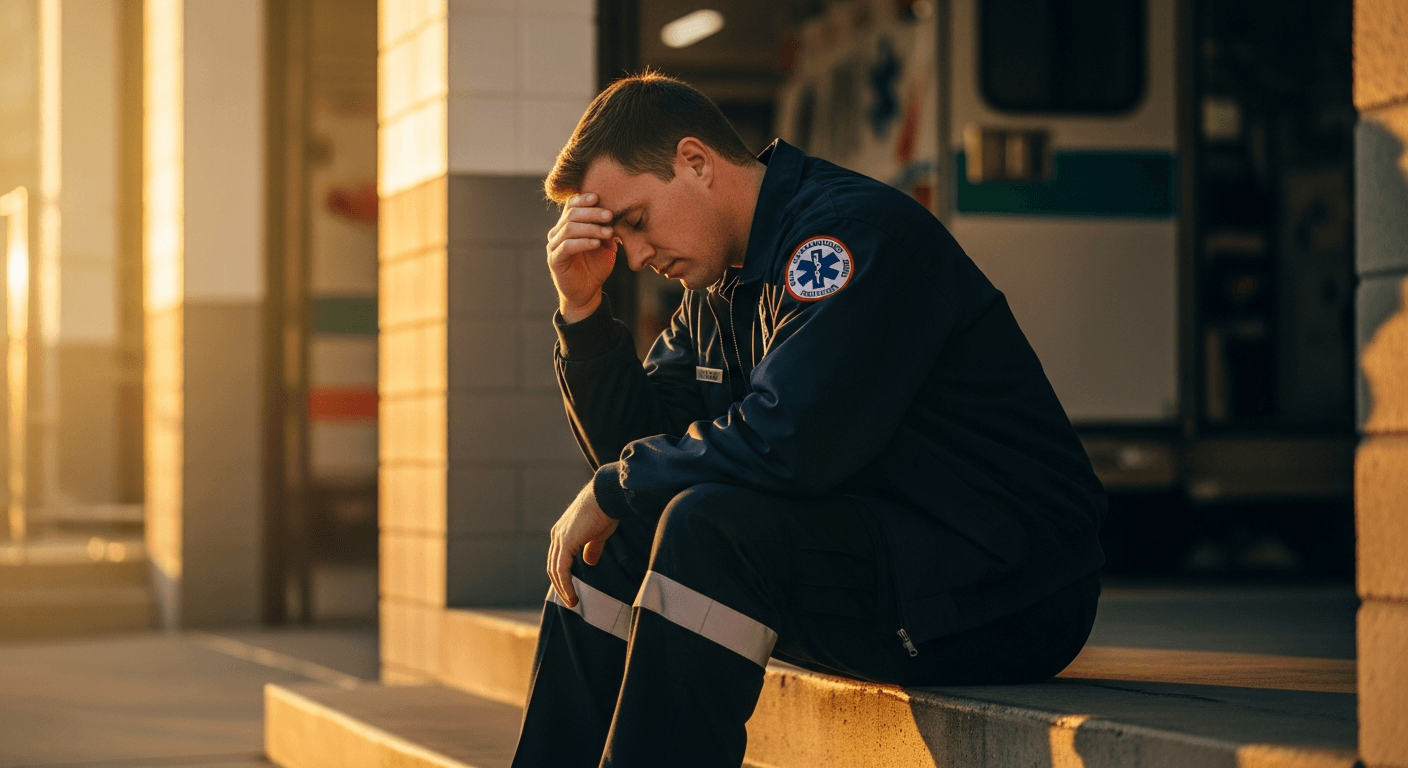
Most stress research happens in well-funded labs studying white-collar workers or elite athletes. A May 2026 study out of Rawalpindi, Pakistan takes a different route. It set out to build a structured stress management protocol for rescue workers facing chronic psychological distress and elevated PTSD risk. What it uncovered along the way applies far beyond the firehouse or the ambulance bay.
The research used a mixed-method design, combining quantitative stress assessments with qualitative interviews. Its goal was practical: create something rescue workers could actually use, in a context with limited clinical infrastructure. But the triggers it identified and the interventions it tested are recognizable to anyone running on empty in a demanding job, a caregiving role, or a life that simply never slows down.
Why First Responders Are a Useful Mirror for the Rest of Us
Rescue workers experience the sharpest version of stressors most people encounter in diluted form. Unpredictable schedules. High stakes decisions. Emotional labor with no formal outlet. Exposure to trauma with no structured recovery window. The difference between a paramedic and a burned-out marketing director isn't the type of stress. It's the intensity and the visibility.
That visibility is exactly why studying first responders is so useful. Their burnout is measurable, their exposures are documented, and their breaking points tend to be hard to ignore. When researchers design interventions for that population, they're forced to strip stress management down to what actually works under pressure, not what looks good in a wellness brochure.
The Rawalpindi protocol did precisely that. It identified three intervention pillars that proved effective across participant groups. None of them require a therapist's office, a corporate wellness budget, or a two-week retreat in Sedona.
The Three Pillars That Transfer Directly to Your Life
Psychoeducation. The first pillar is understanding what stress actually does to your body and brain. This isn't motivational content. It's physiological literacy. Participants who understood the mechanics of their stress response, cortisol cycles, nervous system activation, the difference between acute and chronic load, were significantly better at recognizing when they were approaching a breaking point before they crossed it.
For you, this means learning the basics of how your body registers threat. Not to become anxious about anxiety, but to give yourself useful data. If you know that poor sleep compounds cortisol load the following day, you make different decisions. The right sleep duration actively slows biological aging, which is one concrete reason that knowledge translates into action.
Regulated breathing techniques. The protocol's second pillar sounds simple because it is. Controlled breathing is one of the fastest ways to manually shift your autonomic nervous system out of fight-or-flight. The rescue workers in the study used structured breathing exercises during high-stress intervals and as a daily reset practice. Both applications reduced self-reported anxiety scores within the study window.
The research didn't invent this. Breath regulation has decades of physiological backing. What the protocol adds is structure and consistency. Two minutes of deliberate breathing twice a day produces measurable changes in heart rate variability, a metric that reflects how well your body is actually recovering between stressors. Heart rate variability is one of the most underused recovery markers available, and it responds directly to breath-based intervention.
Peer support structures. The third pillar is the one most corporate wellness programs skip. Rescue workers with access to formalized peer support, structured check-ins with colleagues who understood their environment, showed lower burnout scores and faster psychological recovery after high-stress incidents. The key word is formalized. Casual venting helps briefly. A structured peer framework does something different: it normalizes stress responses, distributes emotional load, and creates accountability for recovery.
You don't need a clinical program to replicate this. A small group of people who understand your work context, who check in with intention rather than politeness, functions the same way. The structure matters more than the size.
The Single Strongest Predictor of Burnout Severity
Across all participant groups in the study design, one variable outperformed every other predictor of burnout severity. It wasn't trauma exposure frequency. It wasn't job tenure. It wasn't even perceived social support, which typically ranks near the top in this kind of research.
It was chronic stressor exposure without structured recovery time.
That finding deserves to sit for a moment. The problem isn't stress. It's unbroken stress. The body can handle significant load when it gets genuine recovery windows. It cannot handle moderate load applied without interruption, indefinitely. The cumulative effect becomes biologically indistinguishable from a single severe trauma event.
This is why rest isn't a reward for productivity. It's a functional requirement. Your nervous system isn't wired to stay in activation mode. Neither is your musculoskeletal system, which is why tendons specifically need 72 hours of recovery after hard training before they've fully adapted. The principle scales up from tissue to whole-person resilience.
The practical implication is blunt. If your schedule has no recovery architecture built into it, you will burn out. Not if conditions get bad enough. Just eventually, at whatever pace your individual buffer allows. Building recovery in isn't optional maintenance. It's the only thing that makes sustained performance possible.
The Global Gap This Research Exposes
One of the study's more uncomfortable findings isn't about burnout mechanics. It's about where evidence-based stress interventions actually exist. The research is explicit on this point: the vast majority of validated stress management protocols have been developed in high-income settings, tested on populations with access to clinical support, and designed with implementation budgets most organizations outside wealthy nations can't match.
The Rawalpindi team built this protocol specifically because their population needed something deployable without expensive infrastructure. That constraint produced something leaner and arguably more honest about what stress management actually requires.
The gap it reveals is real in the US market too. The wellness industry generates billions annually in apps, retreats, coaching programs, and supplements. But evidence-based, structured stress management that doesn't require a $300-per-month subscription or a corporate EAP remains genuinely hard to access for most people. The three pillars in this protocol cost nothing to implement. That's not a limitation of the research. It's one of its most significant findings.
What You Can Actually Build From This
The protocol's transferability is high because its components are behavioral, not pharmaceutical or resource-dependent. Here's what a civilian version of this intervention looks like in practice:
- Learn your stress physiology. Understand cortisol rhythms, what activates your threat response, and how your personal early warning signs present. Most people recognize burnout in retrospect. Psychoeducation moves that recognition window earlier.
- Schedule breathing practice like a meeting. Two to five minutes, twice daily, using a structured method. Box breathing, 4-7-8, or slow diaphragmatic cycles all produce measurable autonomic effects. The method matters less than the consistency.
- Build a real peer support structure. Identify two or three people who understand your environment and commit to genuine, regular check-ins. Not social catch-ups. Structured conversations with an actual agenda that includes how you're managing load.
- Audit your recovery architecture. Look at your week and identify every genuine recovery window. Not passive consumption, not social obligations, but actual downtime. If the gaps aren't there, the burnout timeline is already running.
- Add physical recovery as a non-negotiable. Movement isn't separate from stress management. Even short bouts of physical activity shift your neurological state. One to two minute exercise snacks throughout the day have measurable physiological benefits and can serve double duty as stress interrupts.
Nutrition also plays an underappreciated role in how your brain handles chronic load. Deficiencies in specific micronutrients amplify anxiety responses at a neurological level. Choline deficiency in particular has been linked to anxiety through brain scan data, which suggests that what you eat is part of your stress management infrastructure whether you treat it that way or not.
The Takeaway
First responder research doesn't belong in a category labeled "not for me." It belongs at the center of how anyone in a high-demand life thinks about sustainability. The Rawalpindi study stripped burnout down to its functional mechanism: chronic exposure without recovery. Then it built an intervention around three pillars that work without clinical overhead.
You're not a rescue worker. But if your schedule, your responsibilities, or your lifestyle runs on chronic activation without structured recovery, you're operating the same system under different conditions. The failure mode is identical. So is the fix.