
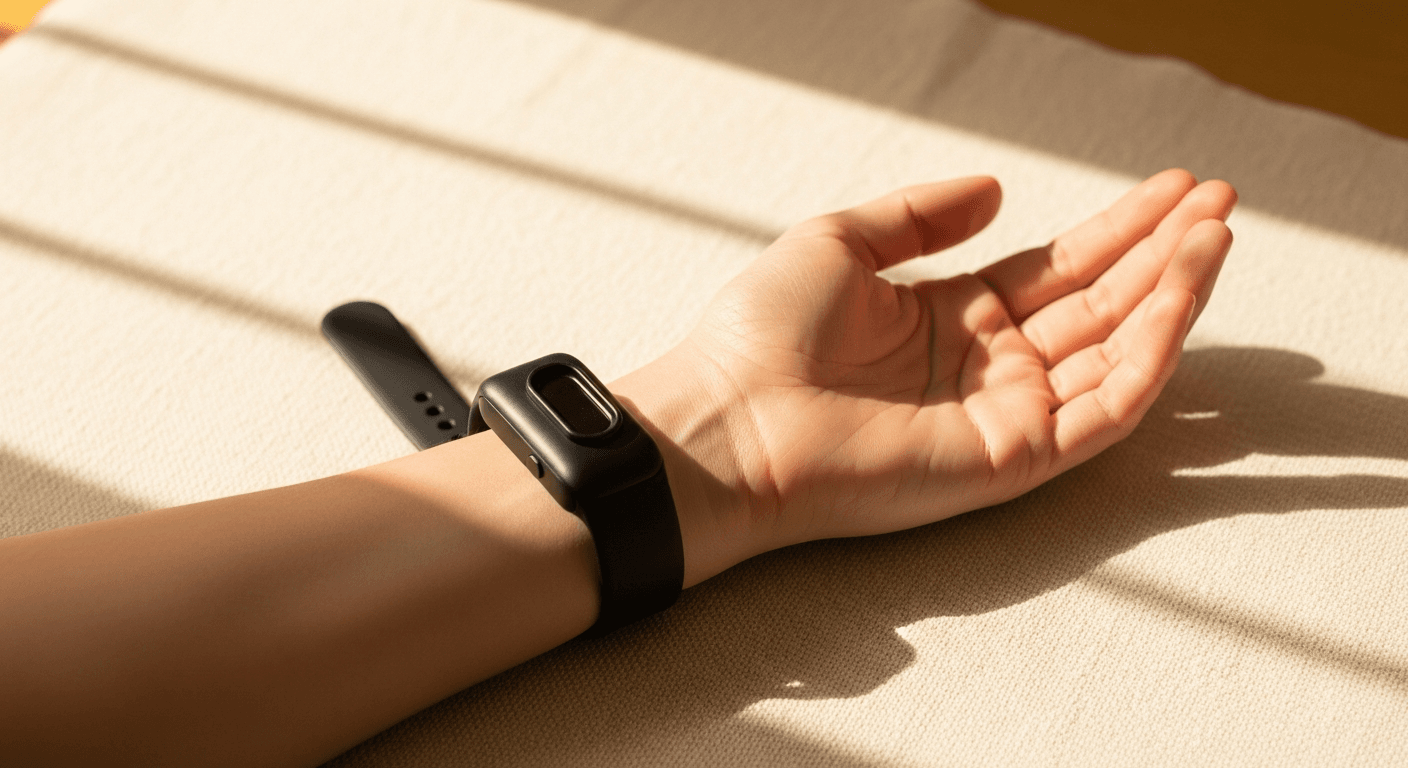
Ask most athletes what recovery looks like, and they'll talk about sleep. Eight hours. A consistent schedule. Maybe a sleep score from their smartwatch sitting comfortably in the green. Sleep matters. Nobody's arguing otherwise. But here's the problem: your sleep score can look perfect while your body is still deep in a stress response it hasn't resolved yet.
That gap between perceived recovery and actual physiological readiness is where a lot of training programs quietly fall apart. You feel rested, so you push hard. But your nervous system tells a different story. And it's been telling that story through a metric most people never think to track.
Why Sleep Scores Don't Tell the Whole Story
Wearable sleep tracking has improved dramatically, but recent physiological research continues to expose its limits. Consumer devices estimate sleep stages using accelerometry and heart rate patterns rather than the electroencephalography used in clinical sleep studies. The result is a score that's directionally useful but not diagnostically precise.
More critically, sleep quality data captures what happened to your body during the night. It doesn't capture how your body responded to the previous day's training load, nutritional status, psychological stress, or cumulative fatigue built up over weeks. A stressful week at work combined with three hard training sessions can leave your nervous system in a suppressed state even after what the device calls a "great night's sleep."
Research consistently shows that perceived recovery scores and subjective sleep satisfaction often diverge from objective physiological markers. Athletes who report feeling well-rested before a session sometimes show measurable indicators of under-recovery that only appear when you look beyond the sleep data. This is where heart rate variability enters the picture.
Heart Rate Variability: The Signal Most People Ignore
Heart rate variability, or HRV, measures the variation in time between consecutive heartbeats. If your heart beats 60 times per minute, those beats aren't perfectly spaced one second apart. The intervals between them fluctuate constantly. That fluctuation isn't noise. It's information about how your autonomic nervous system is balancing its two primary branches: the sympathetic system (your stress and activation response) and the parasympathetic system (your rest and recovery response).
When you're genuinely recovered, your parasympathetic system is dominant. The variability between heartbeats is higher. When you're under-recovered, physically stressed, or fighting off illness, your sympathetic system takes over. Variability drops. Your body is essentially signaling that it's not ready to take on additional load.
What makes HRV particularly valuable is that it reflects your total stress burden, not just training stress. Poor nutrition, alcohol, psychological pressure, disrupted circadian rhythms, and even mild dehydration all suppress HRV. That means a low reading the morning after a hard session might be telling you something your sleep score missed entirely.
This also connects to broader nervous system fitness. If you're interested in building resilience that extends beyond the gym, the concept of training your stress response like a muscle rather than a problem is worth understanding. HRV is one of the clearest windows into how well that system is actually adapting.
How HRV Tracking Actually Works in Practice
Most modern wearables now include HRV tracking, including devices from Garmin, Apple, WHOOP, and Oura. The key is consistency. A single HRV reading is almost meaningless. What matters is your personal baseline, tracked over time, typically through a morning measurement taken immediately after waking before you get out of bed or check your phone.
Your absolute HRV number is less important than how it compares to your own trend. HRV values vary significantly between individuals based on age, fitness level, and genetics. A reading of 45 milliseconds might be excellent for one person and below baseline for another. The relevant question is: is today's number higher or lower than your recent average?
A reading that drops 10 to 20 percent below your rolling average is considered a meaningful signal in most research-backed protocols. That doesn't automatically mean you skip training. It means you adjust. Lower intensity, reduced volume, or a deliberate recovery session instead of a hard effort.
Recovery methods themselves matter here too. Evidence around approaches like cold water immersion, active recovery timing, and post-session nutrition continues to evolve. Post-workout recovery timing has more nuance than most people realize, and pairing those strategies with HRV monitoring gives you a feedback loop that generic recovery advice simply can't provide.
The Other Signals Worth Tracking Alongside HRV
Recovery experts are increasingly clear on one point: no single metric is sufficient. HRV is the most physiologically reliable signal available to most people outside a clinical setting, but it works best as part of a small cluster of daily inputs.
Here's what a practical multi-signal check-in might include:
- Resting heart rate: A resting heart rate elevated five or more beats above your personal baseline is a consistent marker of incomplete recovery or incoming illness. Most wearables track this automatically.
- Subjective readiness: A simple one-to-ten self-rating of how you feel physically and mentally. Research on athlete monitoring shows that subjective wellness scores, when tracked consistently, are predictive of performance and injury risk in ways that sometimes outperform objective markers alone.
- Sleep duration and consistency: Not just quality scores, but whether you slept enough and whether your sleep timing was consistent with your circadian norm. Irregular sleep timing disrupts HRV independently of how many hours you logged.
- Grip strength: This one surprises people, but morning grip strength is a low-tech marker of neuromuscular readiness that some elite coaching programs use daily. It also happens to be one of the most well-studied indicators of longer-term health. Testing your grip strength takes about 60 seconds and tells you more than you'd expect.
- Hydration and nutrition status: Electrolyte balance and overall hydration directly affect HRV readings. A low HRV morning that follows poor fluid or sodium intake needs to be interpreted differently than one following adequate nutrition. If you're uncertain about your hydration strategy around training, the research on electrolytes for gym training is more nuanced than most sports drink marketing suggests.
None of these signals in isolation tells you what you need to know. Together, they give you a picture of readiness that's genuinely actionable.
What Recovery-Optimized Training Actually Looks Like
Putting this into practice doesn't require expensive equipment or complex protocols. The basic framework used in evidence-based performance settings looks like this.
Every morning, before checking messages or caffeine, take a five-minute HRV reading using your device of choice. Note your resting heart rate. Give yourself a subjective wellness rating. Compare your HRV to your seven-day rolling average. Then make one of three decisions: train as planned, modify intensity and volume down by 20 to 30 percent, or take a full recovery day.
The psychological shift this requires is significant. Many people, particularly those who train consistently, have built an identity around not skipping sessions. But the evidence is clear that training hard on days when your nervous system is suppressed doesn't produce the adaptations you're after. It deepens the recovery debt instead.
Stress beyond the gym matters here too. Chronic psychological stress, financial pressure, and ongoing anxiety suppress HRV just as effectively as overtraining does. The physiological mechanism is the same: sustained sympathetic activation. Anxiety and stress continue to rank as top wellness concerns globally, and their physical effects on recovery are real and measurable in your HRV data.
Getting Started Without Overthinking It
You don't need a premium device to start using HRV as a recovery signal. Some free apps allow you to take manual readings using your phone's camera and a fingertip sensor. Accuracy varies, but the trend data is still directionally useful.
If you're already wearing a device that tracks HRV automatically, the starting point is simpler. Stop looking only at your sleep score. Start looking at HRV alongside it. Give it four to six weeks before drawing conclusions. Your baseline will stabilize, your patterns will become readable, and you'll begin to see correlations between your recovery data and your actual performance that subjective feeling alone would have missed.
Sleep will always matter. It's the foundation. But treating it as the only recovery signal is like using a single data point to make a high-stakes decision. Your body produces better information than that. You just have to know where to look.