
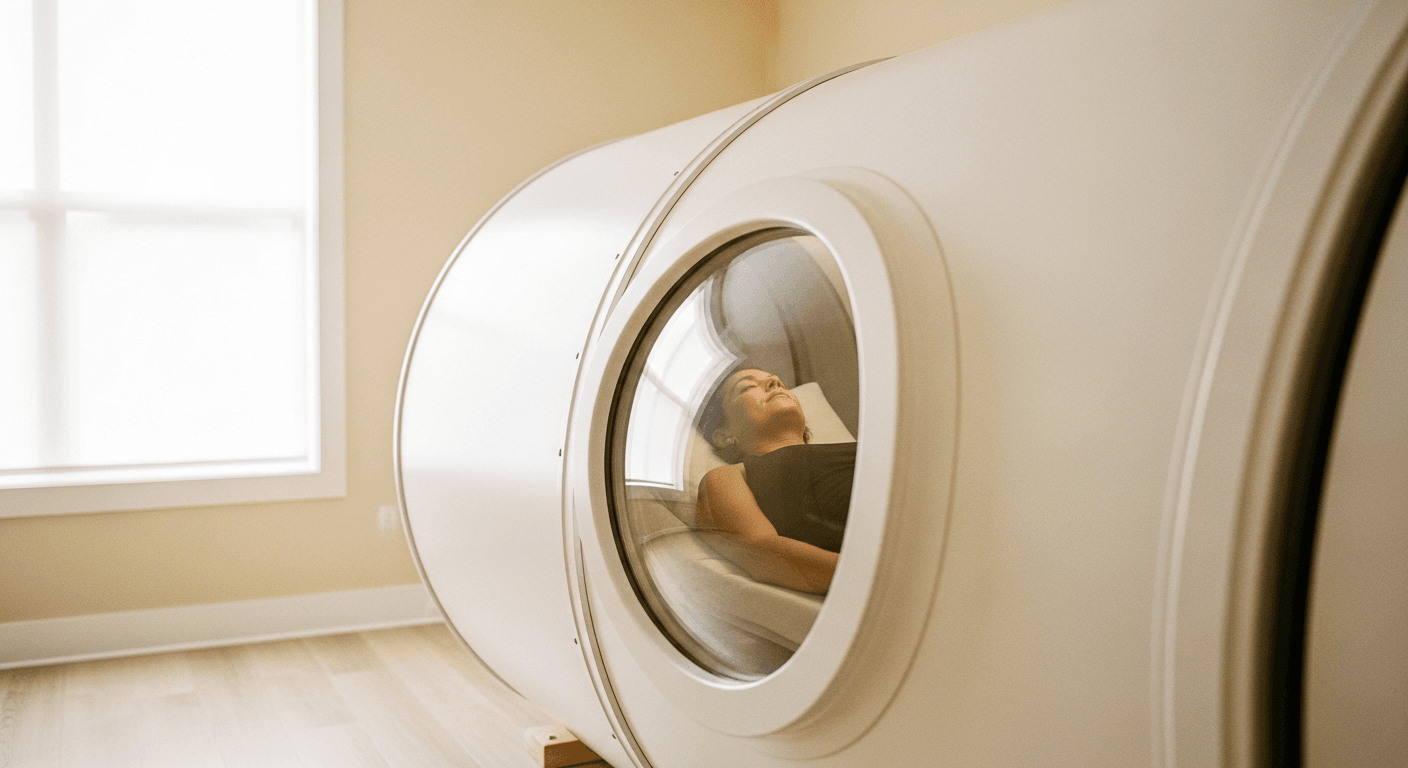
Hyperbaric oxygen therapy used to mean one thing: a clinical chamber in a hospital, reserved for divers with decompression sickness or patients with non-healing wounds. That picture has changed fast. Today you can book a session at a wellness spa between your massage and your infrared sauna, and the marketing will tell you it accelerates recovery, sharpens focus, and extends athletic longevity. The question worth asking is whether any of that applies to you, or whether you're paying a premium for a very expensive breath of air.
What Hyperbaric Oxygen Therapy Actually Does
The mechanism is straightforward. You enter a pressurized chamber, typically at 1.5 to 3 atmospheres of pressure, and breathe pure or near-pure oxygen. Under that pressure, your plasma carries significantly more dissolved oxygen than it does under normal conditions. Proponents argue this floods damaged tissue with oxygen, accelerates cellular repair, and reduces inflammation.
In genuine medical contexts, this logic holds up well. Hyperbaric oxygen therapy is FDA-cleared for 13 conditions, including chronic non-healing wounds, carbon monoxide poisoning, radiation tissue damage, and severe infections. The evidence base for these applications is solid, built over decades of controlled clinical research.
The leap from "heals serious wounds" to "helps you recover from leg day faster" is where the science gets shakier.
What the Sports Medicine Evidence Actually Shows
The research on hyperbaric oxygen therapy as a recovery tool for athletes is best described as mixed. Several small studies have found reductions in markers of muscle damage, such as creatine kinase levels, in the 24 to 48 hours following intense exercise. Others have found no meaningful difference between hyperbaric oxygen sessions and sham sessions using pressurized air.
A consistent pattern emerges when you look across the literature: the more specific and measurable the injury, the stronger the signal. Hyperbaric oxygen shows more promise for acute soft-tissue injuries, bone stress fractures, and compartment syndrome recovery than it does for the general fatigue and soreness that most recreational athletes are actually dealing with. Sports medicine organizations have largely concluded that the evidence is insufficient to recommend it as a routine recovery protocol for non-injured athletes.
That hasn't stopped professional sports teams from installing chambers and high-profile athletes from endorsing them. Anecdote has a way of outrunning randomized trials, especially when the anecdote comes from someone who also has elite coaching, optimal nutrition, and seven hours of structured sleep.
The Real Cost of a Session
Pricing at consumer wellness clinics in the US typically runs between $150 and $400 per session, depending on location, session duration, and whether the facility uses a hard-shell chamber (higher pressure, higher cost) or a soft-shell hyperbaric tent (lower pressure, often marketed more loosely). Some clinics sell packages of 10 or 20 sessions, which can bring the per-session cost down slightly but still represent a significant outlay.
To put that in context: a 10-session package at $200 per session is $2,000. That's the same budget that could cover several months of working with a certified strength and conditioning coach, a full blood panel and nutritional assessment, and a well-stocked recovery toolkit. For professional athletes where a 1% performance edge has measurable financial value, the calculation looks different. For someone training for a half marathon or trying to stay healthy at 45, it's harder to justify.
It's also worth reading the fine print on what you're actually getting. Soft-shell inflatable chambers used in many wellness settings typically operate at around 1.3 atmospheres. The clinical research supporting hyperbaric therapy's stronger medical applications was generally conducted at 2.0 to 2.4 atmospheres. You may be paying premium prices for a lower-pressure experience that sits outside the range studied in most meaningful trials.
Side Effects That Don't Make the Brochure
Hyperbaric oxygen therapy is not risk-free. The most common side effect is barotrauma to the ears or sinuses, the same pressure discomfort you feel descending in an airplane, but more intense and potentially painful if you have any congestion or existing ear issues. Sinus and ear injuries are frequently reported in clinical settings.
At higher pressures, oxygen toxicity becomes a real concern. Breathing high concentrations of oxygen under pressure can trigger central nervous system effects, including seizures, in a small but documented percentage of cases. This risk is primarily associated with clinical-grade chambers operating at higher atmospheres, but it underscores the point that this is a medical intervention being sold as a wellness service.
Fire risk is also a factor. Pure oxygen environments are highly flammable. Reputable facilities have strict protocols around this, but it's a consideration when evaluating the professionalism of any clinic you're considering.
If you have a history of certain lung conditions, recent ear surgery, claustrophobia, or you're pregnant, hyperbaric therapy carries additional contraindications worth discussing with your doctor before you book anything.
What Actually Works for Recovery
Before spending $200 on a session in a pressurized tube, it's worth auditing the recovery fundamentals that have a far stronger evidence base and cost a fraction of the price.
- Sleep quality and duration. Sleep is the most powerful recovery tool available to any athlete. Research consistently shows that extending sleep duration improves reaction time, physical output, and injury resilience. No supplement or therapy has come close to matching it in head-to-head comparisons.
- Cold water immersion. Post-exercise cold water immersion at 10 to 15 degrees Celsius for 10 to 15 minutes has demonstrated reductions in perceived soreness and inflammatory markers in multiple controlled trials. It's cheap, widely accessible, and has a stronger evidence base than hyperbaric oxygen for general exercise recovery.
- Nutrition timing and protein distribution. How you fuel around training has a direct and measurable impact on recovery. Spreading your protein intake across meals, rather than loading it all at dinner, supports muscle protein synthesis more effectively. If you haven't optimized this yet, it's the highest-return investment you can make before exploring expensive therapies. How to Spread Your Protein to Actually Build Muscle breaks down exactly how to structure this.
- Training structure. Progressive overload, adequate rest days, and periodization prevent the accumulated fatigue that people often try to treat with recovery gadgets. Slow Eccentric Reps Build More Muscle With Less Pain covers one underused structural approach that reduces tissue damage during training itself.
- Recovery supplements with actual evidence. Creatine, omega-3 fatty acids, and magnesium have considerably more peer-reviewed support for recovery than hyperbaric oxygen does in healthy recreational athletes. Recovery Supplements in 2026: What Works and What Doesn't gives you a current rundown of where the evidence actually sits.
The pattern here is consistent. The interventions with the strongest evidence base are also the least glamorous and the least expensive. That's not a coincidence. It reflects where most of the research funding and scientific attention has historically gone, toward things that are easy to study at scale and accessible to large populations.
Who Might Actually Benefit
There's a reasonable case for hyperbaric oxygen therapy in specific, limited situations. If you're a competitive athlete recovering from a documented soft-tissue injury, a bone stress fracture, or a wound that's healing slowly, and your sports medicine physician recommends it as part of a structured treatment protocol, the risk-to-benefit ratio looks very different than it does for general wellness use.
Athletes doing extremely high training volumes, such as elite endurance competitors or professional team sport players, may also have more to gain from marginal recovery gains than the average gym-goer. The operative word is marginal. Even in those populations, the research isn't conclusive.
For everyone else, the math is hard to make work. The evidence is weak, the cost is high, and the alternatives are better established. What the wellness industry has done with hyperbaric oxygen is take a legitimate medical tool, strip it of its clinical context, soften the pressure settings, and sell it as a performance upgrade. That's worth naming clearly.
How to Make the Decision for Yourself
If you're seriously considering hyperbaric oxygen therapy, here's a practical framework. Start by checking whether your interest is recovery-related or injury-related. If it's injury-related, talk to a sports medicine physician first, not a wellness clinic sales rep. If it's recovery-related, honestly audit whether you're consistently hitting eight hours of sleep, eating adequate protein across the day, and training with a sensible structure. If any of those are missing, they're higher-priority investments.
Also consider what you're comparing it to. The supplement and wellness market is full of products that sound impressive and deliver modest results. Shilajit and Lactic Acid: What the Science Actually Says is a useful example of how to read through the marketing on recovery products more critically.
Good nutrition is also part of the equation. Understanding how to fuel your training effectively, from carbohydrate timing to gut health, matters more for sustained performance than almost any recovery therapy. Gut Health and Athletic Performance: The 2026 Evidence covers one increasingly well-supported piece of that picture.
Hyperbaric oxygen therapy isn't snake oil. In medical contexts, it's a valuable tool. But "valuable in medicine" and "worth $300 for your post-workout recovery" are very different claims. Know which one you're evaluating before you book.