
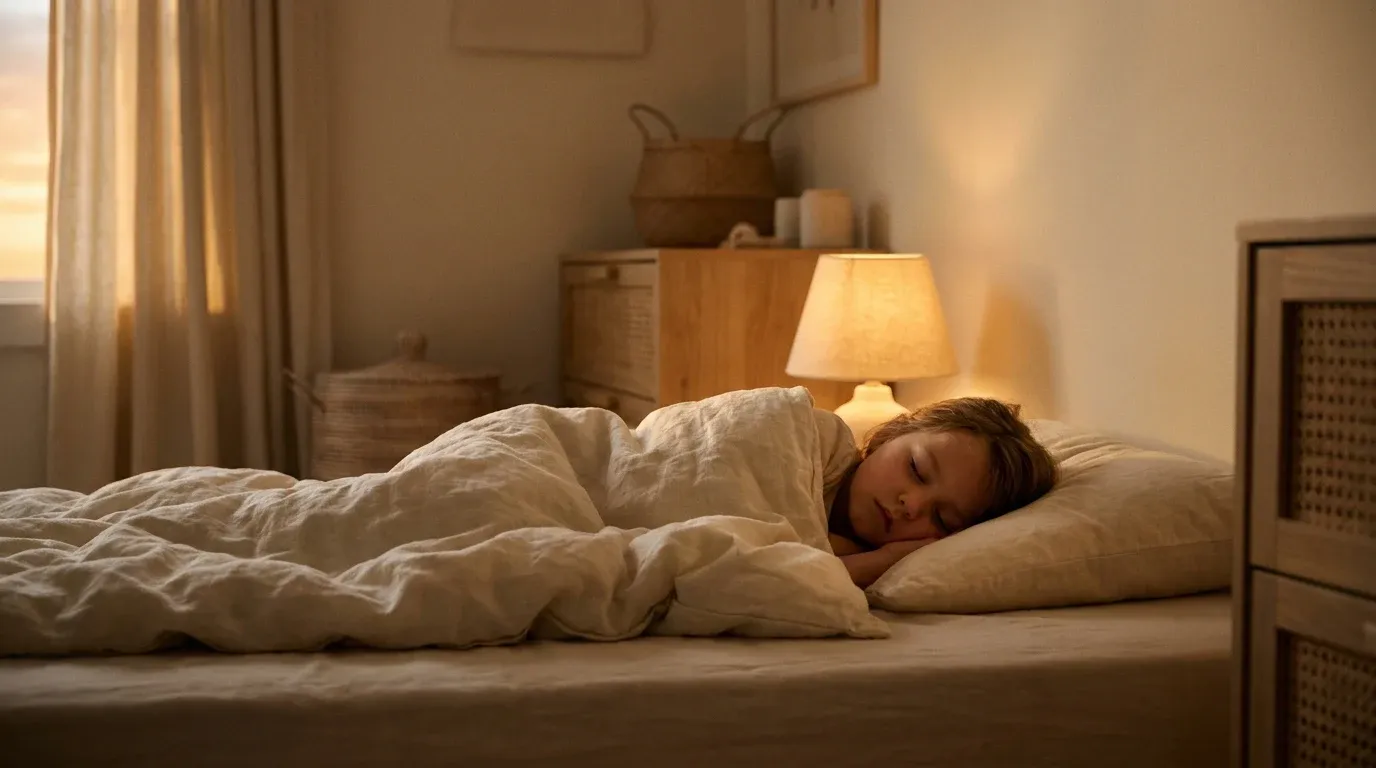
Nearly half of U.S. children aren't getting enough sleep. That number isn't a rough estimate. It comes from the 2026 Sleep in America Poll, which found that 44% of children fall short of recommended sleep duration for their age group. And while bedtime battles and screen time often get the blame, the research is pointing somewhere more specific: the physical and emotional environment in which children sleep.
A 2026 systematic review published in Clocks and Sleep examined dozens of studies on pediatric sleep and identified the environmental factors with the greatest influence on sleep quality and duration. The findings are practical, actionable, and worth understanding if you have children at home or work with families in any health or wellness capacity.
Why Children's Sleep Is a Public Health Problem
Sleep isn't optional for developing bodies and brains. In children, deep sleep is when growth hormone is released, memory consolidation happens, and emotional regulation circuits strengthen. Chronic short sleep in childhood has been linked to higher rates of obesity, anxiety, weakened immune function, and attention difficulties.
The 2026 Sleep in America Poll surveyed parents across the country and found that inadequate sleep in children is spread across all age groups, not concentrated in teenagers. Younger children, including those in elementary school, are also falling short. What's striking is that parents often don't know it's happening. Many children appear functional during the day even when they're running a significant sleep debt.
This mirrors what researchers have observed in adults. Treating insomnia isn't just about sleep anymore. The downstream effects on mood, cognition, and physical health are now understood to be profound, and the same principle applies to children, arguably more so, because development compounds everything.
The Two Factors That Matter Most
The Clocks and Sleep systematic review didn't just catalog environmental influences. It ranked them. Among all the modifiable factors researchers examined, two rose to the top: light exposure and psychosocial stress.
Light exposure affects sleep through circadian biology. Children's eyes are more sensitive to blue-spectrum light than adult eyes. That means screens, overhead lighting, and even bright tablets used in the hour before bed can delay melatonin onset more dramatically in children than in adults. The review found that appropriate light management, including dim, warm-toned lighting in the evening and exposure to natural daylight in the morning, was consistently associated with better sleep onset and longer total sleep time.
Psychosocial stress was the second major factor. This includes household conflict, parental anxiety, academic pressure, and general emotional tension in the home. Children are acutely sensitive to the emotional climate around them. Even when they appear unaffected, stress hormones like cortisol can remain elevated at bedtime, making it significantly harder to transition into sleep. The review found that children in high-stress home environments showed measurably worse sleep architecture, meaning less deep sleep and more nighttime waking, even when they fell asleep at a reasonable time.
These two factors aren't entirely separate. A stressed child is more likely to use a screen for comfort. A bright screen delays melatonin. Delayed melatonin shortens sleep. The mechanisms interact, which makes addressing them together more effective than targeting either one alone.
The 'Nurturing Micro-Sleep Environment': What Researchers Are Proposing
One of the more useful concepts to emerge from the Clocks and Sleep review is what the researchers call the "nurturing micro-sleep environment." The term refers to the immediate, controllable space around a child's sleep. Not the neighborhood. Not the school. The bedroom, the routine, the emotional tone of the hour before bed.
The idea is that parents can meaningfully improve sleep outcomes by making targeted changes within this micro-environment, without needing access to clinical interventions or expensive equipment. Here's what that looks like in practice:
- Light management: Switch to warm-spectrum bulbs in the bedroom and common areas used in the evening. Begin dimming lights 60 to 90 minutes before the child's target bedtime. Remove or power down screens at least an hour before sleep. If a nightlight is needed, use a red or amber-toned one, which has minimal impact on melatonin.
- Morning light exposure: Get children outside or near a bright window within the first hour of waking. This anchors the circadian clock and makes evening melatonin onset more reliable.
- Emotional de-escalation before bed: Reduce demands, conflict, and stimulation in the 30 to 60 minutes before bedtime. This isn't about being permissive. It's about timing. Difficult conversations, homework stress, and overstimulating activities are better handled earlier in the evening.
- Consistent sleep and wake times: Regularity strengthens the circadian rhythm and reduces the biological resistance children feel at bedtime. The review consistently found that predictability in sleep timing was protective, even on weekends.
- Room temperature and noise: Cooler room temperatures (between 65 and 68°F) and low ambient noise support deeper sleep stages. These factors ranked lower in the review than light and stress, but remain relevant, especially in urban environments.
The "nurturing" aspect of the concept is significant. The review emphasized that it's not enough to optimize the physical environment if the emotional environment is dysregulated. Children who feel anxious, unsafe, or emotionally unsettled don't sleep well, even in a perfectly dark, quiet, cool room.
What This Means for Parents Specifically
If you're a parent, this research is worth taking seriously without catastrophizing it. You don't need to overhaul your home or enforce a military-grade bedtime protocol. The evidence supports smaller, consistent changes sustained over time.
Start with light. It's the most physiologically direct lever you have, and it's largely free to address. Evaluate what your child is exposed to in the two hours before bed and reduce the blue-spectrum load. Then look at emotional tone. Is the pre-bedtime window calm, or is it when the household's unresolved tension tends to surface?
The research on adult sleep suggests that these same principles scale across the lifespan. Poor sleep in childhood doesn't stay in childhood. College sleep has gotten dramatically worse since 2008, and early sleep habits, or the absence of them, are part of what drives that trajectory.
It's also worth noting that parental sleep affects children's sleep. A parent running on poor sleep is more emotionally reactive, less consistent in routine management, and more likely to create the household stress that the review identifies as a top risk factor. Workers over 50 are facing a sleep crisis of their own, and that reality plays out at home in ways that directly touch children's environments.
The Broader Context: Sleep as a Developmental Investment
There's growing recognition in sleep science that the brain's architecture is shaped by sleep quality during childhood and adolescence in ways that are difficult to reverse later. Memory, emotional regulation, executive function, and even social cognition all develop with sleep as a critical input.
This is consistent with what neuroscience is revealing about sleep and brain health more broadly. Research on how aerobic exercise affects the brain, for instance, has begun to show that the mechanisms overlap with sleep pathways. Scientists have now visualized what cardio does to your brain, and the implications for long-term cognitive health are significant. Sleep and physical activity work on many of the same systems, which is why sleep deprivation tends to blunt the cognitive benefits of exercise.
For children, this interplay matters. Kids who sleep well are more likely to be physically active, and physically active children tend to sleep better. The lifestyle factors that support health aren't isolated. They're reinforcing.
Simple Changes, Real Stakes
The research in Clocks and Sleep is a useful corrective to the idea that children's sleep problems require clinical solutions. Most don't. Most stem from environmental conditions that parents can change: the light in the room, the emotional temperature of the household, the consistency of the routine.
The 44% figure from the 2026 Sleep in America Poll represents millions of children developing with a significant and modifiable disadvantage. The concept of the nurturing micro-sleep environment gives parents a concrete framework for responding to it, not with perfection, but with intention.
If you're already thinking about sleep in your household, you're ahead of where most families are. The next step is simply making the environment match the biology.