
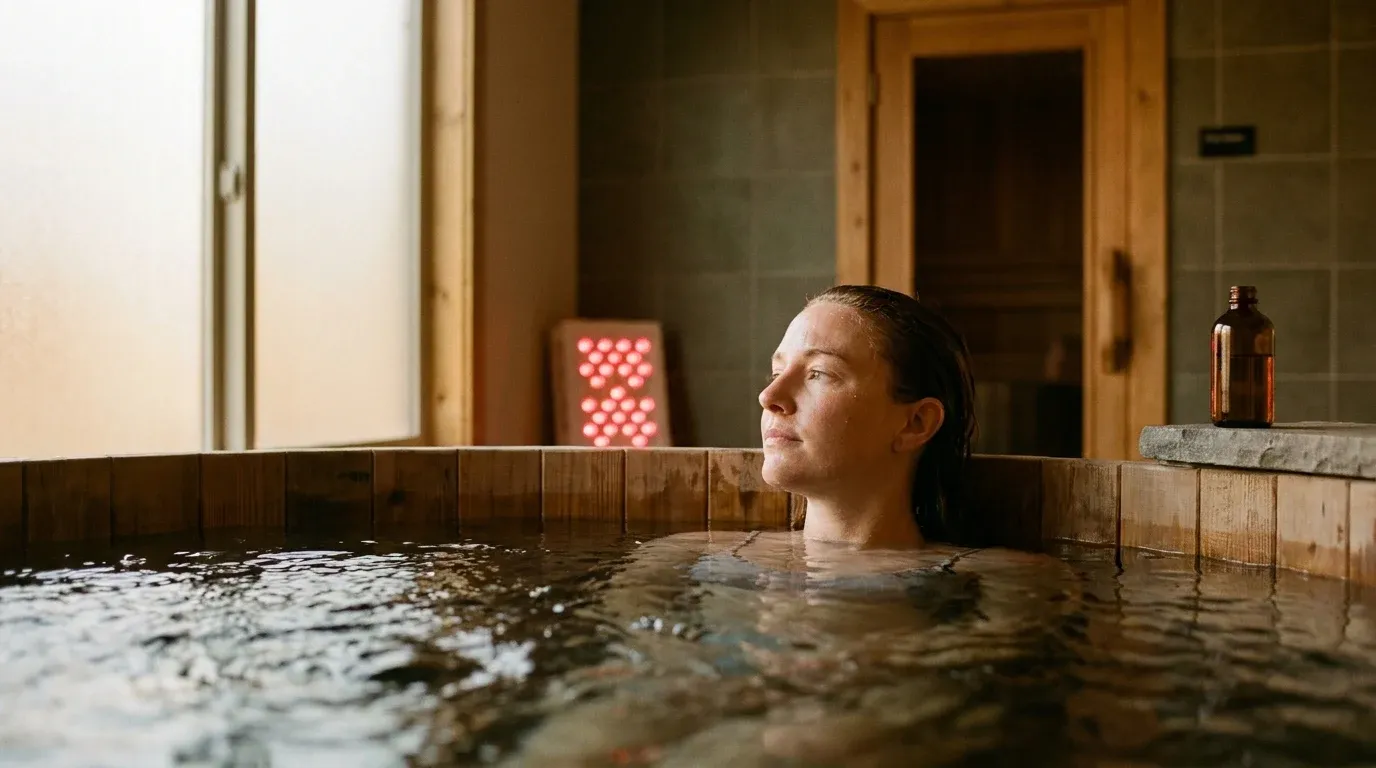
The recovery industry is worth billions, and it runs almost entirely on promise. Ice baths, red light panels, and ketone supplements have become standard fixtures in elite training facilities and home gyms alike. Athletes spend serious money on these tools. Coaches recommend them. Influencers swear by them.
Then came October 2026. A cluster of peer-reviewed studies dropped near-simultaneously, each targeting one of these three pillars of modern recovery. The findings were blunt: none of them do what their marketing says they do. Here's what the research actually found, and what that means for how you train.
Ice Baths vs. Hot Tubs: The Cold Truth
Cold water immersion has been a recovery staple for decades. The logic seems solid: reduce inflammation, constrict blood vessels, flush metabolic waste, feel better faster. Professional sports teams have built entire cold plunge suites around this premise. Consumer ice bath products now retail for $300 to $3,000 depending on the model.
The new research compared cold water immersion directly against hot water immersion across multiple performance markers: perceived muscle soreness, muscle fatigue, and neuromuscular function measured 24 and 48 hours post-exercise. Both groups performed the same high-intensity resistance protocol. Both recovered. Neither recovered better than the other.
The difference in outcomes between cold and hot immersion was not statistically meaningful on any of the primary measures. Soreness ratings were nearly identical. Force production recovered at the same rate. Neuromuscular assessments showed no advantage for cold over hot, or hot over cold.
What this suggests is that immersion itself, the hydrostatic pressure, the rest, the sensory change, may be driving most of the perceived benefit. The temperature is largely irrelevant. If you find cold plunges invigorating and they help you show up consistently, that's a legitimate psychological benefit. But if you're suffering through ice baths because you believe they're accelerating muscle repair faster than a warm soak, the evidence no longer supports that belief.
Ketone Supplements: Marketing Outpacing the Science
Exogenous ketones had a remarkable decade of hype. The pitch is straightforward: provide the body with an alternative fuel source, spare glycogen, reduce oxidative stress, and recover faster between sessions. Some formulations have been positioned specifically as anti-overtraining tools for endurance athletes.
The 2026 cyclist study tested this directly. Participants followed a structured overreaching protocol designed to induce measurable fatigue accumulation, the kind of short-term performance suppression that's a real problem for competitive cyclists during high-load training blocks. One group supplemented with ketone esters at doses matching manufacturer recommendations. The other used a calorie-matched placebo.
After several weeks, there was no significant difference between groups in recovery markers, training load tolerance, or overtraining indicators. Performance metrics, including power output, heart rate variability, and subjective fatigue, tracked nearly identically. The ketone group showed no protection against accumulated fatigue.
This is worth pausing on, because ketone supplements are expensive. Quality ketone ester products run $80 to $150 per month at maintenance doses, and some athletes use considerably more. The marketing copy for these products is often aggressive, leaning on early mechanistic studies conducted in controlled lab conditions rather than training-relevant human trials. This new data from an actual sport context is a meaningful corrective.
If you're already paying close attention to what goes into your supplements, the labeling accuracy issues affecting much of the supplement industry in 2026 add another layer of concern when evaluating whether you're even getting what's on the label.
Red Light Therapy: The Mitochondria Claim Falls Apart
Low-level laser therapy, commonly marketed as red light therapy or photobiomodulation, has built its entire commercial identity around one central claim: that specific wavelengths of light stimulate mitochondria, increasing ATP production and accelerating cellular repair. This idea has been referenced in thousands of product pages, podcasts, and coaching certifications.
The October 2026 study tested this mechanism directly in human subjects using validated markers of mitochondrial activity. The result: no meaningful mitochondrial stimulation was detected at the wavelengths and doses used by commercial devices operating within standard safety limits.
This doesn't mean red light therapy does absolutely nothing. Some research on wound healing and specific dermatological applications remains more promising. But the core athletic recovery claim, that it boosts mitochondrial function and therefore speeds muscle recovery, does not hold up under direct measurement. The mitochondria story was always the scientific engine that justified the price tags on these devices. Without it, you're left with a product that may have secondary benefits too modest to justify costs that frequently exceed $500 for a quality panel.
Red light device companies have responded to prior skeptical research by arguing that dose, wavelength specificity, and application time are critical variables. That argument becomes harder to sustain when studies begin using parameters matched to real-world consumer use rather than theoretical optima.
Why These Three Tools Took Hold
Understanding why ice baths, ketones, and red light became so embedded in serious training culture helps explain why this kind of research takes so long to penetrate the market.
All three tools share a common pattern:
- Plausible mechanisms. Each one has a biological story that sounds credible. Cold reduces inflammation. Ketones provide alternative fuel. Light stimulates cells. The mechanism-first framing makes skepticism feel uninformed.
- Elite adoption. When professional teams or Olympic athletes use something publicly, it signals efficacy regardless of the evidence base. Adoption at the elite level functions as social proof that's almost impossible to argue against.
- Measurable sensations. Ice baths feel dramatic. Ketones change blood chemistry in ways you can measure with a finger-prick device. Red light panels produce warmth. Sensory feedback creates a felt sense of doing something, which the brain interprets as benefit.
- Uncontrolled conditions. Most people using these tools are also sleeping better, training more consistently, or eating more carefully during the same period. Recovery improvements get attributed to the new tool rather than the entire behavior cluster.
None of this means you've been foolish for using them. These tools were backed by real researchers making real arguments. The science just didn't hold up when tested at scale in realistic conditions.
What the Evidence Does Support
The October 2026 research doesn't leave you without options. It just redirects attention to interventions with a more durable evidence base.
Sleep remains the single most well-supported recovery tool available. Its impact on muscle protein synthesis, hormonal regulation, and neuromuscular recovery is substantial and consistent across studies. Chronic stress, which directly degrades sleep quality, compounds the recovery deficit in ways that no supplement or device can meaningfully offset.
Protein timing and total intake continue to show robust effects. The window is wider than early research suggested, but adequate daily protein distributed across meals remains one of the most reliable levers you can pull for muscle repair.
Training load management is arguably the most underutilized recovery tool in recreational athletes. Periodization, deload weeks, and honest assessment of readiness before high-intensity sessions prevent the accumulated fatigue that these products were marketed to fix. Returning to training intelligently after any kind of break is a skill that pays compounding returns over time.
Active recovery including low-intensity movement, mobility work, and structured rest days has solid support for maintaining blood flow and reducing subjective soreness without the costs or complexity of the tools tested here.
What to Do With This Information
If you currently use any of these three tools and you find genuine value in them, the decision isn't automatically to stop. Cold immersion after hard sessions may support your mental reset and motivation. Ketones may help with appetite or energy perception in ways you find useful. Red light panels might improve your mood through warmth and dedicated downtime. These are real outcomes, just not the ones being advertised.
What you're entitled to now is clarity. You don't have to justify the cost of these tools based on mitochondrial stimulation or overtraining prevention. And if you're a coach structuring recovery protocols for clients, the same applies. Understanding what clients actually need from their training support starts with being honest about what the evidence does and doesn't show.
The fundamentals of recovery aren't glamorous enough to sell $800 devices or $120 monthly supplement subscriptions. But they're what works. Sleep more. Eat enough protein. Manage your training load. Move on rest days. The research in October 2026 didn't take anything essential away from you. It just cleared the clutter.