
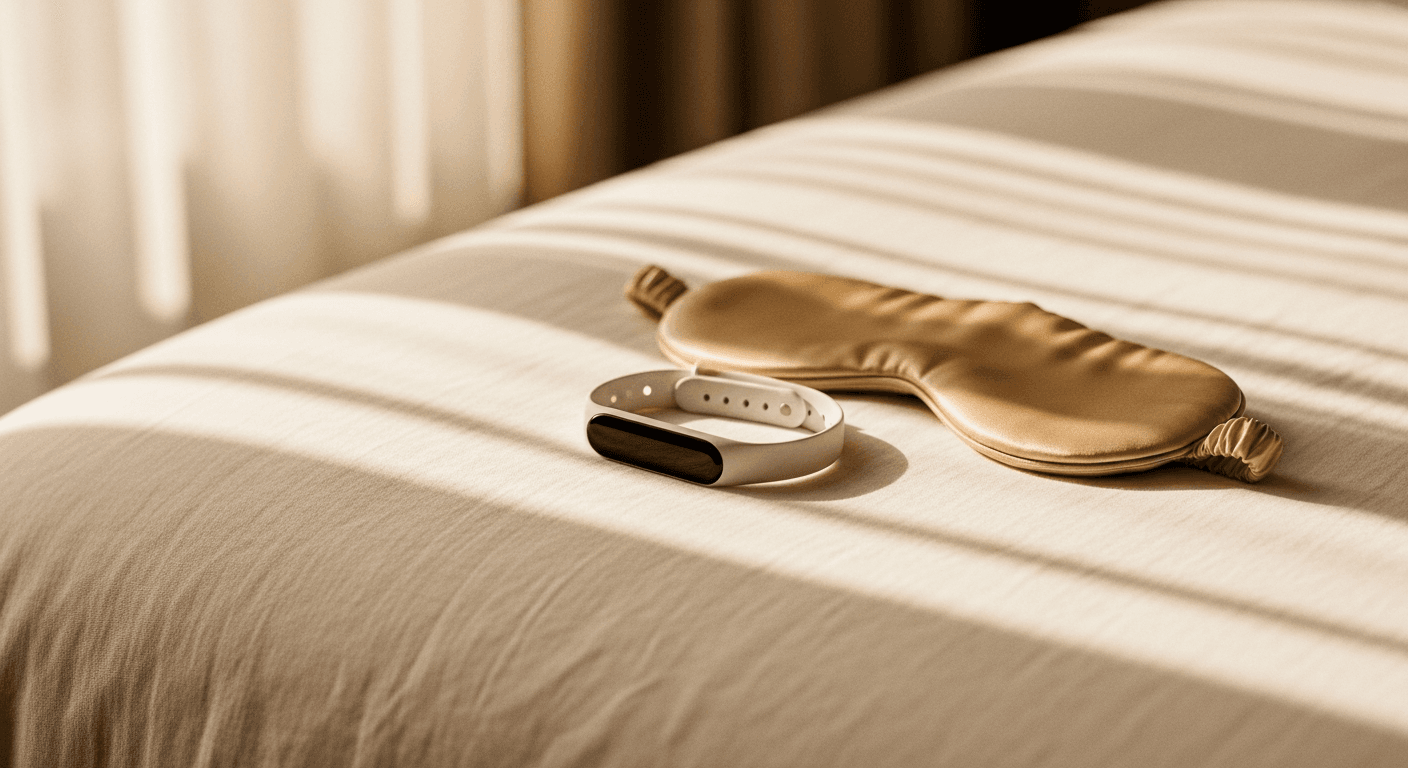
Sleep has gotten serious. Not just as a public health message — as a market. In 2026, two converging trends are transforming how people think about, spend on, and optimize their sleep: sleep tourism and clinical-grade wearable tracking.
Sleep tourism: where you sleep is becoming the destination
Hotels and resorts worldwide now offer dedicated sleep programs. Blackout rooms, precision temperature control, premium mattresses, sleep-optimized menus (tryptophan-rich foods, adaptogenic herbal teas), and at the highest end, personal sleep coaches on staff.
The Global Wellness Institute's 2026 Sleep Initiative identifies sleep as one of the top wellness spending priorities globally. The sleep economy is estimated at over $600 billion globally — across medications, supplements, wearables, premium bedding, and now hospitality.
This isn't a niche market. It's an industry.
Wearables: from tracker to clinical tool
The new generation of sleep wearables — Oura Gen 4, WHOOP 5.0, Apple Watch Series 10 — are moving beyond simple stage counters. These devices are approaching clinical relevance for specific indicators:
- Overnight HRV: reliable indicator of recovery, stress load, and long-term cardiovascular health
- SpO2: screening for mild sleep apnea and nocturnal breathing disorders
- Sleep stages: deep sleep and REM estimation with improving accuracy
- Skin temperature: indicator of illness, hormonal cycles in women, recovery status
Stanford's 2026 research (see our article on AI and sleep data) shows this data goes far beyond athletic recovery. It's becoming a long-term health biomarker.
Sleepmaxxing: the Gen Z trend
On TikTok and Instagram, "sleepmaxxing" — optimizing sleep with the same rigor as a training program — is one of the most engaging wellness trends of 2026. Room temperature, blue light exposure, supplements (melatonin, magnesium, L-theanine), timed pre-sleep routines.
This has a good side and a bad side. The good: young adults taking sleep seriously for the first time. The bad: it can create performance anxiety around sleep — orthosomnia, where obsessing over sleep data makes you sleep worse.
What to actually take away
Without flying to a sleep hotel or buying a $400 wearable, the fundamentals of quality sleep stay the same:
- Consistent bedtime and wake time, 7 days a week
- Cool, dark, quiet room
- No screens 30 minutes before sleep
- No alcohol — it fragments deep sleep even in small amounts
Sleep tourism and wearables are amplifiers for people who have the basics nailed. They're not shortcuts for people who skip them.