
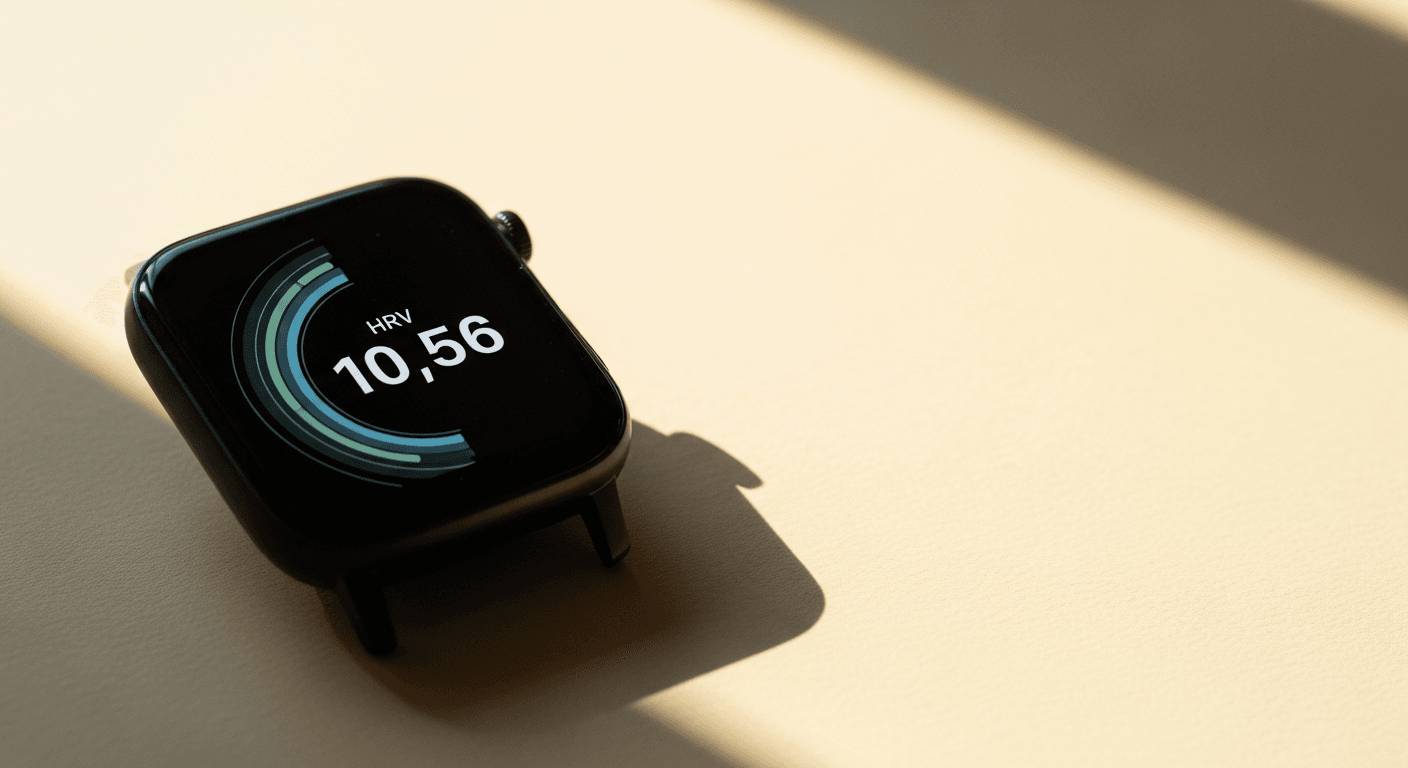
Your wearable buzzes. Your stress score is high. Now what? For most people, that notification lands and then vanishes, leaving no real path forward. That's not a minor UX problem. It's a fundamental flaw in how stress tracking has been built and sold.
A 2026 systematic review mapped the full landscape of stress monitoring technologies, behavioral intervention tools, and evaluation methods used in consumer and clinical settings. The findings don't condemn wearables. But they do expose the gap between what these devices are marketed to do and what the underlying science can actually support.
The Landscape Is Bigger and Messier Than You Think
Stress tracking isn't one technology. It's a cluster of overlapping approaches: heart rate variability (HRV), electrodermal activity (EDA), cortisol-adjacent proxies, sleep quality scores, and behavioral pattern recognition. Different devices use different combinations, and very few disclose which signals they're actually prioritizing or how their algorithms weight them.
The 2026 review found wide variation in reliability across consumer devices. Some tools performed reasonably well under controlled lab conditions. Others showed high error rates even there. In real-world use, where you're moving, sweating, and living your life, that variation gets significantly worse.
That's the part the marketing rarely mentions. Accuracy claims are often sourced from studies conducted in tightly controlled environments, not from someone wearing a ring while commuting or a watch during a difficult meeting.
HRV Is the Gold Standard. Sort Of.
Heart rate variability remains the most validated physiological proxy for stress among consumer-accessible metrics. The science behind it is solid: when your autonomic nervous system is under load, the millisecond variation between heartbeats decreases. Track that variation over time, and you have a window into recovery, resilience, and stress response.
If you want to understand why HRV matters beyond just stress tracking, the one recovery metric that isn't sleep breaks down how HRV stacks up against other recovery signals and what it actually tells you about your body's readiness.
The problem isn't the metric. It's the measurement. Clinical HRV assessment uses chest-strap ECG sensors in controlled conditions, typically with a defined breathing protocol. Consumer wearables use optical photoplethysmography (PPG), which estimates heart rate by shining light through your skin. That's a meaningful difference.
PPG-based HRV readings introduce noise from motion artifacts, skin tone variation, device fit, and ambient light. The review flagged this consistently: consumer-grade sensors produce HRV estimates that can diverge from ECG-validated readings by a clinically relevant margin. Apps rarely disclose this, and most users have no reason to suspect it.
That doesn't mean your HRV trends are worthless. Tracking your own baseline over time, rather than comparing your score to population norms, is where the real signal lives. But the single-day stress number your app shows you is a rougher estimate than the interface implies.
Cortisol, EDA, and the Harder-to-Measure Signals
Some newer devices are attempting to go beyond HRV. Electrodermal activity, which measures skin conductance as a proxy for sympathetic nervous system arousal, is now built into a handful of consumer wearables. Cortisol measurement through sweat sensors is being actively researched.
Both signals are real. Both have meaningful scientific backing in lab settings. But neither has yet crossed the threshold of reliable real-world consumer measurement at scale. EDA is especially sensitive to motion and temperature, making it prone to false positives during physical activity. Sweat-based cortisol sensors face both technical and calibration challenges that haven't been solved at the consumer level.
The review was clear here: these are promising directions, not proven tools. Devices marketing cortisol tracking to everyday users are, at best, ahead of the science.
Notifications Without Direction Don't Work
Here's where the research gets practically useful. The review examined behavioral interventions that stress-tracking systems triggered, and the findings were pointed: alerts alone don't produce meaningful behavior change.
When a high-stress notification is paired with nothing, or with a generic suggestion like "try to relax," users habituate quickly. The buzz becomes background noise. Some users reported increased anxiety from repeated stress alerts, not decreased stress. Awareness without a pathway forward isn't neutral. It can be counterproductive.
What does work? Interventions that delivered specific, actionable prompts showed measurably better outcomes. Guided breathing protocols triggered at the moment of a spike. Short movement breaks with defined structure. Prompts that connected the stress signal to a specific recent behavior, like poor sleep the night before or skipping a meal.
Speaking of movement breaks, there's growing evidence that even very short bouts of activity have real physiological impact. 1-2 minute exercise snacks have been shown to build muscle, and the same principle applies to stress regulation. A structured two-minute breathing or movement response to a stress alert is meaningfully different from an unstructured notification.
The gap between what most apps deliver and what the evidence supports is significant. Most consumer stress apps stop at detection. The intervention layer, where behavior change actually happens, is underdeveloped across the category.
The Education Gap Is the Biggest Problem
The review's most actionable finding might be the one that's hardest to monetize: users who understand what their data means are significantly more likely to act on it effectively.
This isn't surprising when you think about it. If you know that your low HRV this morning reflects the two glasses of wine you had last night, you can contextualize it. If you know that your stress score naturally spikes during intense workouts because the sensor can't distinguish physiological stress from exercise load, you won't panic. If you understand that a single data point is noise and a seven-day trend is signal, you make better decisions.
Most wearable ecosystems don't build this understanding. They present a number, sometimes a color, occasionally a vague label. The implicit message is: trust the score. The more useful message would be: here's what the score is measuring, here's what it can't see, and here's how to use it alongside everything else you know about yourself.
This connects to a broader wellness literacy issue. Stress doesn't exist in isolation from sleep, nutrition, and physical load. Research on sleep duration and biological aging shows that sleep quality has cascading effects on physiological stress markers. If your wearable is tracking HRV but not helping you connect it to your sleep patterns, recovery, and lifestyle context, it's giving you a fragment of a picture.
Similarly, nutritional factors that affect anxiety and nervous system function rarely appear in wearable-generated insights. Choline deficiency has been linked to elevated anxiety through brain scan data, but no stress-tracking app is going to surface that connection based on your HRV reading.
What to Actually Do With Your Stress Data
Given all of this, the practical question is: should you use a stress tracker, and if so, how?
The answer isn't to abandon the technology. It's to use it with appropriate calibration about what it can and can't do.
- Track trends, not daily scores. A single stress reading is noisy. A pattern across two weeks, especially if it correlates with identifiable life events or behaviors, contains real information.
- Learn your personal baseline. Comparing your HRV to average population norms is less useful than understanding your own typical range and noticing deviation from it.
- Pair alerts with prepared responses. If you're going to act on a stress notification, decide in advance what that action looks like. A specific breathing protocol, a short walk, or a five-minute break has more impact than an open-ended intention to de-stress.
- Contextualize with lifestyle factors. Poor sleep, high training load, and dietary patterns all affect your physiological stress markers. If your scores are consistently high, look at the full picture before assuming you need a new app.
- Ask what your device is actually measuring. Read the methodology documentation if it exists. Understand whether your device uses optical HRV, EDA, or some proprietary stress algorithm. That context changes how much weight you give the output.
The 2026 review doesn't suggest that stress tracking is pseudoscience. The underlying physiological signals are real, and the potential for wearables to support mental and physical wellness is genuine. But that potential is being partially squandered by products that prioritize engagement over accuracy and notifications over education.
The devices will keep improving. Sensor accuracy is advancing, algorithms are becoming more personalized, and some platforms are building more substantive intervention layers. But right now, the most important upgrade you can make to your stress-tracking setup isn't a new device. It's a clearer understanding of what the data is telling you, and what it isn't.