
You probably already know that sitting all day isn't great for you. But knowing that and actually doing something about it are two very different things. The good news is that the solution doesn't require a gym membership, a standing desk that costs $1,200, or a complete overhaul of your workday. It requires five minutes, every half hour, and a willingness to take it seriously.
Two recent streams of research have converged on the same conclusion: small, deliberate movement breaks don't just make you feel better. They measurably change your physiology, your cognitive output, and your long-term health trajectory. HR leaders especially should pay attention, because the protocol here is specific, low-cost, and deployable today.
What Happens Inside Your Body When You Sit for Hours
Prolonged sitting triggers a cascade of metabolic disruption that most office workers never think about. Blood pools in the lower extremities. Insulin sensitivity drops. Postural muscles switch off. And every time you eat lunch at your desk and go straight back to staring at a screen, your blood glucose spikes harder and stays elevated longer than it would if you'd moved even briefly afterward.
A 2026 study on short exercise bursts found that five minutes of light movement every 30 minutes significantly reduced post-meal glucose spikes in sedentary adults. The effect wasn't marginal. Participants who incorporated these micro-breaks showed meaningfully better glycemic control than those who remained seated, without any change to their diet. This matters because chronically elevated post-meal glucose is a key driver of inflammation, energy crashes, and long-term metabolic disease.
If you want to understand the full scope of what unbroken sitting does to your body over time, sitting too long raises your cancer risk at work, and the evidence behind that claim is more direct than most people realize.
The Cognitive Case: Active Workstations and Mental Output
The metabolic argument is compelling. The cognitive argument might be even more persuasive for anyone managing a team or trying to justify a wellness investment to leadership.
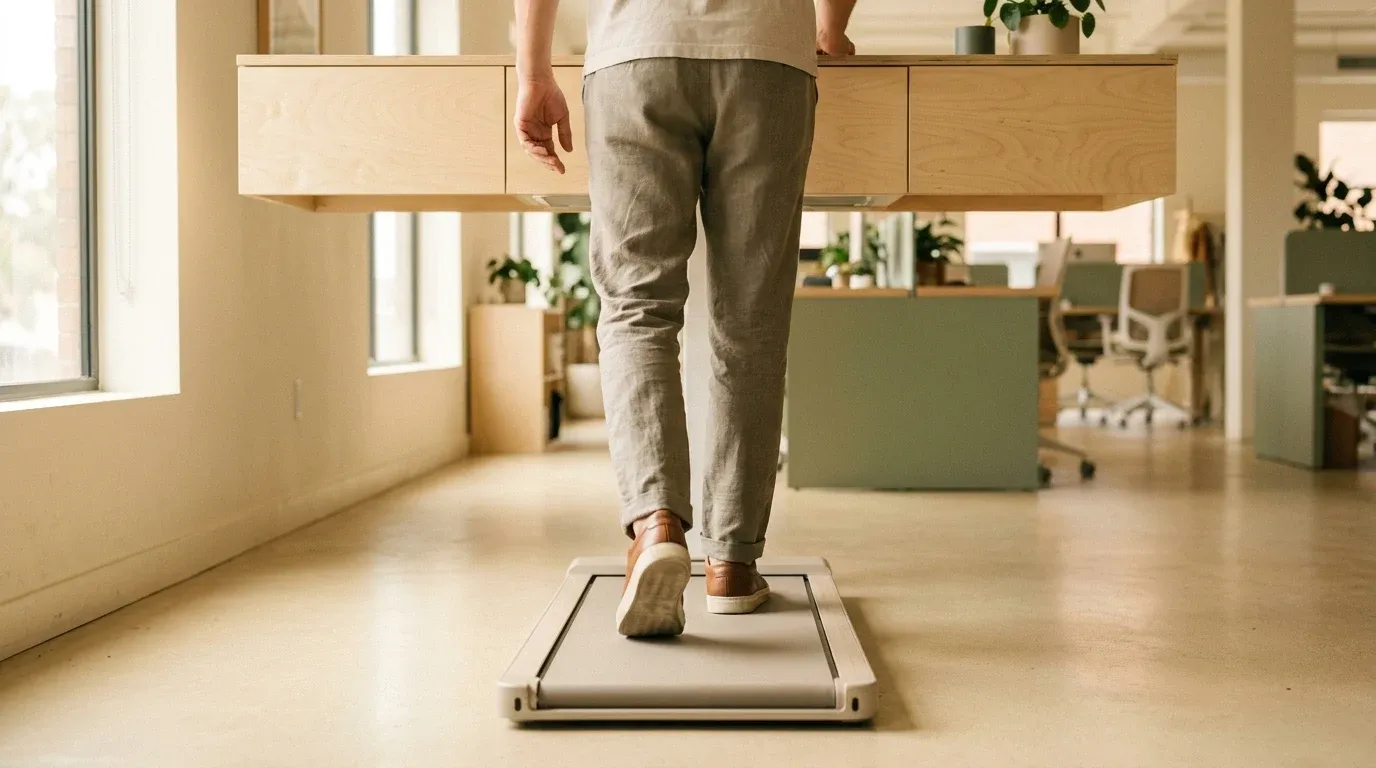
A Mayo Clinic study examining active workstations, including walking pads, desk bikes, and standing desks, found that these setups measurably reduced sedentary time and improved cognitive performance across a range of tasks. Crucially, job output didn't suffer. Workers using active workstations were not less productive. In many cases, they were more focused, particularly on tasks requiring sustained attention.
This aligns with what exercise physiology has shown for years: light physical activity increases cerebral blood flow, elevates norepinephrine and dopamine levels, and reduces the kind of mental fatigue that builds up after two hours of motionless screen time. You don't need to be sprinting on a treadmill to access these benefits. A slow walk at 1.5 mph while reading or typing is enough to shift your neurochemical environment.
For teams already exploring broader approaches to cognitive performance and stress, it's worth noting that movement breaks work well alongside other evidence-based interventions. a workplace meditation program can also prevent burnout, and pairing the two strategies addresses both the physiological and psychological dimensions of desk-worker fatigue.
The Most Common Complaint Nobody Fixes Properly
Ask any ergonomics researcher what desk workers complain about most, and you'll get the same answer every time: neck and shoulder pain. It's the single most cited physical complaint across office-based workforce studies, and it's almost universally undertreated.
The typical response is a posture reminder, maybe a new chair, possibly a monitor riser. These help at the margins. What actually moves the needle, according to ergonomics data, is targeted resistance work. Specifically, just two minutes of daily resistance exercises targeting the neck and shoulder stabilizers is enough to produce measurable relief and reduce chronic tension in that region.
Two minutes. That's not a typo. The muscles involved, particularly the deep cervical flexors, the lower trapezius, and the serratus anterior, respond quickly to even minimal loading when that loading is consistent. The problem isn't intensity. It's consistency. Most people stretch occasionally when they're in pain and do nothing the rest of the time.
A practical daily protocol for neck and shoulder relief looks like this:
- Chin tucks: 10 slow repetitions, pulling the chin straight back to activate the deep cervical flexors
- Band pull-aparts or doorframe squeezes: 15 repetitions targeting the lower trapezius and rear deltoids
- Shoulder blade retractions: 10 slow holds, focusing on drawing the scapulae together and down
Done at a desk, with no equipment, this takes under two minutes. Done every workday, it produces results that a monthly massage cannot replicate.
The Single Most Effective Stretch for Desk Workers
If you're only going to add one movement to your day, make it this one. The standing hip flexor lunge stretch has been identified as the most effective single intervention for counteracting the physiological damage of prolonged sitting.
Here's why it matters. When you sit for extended periods, the hip flexors, particularly the iliopsoas complex, shorten and tighten. This anterior pelvic tilt pattern doesn't just cause hip discomfort. It alters lumbar spine loading, contributes to lower back pain, and affects gait mechanics long after you've stood up. The damage from a single long day of sitting can persist into the following morning if you don't actively address it.
To perform the standing hip flexor lunge stretch correctly:
- Step one foot forward into a lunge position, keeping the back knee lowered toward the floor or resting on it if you're on carpet
- Tuck the pelvis under slightly, creating a posterior pelvic tilt, this is what actually stretches the iliopsoas rather than just the quad
- Hold for 30 to 60 seconds per side, breathing deeply and allowing the hip to sink forward gradually
- For a deeper stretch, raise the same-side arm overhead and lean slightly away from the back leg
Done twice per day, this stretch meaningfully reverses the hip flexor shortening that accumulates during desk work. It also has a secondary effect on thoracic extension, helping to counteract the rounded upper back posture that most people develop over years of screen-focused work.
A Protocol HR Leaders Can Deploy This Week
The research here isn't abstract. It translates directly into a workplace wellness protocol that costs almost nothing to implement and requires no specialized equipment for most participants.
Here's the framework:
- Every 30 minutes: a 5-minute movement break. This can be a short walk, light bodyweight movements, or a series of stretches. The key is that it happens consistently, not just when someone remembers or feels stiff.
- Once per day: two minutes of resistance work targeting the neck and shoulder complex, ideally mid-morning before tension accumulates.
- Twice per day: the standing hip flexor lunge stretch, once before lunch and once before leaving the workday.
- For teams with budget: walking pads start at around $300 to $500 for entry-level models. Even one shared unit in a common area creates an accessible active workstation option without requiring individual desk upgrades.
The 30-minute timer is the cornerstone. Everything else supports it, but without that rhythmic break pattern, the metabolic and cognitive benefits of the other interventions are significantly reduced. Use a phone timer, a calendar alert, or one of the many free desktop apps designed specifically for this purpose.
For teams already walking together, walking meetings represent the simplest wellness win at work and can be built directly into the 5-minute break structure for one-on-one check-ins or small group discussions.
Why Five Minutes Works When an Hour Doesn't
There's a counterintuitive element to this research that's worth naming directly. Many wellness programs fail because they ask too much. A 45-minute lunchtime workout sounds great in theory, but compliance collapses within weeks because it's genuinely disruptive to a workday. Five minutes every 30 minutes is frictionless by comparison.
It's also physiologically superior for the specific harms of desk work. You're not trying to get fit during these breaks. You're interrupting the metabolic and postural deterioration that happens when the body stays locked in one position. That's a different goal, and it requires a different solution. Frequency matters more than duration here.
This is the same logic that underlies the growing body of evidence around short exercise bursts fixing what sitting does to your body. The intervention doesn't need to be hard. It needs to be consistent and well-timed.
If you're building out a broader personal wellness approach alongside these desk habits, it's also worth considering how nutrition supports the cognitive benefits of movement. what you eat actually changes your mental resilience, and the two factors compound each other in ways that make both more effective.
The Bottom Line
You don't need a wellness budget, a gym, or an expensive ergonomic overhaul to protect your health at work. You need a timer, a small amount of floor space, and a commitment to interrupting your sitting at 30-minute intervals. The research is specific. The protocol is clear. The only variable is whether you actually do it.
Start today. Set the timer. Stand up. Five minutes from now, you'll already be ahead of where you were this morning.