
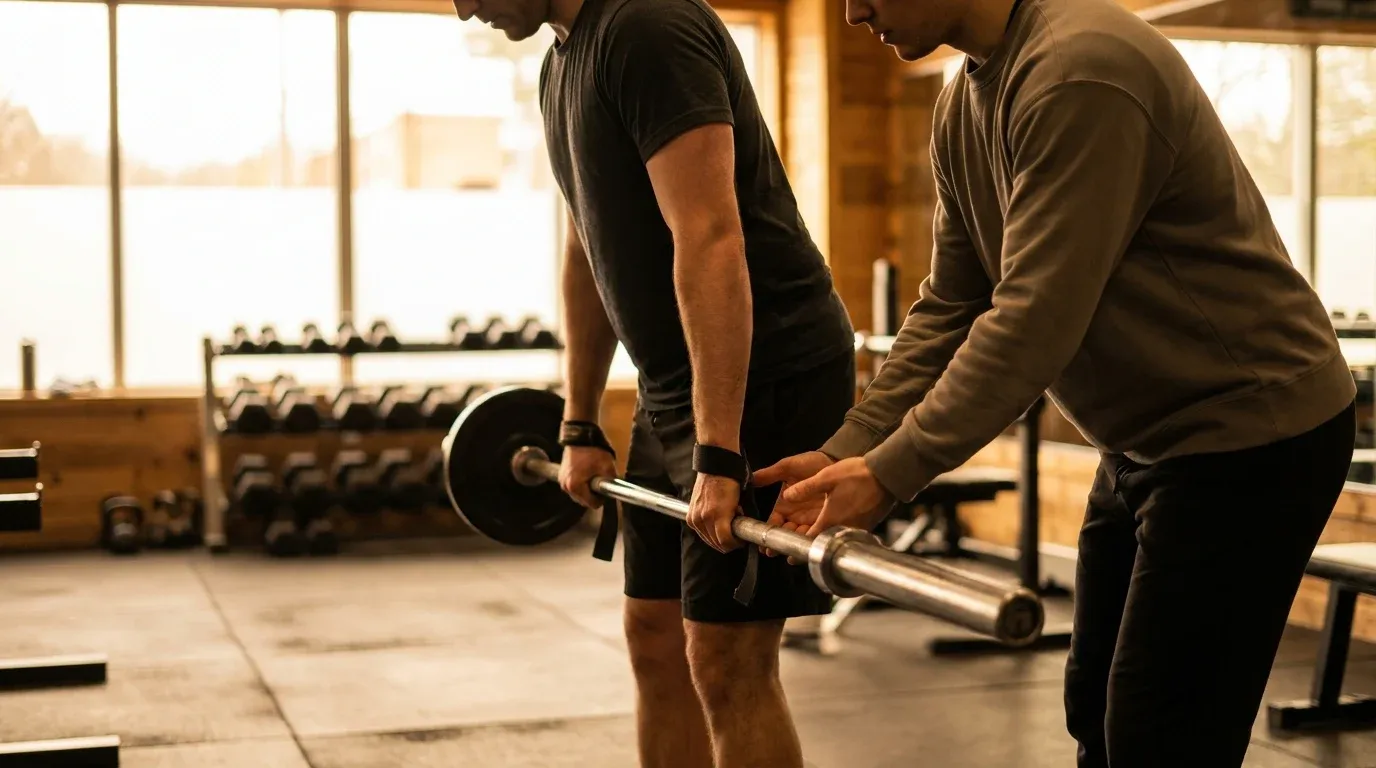
Most people pick a session frequency the same way they pick a gym membership tier: they go with what sounds reasonable, or what fits a round number. Three times a week feels serious. Once a week feels light. But neither of those instincts is especially useful, because the right answer depends entirely on where you're starting from, what you're trying to achieve, and how much you can realistically spend.
This guide is for both clients trying to build a smart plan and coaches who want to set honest expectations from the first consultation. Frequency is a tool, not a target. Here's how to use it correctly.
Why "As Often As Possible" Is the Wrong Starting Point
There's a persistent assumption in the fitness industry that more coaching automatically means better results. It doesn't. What drives results is the quality of stimulus, adequate recovery, and consistent execution. A coach who sees you every day can't manufacture effort or accelerate adaptation beyond what your biology allows.
More sessions can also create a dependency problem. Clients who train exclusively under supervision often struggle to sustain progress when circumstances change, whether that's travel, cost, or the coach's availability. Building some degree of independent competence isn't a nice-to-have. It's part of the coach's actual job.
The question worth asking isn't "how many sessions per week can I afford?" It's "how many sessions per week does my situation actually require?"
Goal Specificity and Self-Sufficiency: The Two Factors That Matter Most
The strongest argument for high session frequency is skill acquisition, not just exercise volume. A complete beginner learning to squat, deadlift, or perform Olympic lifts needs rapid feedback loops. Reinforcing a faulty movement pattern six days a week in the gym makes things worse, not better. In this context, three supervised sessions per week is a defensible starting point, because the coach is correcting errors in real time before they become habits.
An intermediate lifter who already moves well is in a different position. They can self-monitor, they understand how their body responds to load, and they know when something feels off. For this person, one or two sessions per week with a coach, combined with a structured independent program, will produce results comparable to three or four sessions. Sometimes better ones, because the additional training days are programmed strategically rather than improvised.
It's also worth considering the nature of the goal itself. Training for a powerlifting competition requires technical precision that benefits from frequent coaching eyes. Training for general health and cardiovascular fitness, as research consistently shows, responds well to moderate-intensity work that doesn't require expert supervision to execute safely. You can read more about that in research on whether gentle exercise is actually more effective than we think.
Budget Is a Real Constraint. Treat It That Way.
Personal training in the US typically costs between $60 and $150 per session, depending on the trainer's credentials, location, and whether you're working in a commercial gym or privately. Four sessions per week at $100 each means $1,600 per month. That's an annual spend of roughly $19,200. For most people, that number isn't sustainable, and pretending otherwise doesn't serve anyone.
A more practical model for the majority of clients is one to two sessions per week with a coach, paired with two to three independent training days built around a program the coach has designed. This structure keeps the monthly cost between $400 and $1,200, maintains accountability, and still delivers four to five training days per week of quality work.
The key is that the independent sessions need to be genuinely well-designed, not leftover filler. A coach who hands you a generic PDF and calls it programming isn't delivering value proportional to their role. The off-days should be built specifically around what's happening in your supervised sessions, accounting for recovery, progression, and your individual weak points.
Recovery between sessions matters more than most clients realize. Understanding how to structure the 24 hours after intense training can significantly affect whether you show up to the next session ready to work. Recovery methods that work best in the first 24 hours is a useful reference for building that kind of awareness.
Frequency by Life Stage and Population
Session frequency recommendations also shift depending on who you're coaching. Older adults building strength face a physiological reality that younger clients don't: neuromuscular efficiency declines with age, which means the window between productive stimulus and excessive fatigue is narrower. Two to three sessions per week is often the sweet spot for this population, with particular attention paid to technique and progressive load. There's relevant science on that mechanism in research on why aging muscles lose strength.
For women with specific health goals, the picture is similarly nuanced. Hormonal fluctuations across the menstrual cycle affect recovery capacity and strength output, which means a rigid three-sessions-per-week schedule may not be optimal across the entire month. A good coach builds flexibility into the program rather than applying a fixed template.
Athletes training alongside a sport have yet another constraint: their total weekly stress load includes game time, practice, and travel. Stacking three personal training sessions on top of that isn't frequency. It's overreach. Lessons from elite sport about managing total load apply directly here. What elite soccer training teaches regular lifters about recovery covers this in practical terms.
What to Look For in a Session That Justifies Its Cost
If frequency is overrated, session quality is underrated. A single well-structured session with a coach who communicates clearly, programs precisely, and gives actionable feedback is worth more than three sessions of vague encouragement and generic supersets.
Here's what a high-quality session should include:
- Specific technical feedback tied to what you're working on, not generic cues repeated from last week.
- Load and volume decisions that are explained, so you understand the reasoning and can apply it independently.
- A brief check-in on recovery, sleep, and stress, because training doesn't happen in isolation from the rest of your life.
- Clear progression markers, so you both know what success looks like between now and your next milestone.
- An exit point on the horizon. A good coach isn't trying to keep you dependent. They're building toward a version of you that needs them less.
The relationship between client and coach is a significant variable in outcomes, and it's one that's often overlooked when people are comparing credentials or prices. Communication style, trust, and the ability to give honest feedback without deflating motivation all matter enormously. What makes a trainer-client partnership actually work goes deeper on this dynamic.
How to Set Your Own Frequency: A Simple Framework
Rather than defaulting to a number, work through these three questions before your first session or when reviewing an existing arrangement.
How technically demanding is your goal? If you're learning new movement patterns or training for a specific sport or competition, you need more frequent supervision. If you're maintaining fitness or training for general health, less is often enough.
How confident are you training alone? Be honest. If you lose motivation without accountability, or if you genuinely don't know how to structure an effective session, that increases the value of face time with a coach. If you can execute a program independently and adjust when needed, your money is better spent on fewer, higher-quality sessions.
What's your realistic monthly budget? Don't plan around what you could spend in a good month. Plan around what you can sustain for twelve months. Consistency over a year beats intensity over three months every time.
The Bottom Line on Frequency
There's no universal answer to how often you should train with a personal trainer. What the evidence and practical experience both suggest is that one to two high-quality sessions per week, paired with structured independent training, is the most effective model for the majority of clients. Beginners and those with highly technical goals may need more early on, and that's fine. The frequency should reduce as competence builds, not stay fixed.
The best coaches will tell you this upfront. They're not selling sessions. They're selling outcomes. And the fastest route to a good outcome rarely runs through the maximum number of appointments on the calendar.