
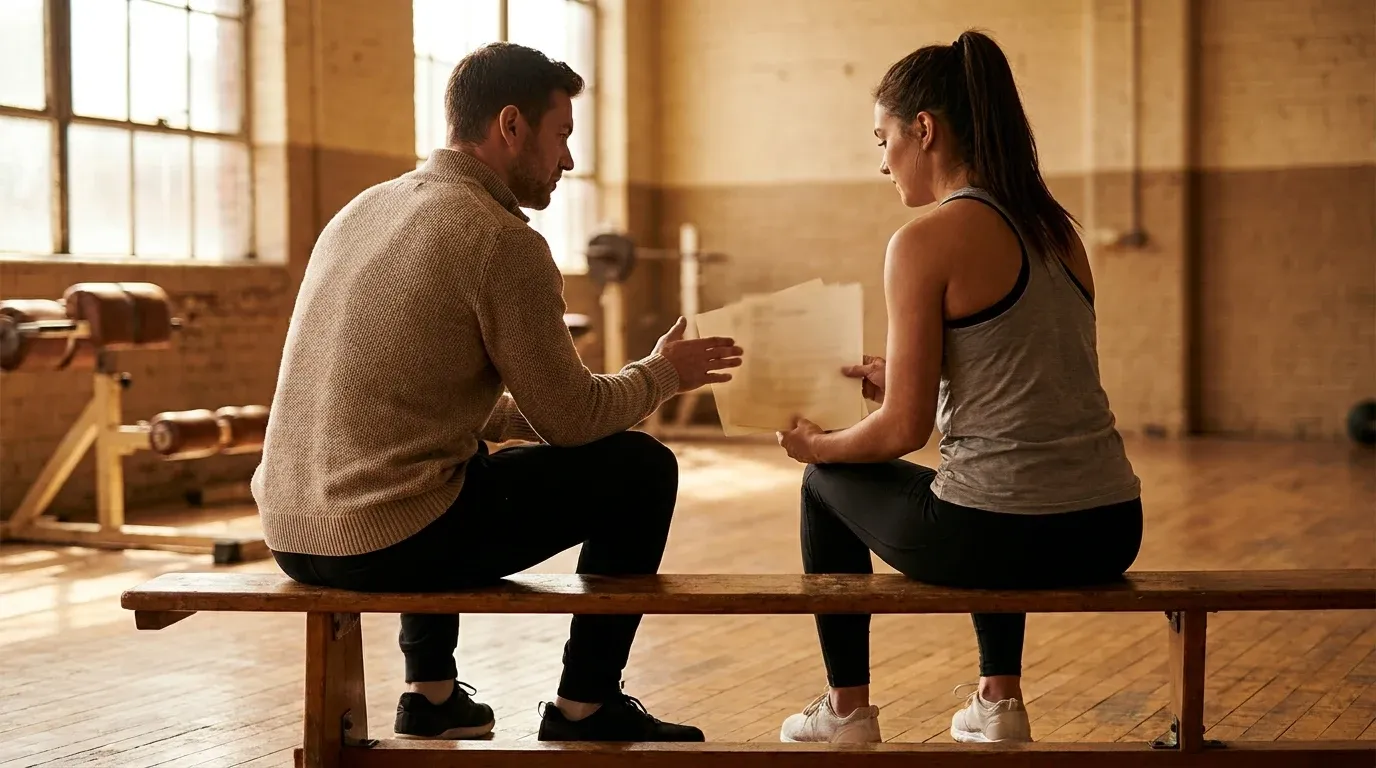
Most guides on finding a personal trainer read like a certification checklist. NASM? Check. CPR certified? Check. Good reviews? Sure. The problem is that approach treats every fitness goal as roughly the same thing, and they're not. The trainer who helped your coworker lose 30 pounds after two kids may be completely wrong for your powerlifting prep or your post-surgery rehab. Starting with credentials is starting from the wrong end.
Here's the better approach: define the goal first, then work backward to find the trainer built for it.
Step One: Get Specific About What You Actually Want
Vague goals produce vague results. "Get fit" or "lose weight" tells a trainer almost nothing, and it tells you even less about who you should be hiring. Before you search for anyone, write down your goal in one specific sentence. Not "get stronger" but "add 20 pounds to my deadlift in four months." Not "feel better" but "return to recreational soccer without knee pain."
That specificity changes everything downstream. A bodybuilder chasing hypertrophy needs a coach who obsesses over training volume, progressive overload, and details like why the lowering phase of a rep matters more than most people think. A new runner training for their first half-marathon needs someone versed in periodization, aerobic base building, and injury prevention. These are different bodies of knowledge. No single trainer masters all of them equally.
Common goal categories that genuinely require different expertise:
- Fat loss and body recomposition: Requires knowledge of caloric programming, sustainable habit formation, and often nutrition integration.
- Strength and powerlifting: Demands deep technical coaching in compound lifts, peaking cycles, and load management.
- Hypertrophy and aesthetics: Centers on volume, muscle group prioritization, and recovery optimization.
- Post-injury or post-surgical rehabilitation: Needs someone comfortable working alongside physical therapists and within medical clearance guidelines.
- Sport-specific performance: Requires understanding of energy systems and movement patterns specific to the sport.
- General health and longevity: Benefits most from coaches focused on consistency, lifestyle integration, and long-term adherence.
Once you've placed your goal in a category, you have a filter. You're no longer searching for "a good trainer." You're searching for the right kind of trainer.
Coaching Style Matters More Than You Think
Credentials confirm that someone sat through coursework and passed a test. They say almost nothing about whether that person can actually coach you. The gap between certified and effective is wide, and it's filled by things like communication style, adaptability, and the ability to read when a client is struggling.
This matters most for two groups: people with injury history, and people with non-standard goals. If you've had a herniated disc, a torn ACL, or chronic joint pain, you don't just need someone technically qualified. You need someone who asks questions first and programs second. Research on fear-avoidance in injury recovery consistently shows that how a coach frames pain and loading affects outcomes just as much as the exercises themselves. If you're navigating something like knee pain, understanding why movement is typically the right response, not rest, should be part of your coach's working knowledge.
Non-standard goals face a similar problem. If you're a 55-year-old woman training for her first Olympic weightlifting competition, most templates built for 25-year-old male athletes don't apply. You need a coach who adapts rather than one who slots you into a prefab program and hopes for the best.
When evaluating style, ask yourself these questions after a first session or consult:
- Did they ask more questions than they answered?
- Did they explain the reasoning behind their approach, or just hand you a plan?
- Did they seem uncomfortable when you pushed back or asked why?
- Did they treat your previous experience as useful information or a hurdle to overcome?
A coach who can't handle questions in a first meeting won't handle setbacks well either.
Red Flags in a First Consultation
A first consult should feel more like a conversation than a sales pitch. Trainers who skip straight to pricing, program templates, or transformation before-and-afters are showing you their priority order. Here's what to watch for.
No questions about injury history. This is the clearest red flag on the list. Any competent trainer asks about injuries, surgeries, chronic conditions, and current medications before recommending anything. Skipping this step isn't just unprofessional. It's a liability for you. If a trainer starts describing your program before asking about your body, leave.
One-size-fits-all program templates. Some trainers sell the same 12-week program to everyone, with minor label changes. Ask directly: "Will my program be built from scratch based on my assessment, or is it a modified template?" If the answer is evasive, that's your answer. Templates aren't inherently bad for general fitness, but they're rarely appropriate for specific goals or clients with complex histories.
Vague progress tracking. If a trainer can't explain how they'll measure your progress, that's a problem. Progress tracking doesn't have to be elaborate, but it has to be concrete. Strength goals should have numbers. Body composition goals should have a measurement method. Endurance goals should have performance benchmarks. "You'll feel the difference" is not a tracking system.
Overselling results with no context. Before-and-after photos are common marketing. The issue is when they come without context. How long did that take? What was that client's starting point? What other lifestyle factors were involved? Transformation images stripped of context are almost meaningless, and trainers who lead with them are prioritizing optics over substance.
Dismissiveness about nutrition or recovery. Training doesn't exist in a vacuum. A trainer who waves off recovery, sleep, or nutrition as "not my department" is ignoring half the equation. They don't need to be your dietitian, but they should understand how those factors interact with training load and progress.
Where to Actually Find Good Trainers in 2026
The discovery landscape has shifted. Gym bulletin boards and word-of-mouth still work, but they're no longer your best options if you have a specific or complex goal.
Local gyms with specialty programming. Large commercial gyms carry a wide range of trainer quality. Boutique facilities, however, often recruit around a specific methodology, whether that's functional fitness, strength sport, corrective exercise, or endurance. If your goal aligns with a gym's specialty, the trainer pool there is filtered in your favor before you even walk in.
Coaching apps and platforms. Remote coaching has matured significantly. Platforms now allow trainers to work with clients globally, with video check-ins, app-based program delivery, and real-time feedback. If you're in a city without strong local options, this is worth exploring seriously. The guide on how to evaluate coaching platforms in 2026 breaks down what to prioritize when comparing remote options.
Social proof tied to real results. Instagram and YouTube have created an entire category of trainer who is better at marketing than coaching. The signal to look for isn't follower count. It's client results shared publicly over time, with enough context to be credible. Testimonials from clients with similar goals to yours carry more weight than generic praise. Ask trainers directly for references you can contact.
Specialist referrals. Physical therapists, sports medicine doctors, and orthopedic surgeons refer clients to trainers regularly. If you're coming off an injury or have a medical condition, this channel is underused and often produces better matches than a general search. A PT who works with post-surgical athletes, for instance, will typically know which local trainers can safely continue that work. For context on how exercise protocols have evolved for post-surgical patients, the research around exercise safety after ACL reconstruction is worth reviewing before your first appointment.
On pricing: in the US market, in-person personal training typically ranges from $60 to $150 per hour depending on location and specialization. Remote coaching packages often run $150 to $400 per month for structured programming with regular check-ins. Premium sport-specific or post-rehab coaching can exceed $500 per month. Price alone doesn't indicate quality, but significantly below-market rates sometimes signal a lack of experience with complex goals.
Making the Final Call
After a first consultation, give yourself 24 hours before committing. The right trainer will not pressure you to sign immediately. Use that window to revisit your notes, compare how the trainer answered your specific questions, and check whether the proposed approach actually maps to your stated goal.
Ask one final question before you decide: does this person understand what success looks like for me specifically, or are they describing success in general? The trainers worth hiring know the difference. They've built their answer around your goal, not around a template they've delivered a hundred times before.
Finding the right trainer takes more effort upfront than picking whoever's available on Tuesday mornings. That effort pays off in a program that's actually built for you, with a coach who can adapt when things don't go as planned. That's the version of this process that gets results.