
If you've had ACL reconstruction surgery, chances are someone told you to be careful with your knee. Maybe you've avoided squats, skipped the stairs at speed, or quietly pulled back from sport because you were afraid of wearing down the cartilage you worked so hard to protect. That fear is understandable. For years, it was shared by clinicians too.
New clinical evidence is changing that picture significantly. A well-designed trial called SUPER-Knee has found that supervised exercise therapy does not accelerate cartilage damage in people recovering from ACL reconstruction. In fact, it appears to protect the joint. For millions of people living cautiously in the months and years after surgery, that's a meaningful shift in what recovery can look like.
What the SUPER-Knee Trial Actually Found
The SUPER-Knee trial followed young adults who were still experiencing persistent knee symptoms one to three years after ACL reconstruction. This is a clinically important window. By that point, many patients have been discharged from formal care but haven't returned to full activity. They exist in a kind of recovery limbo, managing discomfort without clear guidance on how hard to push.
Participants in the trial were assigned to a structured program of physiotherapist-supervised exercise therapy. The researchers tracked several outcomes over time: pain levels, quality of life, muscle strength, and critically, the condition of knee cartilage as assessed through imaging.
The results were clear. The supervised exercise group showed meaningful improvements in pain and self-reported quality of life. Muscle strength increased. And cartilage health? It did not worsen. There was no acceleration of joint damage compared to control groups, contradicting the assumption that loading an ACL-reconstructed knee in this population inevitably leads to early cartilage breakdown.
Why This Finding Matters More Than It Sounds
The fear of post-surgical cartilage damage isn't irrational. ACL injuries are strongly associated with the later development of knee osteoarthritis, with some studies suggesting that people who undergo ACL reconstruction face a significantly elevated lifetime risk compared to the general population. That risk has led many clinicians, and patients, to treat the reconstructed knee as inherently fragile.
The practical result has been widespread under-loading. Patients restrict movement not because they're told to after their initial recovery, but because they're afraid. Physiotherapists sometimes reinforce that caution without strong evidence to support it. The SUPER-Knee trial pushes back on exactly this pattern.
What the data suggest is that the reconstructed knee responds to exercise much like healthy tissue does. It adapts. Cartilage requires mechanical loading to stay healthy. When you remove that loading consistently over months or years, you're not protecting the joint. You're potentially depriving it of the stimulus it needs to maintain integrity.
This aligns with a growing body of evidence in musculoskeletal medicine suggesting that rest, while necessary acutely, becomes counterproductive when extended. Everyday Movement Counts as Much as Your Workout explores how low-level, consistent physical activity supports tissue health in ways that structured exercise alone can't replicate. The same logic applies here: keeping the knee moving purposefully, under guidance, matters.
The Specific Role of Supervision
It's worth being precise about what this research supports, because nuance matters when you're dealing with a surgically reconstructed joint.
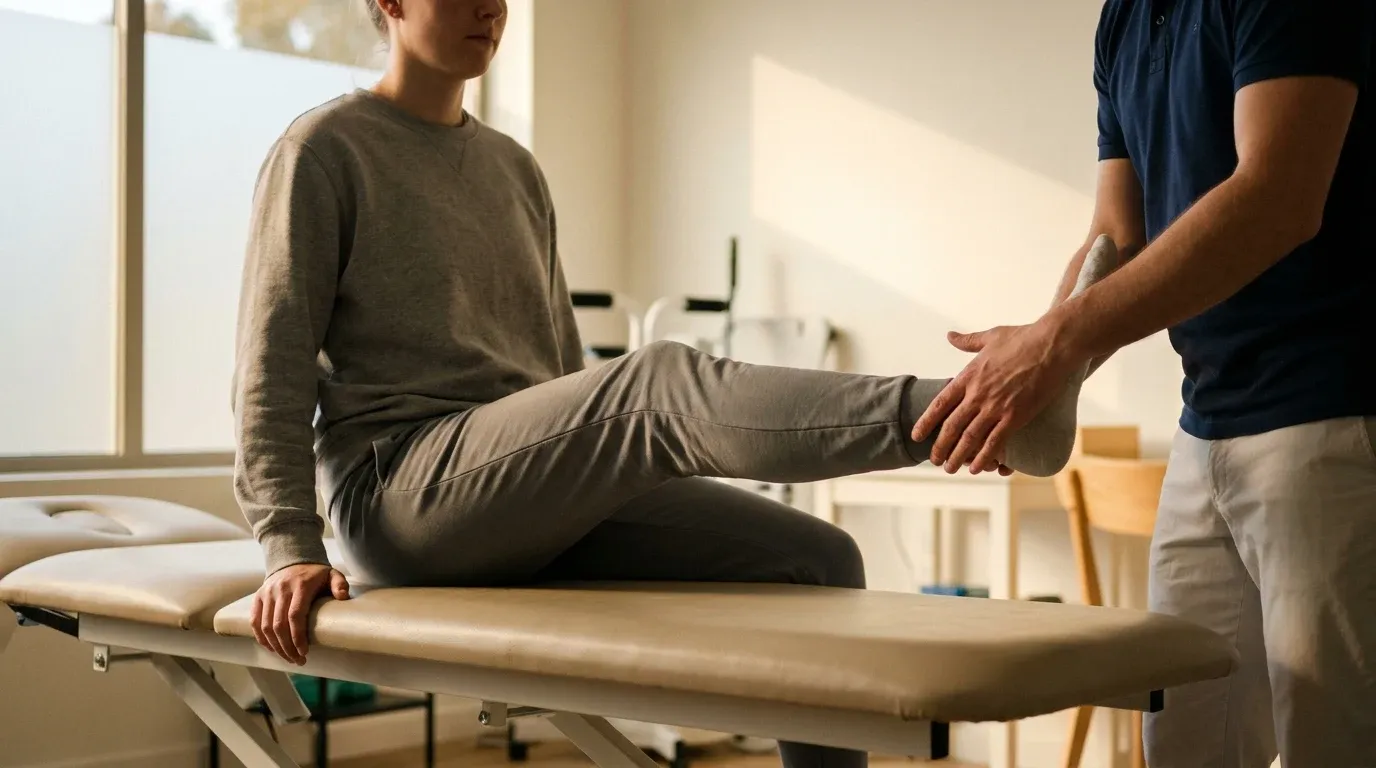
The trial didn't conclude that any exercise is safe, or that you should load your knee however you feel like. The intervention was physiotherapist-supervised. That means progressive, individualized, monitored. Loads were increased systematically. Movement patterns were corrected. Pain responses were tracked and used to adjust the program.
This distinction is important. Unsupervised, unstructured activity after ACL reconstruction can still cause problems. What SUPER-Knee validates is a clinical model, not a free pass to jump back into sport without guidance.
If you're in that one-to-three-year window post-surgery and still dealing with persistent pain, strength deficits, or movement restrictions, the evidence now strongly supports seeking out a physiotherapist who specializes in knee rehabilitation rather than simply waiting it out. Waiting, without loading, may be making things worse.
Muscle Strength Is Central to This Story
One of the clearest outcomes in the SUPER-Knee data was improved muscle strength. This isn't incidental. Quadriceps and hamstring strength are closely tied to how well the knee joint is protected during movement. When those muscles are weak, the joint absorbs more force directly. When they're strong, force is distributed more effectively across the entire limb.
Many people who've had ACL reconstruction never fully recover the strength symmetry between their operated and non-operated leg. Research consistently shows that returning to sport with significant quadriceps asymmetry increases the risk of reinjury. Building that strength back, through supervised loading, is therefore both a performance goal and a protective one.
Some people in longer-term recovery also explore nutritional support during rehabilitation. Creatine, for instance, has well-documented effects on muscle output and strength gains during resistance training. Creatine, HMB, and Hydration: Does the All-in-One Stack Deliver? examines how combining creatine with other recovery-focused compounds compares to standalone supplementation, which is a question worth asking if you're actively rebuilding muscle post-surgery.
Rethinking the Default Response to ACL Reconstruction
ACL injuries are among the most common serious orthopedic injuries in sport, with an estimated 200,000 ACL reconstructions performed annually in the United States alone. The majority occur in young, active people between the ages of 15 and 45. The standard expectation after surgery has been a nine-to-twelve-month return-to-sport timeline, though many athletes never get there.
What's less often discussed is what happens after formal rehabilitation ends. For a significant proportion of patients, that endpoint is not full recovery. It's discharge. They leave physiotherapy with residual weakness, residual pain, and a lingering fear of reinjury that discourages them from ever returning to their pre-injury activity level.
This population is exactly who the SUPER-Knee trial addresses. And the message is fairly direct: structured exercise therapy, even years after surgery, can still move the needle on pain, function, and joint health. It's not too late to load the knee properly. And doing so doesn't appear to shorten the joint's lifespan.
That should change the conversation between patients and clinicians. Instead of accepting persistent symptoms as the new normal, the evidence now supports a more active response. Supervised exercise should be the default, not the exception, for people still struggling in the medium-term aftermath of ACL reconstruction.
What This Means for Your Recovery
If you're in recovery, or know someone who is, here's what the current evidence suggests you should expect from a good rehabilitation program:
- Progressive loading: Exercise intensity should increase over time, not stay flat. Your knee needs a gradually increasing challenge to adapt and strengthen.
- Strength symmetry as a goal: Aim to close the gap between your operated and non-operated leg. Many programs target 90% limb symmetry index before clearing return to sport.
- Pain monitoring, not pain avoidance: Some discomfort during exercise is acceptable and expected. Sharp, acute, or worsening pain is not. A physiotherapist helps you tell the difference.
- Cartilage loading as protective: Based on the SUPER-Knee findings, loading the joint appropriately appears to support cartilage health rather than undermine it. Avoidance is not automatically the safer option.
- Consistency over intensity: Regular, moderate, supervised exercise beats occasional intense sessions followed by prolonged rest.
Beyond the knee itself, broader physical health habits matter during prolonged recovery. Sleep quality, for instance, significantly affects tissue repair and pain sensitivity. If disrupted sleep is part of your post-surgery experience, evidence-based approaches like CBT-I, the insomnia therapy most people haven't heard of, are worth knowing about. Recovery is systemic, not just structural.
Nutrition supports the same picture. Protein intake, anti-inflammatory foods, and adequate micronutrients all contribute to how well your body rebuilds after injury. If you're exploring supplementation to support your training load, it's worth reading critically. EAAs Plus Electrolytes: Smart Stack or Just Marketing? offers a practical breakdown of what the evidence actually supports in that space.
The Science Is Catching Up to What Active People Know
There's often a gap between what researchers demonstrate and what becomes clinical practice. The SUPER-Knee trial adds meaningful evidence to a growing consensus: movement, properly guided, is medicine for the musculoskeletal system. Rest has its place, but it's not a long-term strategy.
For anyone who has held back from loading their knee after ACL reconstruction because they were told to be careful, or because they were afraid, the science is now clearer than it's been. Supervised exercise therapy protects the joint. It improves how the knee feels and functions. And it doesn't wear out the cartilage you've been trying to spare.
That's not a reason to be reckless. It's a reason to stop waiting and start working, with the right support around you.