
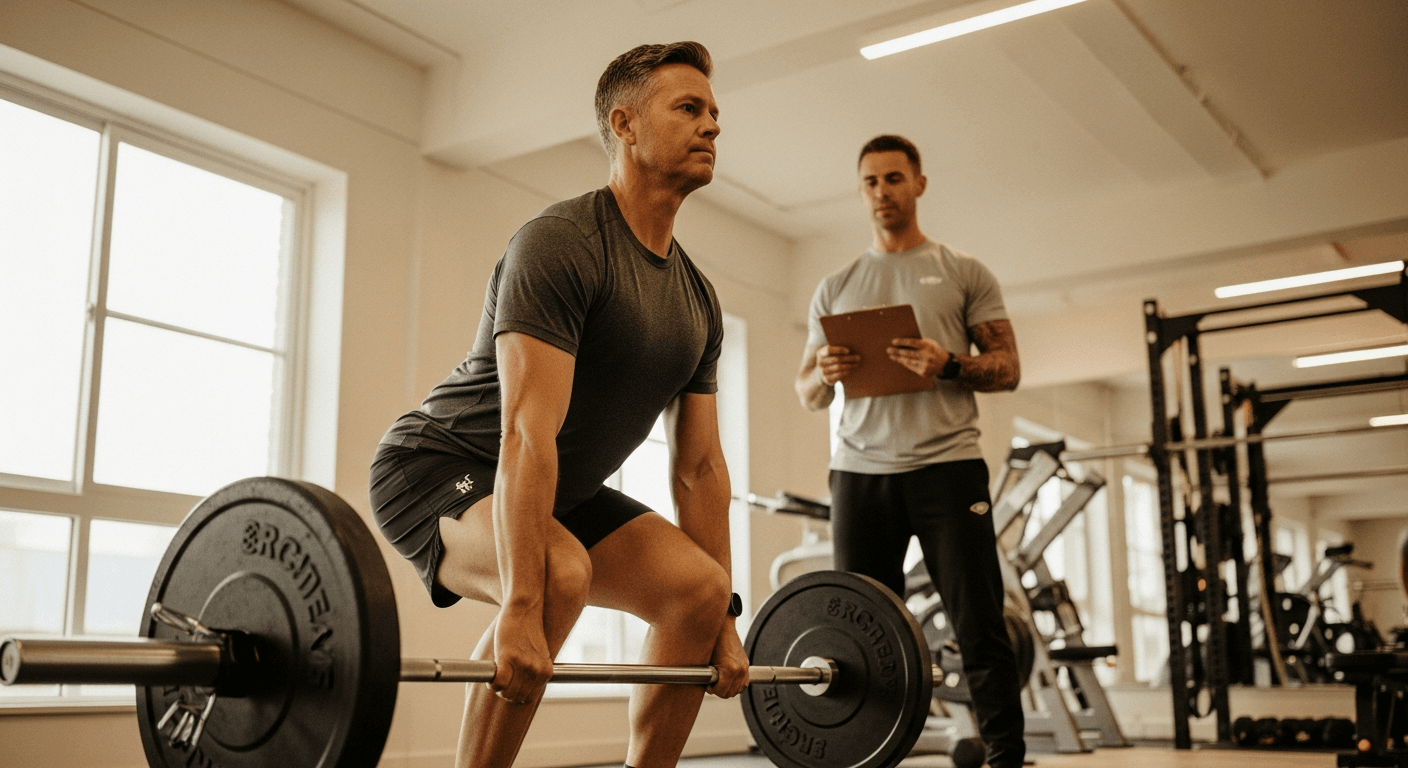
Somewhere along the way, the fitness industry convinced adults over 40 that they need to work harder to see results. More sweat, more soreness, more sessions. That logic doesn't hold up. What the research and real-world coaching experience consistently show is that structure. not intensity. is what actually delivers long-term results for this age group.
If you're over 40 and feeling like your workouts aren't working, the problem probably isn't effort. It's architecture.
Why Intensity Stops Being the Answer
In your twenties and early thirties, the body absorbs punishment well. Recovery is fast, hormonal output is high, and you can get away with inconsistent programming by simply showing up and grinding. That buffer shrinks significantly after 40.
Testosterone and estrogen levels decline. Recovery windows lengthen. Connective tissue becomes less forgiving. A training approach built around pushing harder in every session stops producing returns and starts producing injuries. And injury, more than almost any other variable, is what ends long-term training careers.
Research consistently shows that adults over 40 who train with high-frequency, high-intensity approaches without adequate recovery experience significantly higher rates of overuse injuries. Tendinopathies, lower back strain, and shoulder impingement are among the most common reasons this age group falls off training programs entirely. Intensity without structure isn't ambition. It's attrition.
The Six Movement Patterns That Cover Everything You Need
Smart programming for adults over 40 doesn't require complexity. It requires completeness. Six foundational movement patterns, trained consistently, cover the full spectrum of functional strength and musculoskeletal health:
- Squat: Goblet squats, box squats, front squats. Develops lower body strength and knee stability under load.
- Hinge: Deadlifts, Romanian deadlifts, kettlebell swings. The single most important pattern for posterior chain health and lower back resilience.
- Push: Push-ups, dumbbell press, overhead press variations. Maintains shoulder integrity and upper body pressing strength.
- Pull: Rows, lat pulldowns, band pull-aparts. Counterbalances pushing movements and supports thoracic posture.
- Carry: Farmer's carries, suitcase carries, overhead carries. Builds grip strength, core stability, and real-world durability in ways most machines can't replicate.
- Trunk control: Dead bugs, pallof presses, plank variations. Protects the spine during loaded movement and transfers strength from lower to upper body.
Two to three sessions per week that each include a variation from every category is enough to drive meaningful adaptation. You don't need six days of training to make progress. You need six patterns, trained intelligently and consistently over months and years.
Progressive Overload at a Sustainable Pace
Progressive overload. the practice of gradually increasing training demands over time. is the fundamental driver of strength gains at any age. After 40, the principle doesn't change. The pacing does.
Where a 25-year-old might add weight weekly, adults over 40 often see better results adding load every two to three weeks, or progressing through volume (more sets or reps) before adding intensity. This approach keeps the stimulus present while avoiding the spike in systemic stress that derails recovery and invites injury.
Mobility work deserves equal billing here. It's not a warm-up afterthought. Dedicated hip flexor work, thoracic rotation, ankle mobility, and shoulder capsule work done consistently over months changes what loading positions are available to you. Better positions mean better mechanics. Better mechanics mean less compensatory strain. This is how adults over 40 stay in the game for decades rather than burning out in a single aggressive training block.
Sleep and Recovery Aren't Optional Add-Ons
No training program survives poor recovery. For adults over 40, the quality of adaptation. how well muscle tissue repairs, how fully the nervous system resets. is directly tied to sleep quality and duration.
Research from Berkeley found that deep sleep is a primary driver of growth hormone release, which plays a central role in muscle repair and body composition. You can read the full breakdown in this piece on how deep sleep builds muscle and supports fat loss. The implication for training is direct: two great sessions per week with excellent recovery will outperform four mediocre sessions on five hours of sleep.
A Columbia University study found that losing as little as 80 minutes of sleep per night was associated with measurable weight gain over time. That study's findings, covered in depth in why losing 80 minutes of sleep a night makes you gain weight, reinforce why coaches working with adults over 40 need to treat sleep as a training variable, not a lifestyle conversation.
If recovery is the constraint in your client's program, adding a third session isn't the answer. Fixing their sleep is.
Nutrition Supports the Structure
Strength training after 40 places specific nutritional demands on the body, particularly around protein. Muscle protein synthesis becomes less efficient with age, meaning adults over 40 need more dietary protein per kilogram of bodyweight than younger adults to achieve similar anabolic responses. Current evidence supports daily protein intakes in the range of 1.6 to 2.2 grams per kilogram of bodyweight for this population.
Creatine monohydrate is one of the few supplements with consistent evidence behind it for adults over 40. Beyond supporting strength output, it's showing promising signals for cognitive health. The emerging research on creatine's brain benefits beyond muscle performance is particularly relevant for a demographic managing mental load alongside physical training demands. It's not a magic bullet, but it's one of the more evidence-supported tools available.
Supplement quality matters too. With a market full of under-dosed or mislabeled products, understanding how to evaluate what you're actually taking is worth your time. The ongoing conversation around how the supplement industry is working to close the trust gap offers a useful framework for making smarter choices.
The Coach's Role Has to Evolve
The traditional model of personal training. show up, push hard, repeat. doesn't serve adults over 40 well. A coach working with this demographic needs a different skill set, and frankly, a different mindset.
Programming intelligence matters more than motivational energy. The ability to assess someone's movement quality, identify the right starting load, sequence progressions across a twelve-week block, and adjust when life disrupts the plan is what separates coaches who get long-term results from those who get short-term compliance followed by dropout.
Lifestyle integration is the other side of this. Adults over 40 are managing careers, family demands, stress, and often less predictable schedules than younger clients. A program that looks perfect on paper but can't survive a week of travel or a bad stretch of sleep isn't a good program for this client. It's a liability.
Coaches who build their practice around the 40-plus demographic are also tapping into one of the most commercially valuable segments in the market. Personal training already represents a significant share of gym revenue, and the adult professional market commands premium pricing. The strategic landscape for coaches building in this space is laid out clearly in why personal training now represents 47% of gym revenue.
The coaches who thrive with this population aren't the ones who design the most creative workouts. They're the ones who design the most sustainable programs, check in consistently, adjust proactively, and help clients understand that showing up twice a week for three years beats showing up six days a week for six months.
What a Smart Week Actually Looks Like
Here's a practical example of what a structured week might look like for an adult over 40 with no major injuries and around two years of training experience:
- Session 1 (Monday): Goblet squat, Romanian deadlift, dumbbell bench press, seated cable row, farmer's carry, dead bug. Three sets each, moderate load, controlled tempo.
- Session 2 (Wednesday or Thursday): Box squat, kettlebell swing, overhead press, single-arm row, suitcase carry, pallof press. Three sets each, similar structure with slight load variation.
- Session 3 (Saturday, optional): Lower intensity. bodyweight or light load. with emphasis on mobility, carries, and trunk work. Serves as active recovery and pattern reinforcement.
Between sessions: walking, stretching, adequate sleep, and protein intake. That's the full program. It's not complicated. It's consistent, and consistency over time is what produces the results adults over 40 are actually looking for.
The Long Game Wins
Strength training after 40 isn't about accepting less. It's about building a framework that actually lasts. Two to three structured sessions built around the six foundational movement patterns, progressed deliberately over time, supported by recovery and sound nutrition. that's the formula.
You don't need to suffer through every session to make progress. You need to keep showing up. Structure makes that possible. Intensity alone doesn't.