
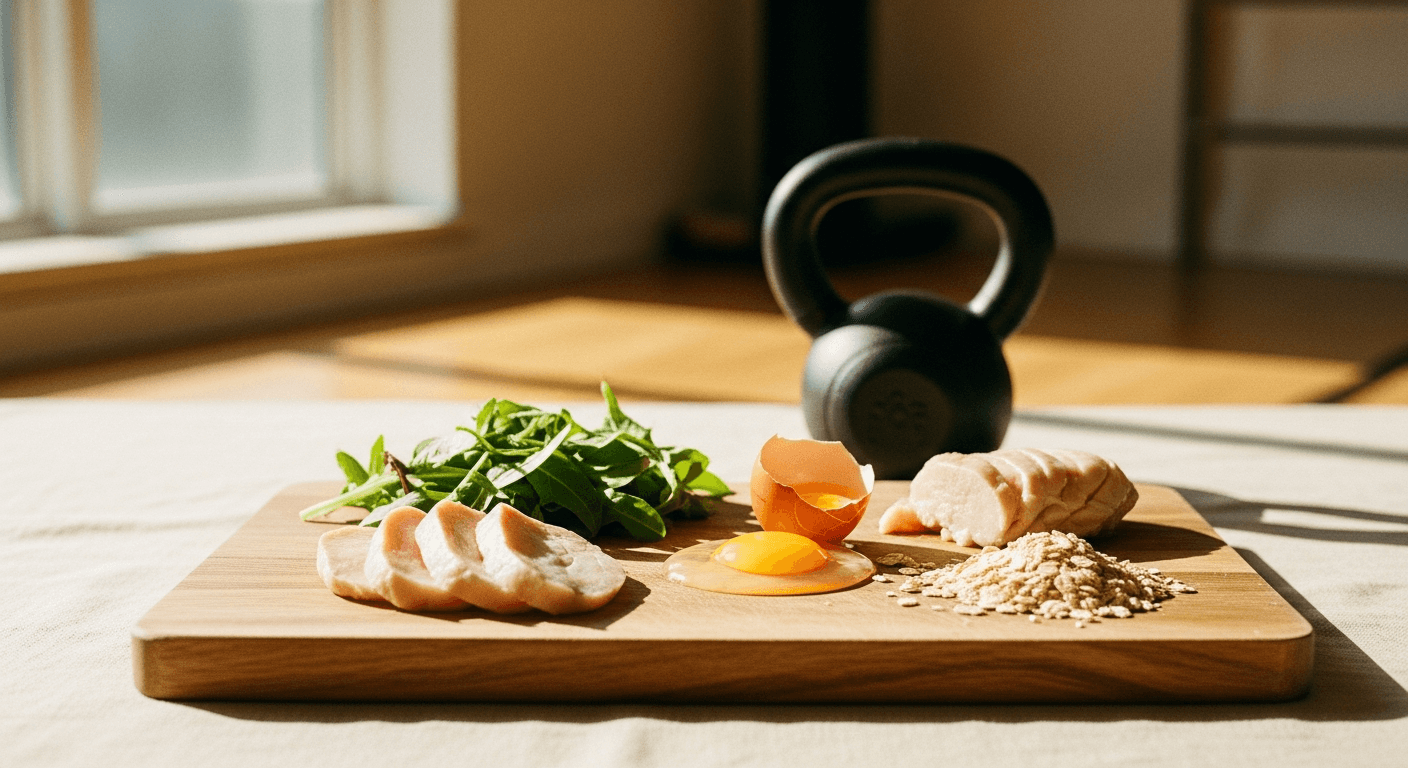
Body Transformation Without Supplements: Does It Work?
The global sports nutrition market is projected to surpass $45 billion by 2027. Walk into any gym, scroll through any fitness account, and you'll be met with protein powders, pre-workouts, creatine stacks, and recovery blends promising to accelerate your results. But here's the question most people don't stop to ask: what actually happens if you skip all of it?
The honest answer, backed by decades of research, is that most people can achieve a genuine body transformation using nothing more than structured training, whole foods, and consistency. That's not a contrarian take. That's what the evidence shows.
What Actually Drives Body Composition Change
Before you can evaluate whether supplements matter, you need to understand what drives muscle growth and fat loss in the first place. The science here is remarkably consistent. Two variables dominate: progressive overload in training and sufficient protein intake from your diet.
Progressive overload means systematically increasing the stress placed on your muscles over time. More weight, more reps, shorter rest periods, or more volume. Without this stimulus, your body has no reason to adapt. It doesn't matter how many supplements you're taking. If your training isn't challenging your muscles progressively, you won't grow.
Protein is the other non-negotiable. Research consistently points to a daily intake of around 1.6 to 2.2 grams of protein per kilogram of body weight as the effective range for maximizing muscle protein synthesis. That's roughly 0.7 to 1 gram per pound. You can hit this target through chicken, eggs, Greek yogurt, legumes, fish, and cottage cheese without ever opening a tub of whey.
When both of these fundamentals are in place, the body responds. Consistently and predictably.
The Real Role of Supplements
This isn't an argument that supplements are useless. Some of them, taken in the right context, genuinely work. Creatine monohydrate is the most researched ergogenic aid in sports science history, with strong evidence supporting its role in improving high-intensity performance and supporting lean mass gains over time. The latest meta-analysis on creatine and strength confirms that effect is real and replicable.
Protein powder is also effective. But effective at what, exactly? At delivering protein. That's its job. And whole foods do the same job, often with additional nutritional benefits including fiber, micronutrients, and compounds that support gut health. Research increasingly shows that the diversity of your food sources matters for performance and recovery in ways that isolated supplements don't replicate. The connection between gut health and sports performance is one of the more compelling emerging areas in nutrition science, and it points squarely toward whole food variety rather than supplementation.
The key distinction is convenience versus necessity. Protein powder is faster than cooking a chicken breast at 6 a.m. Creatine is cheaper than the marginal performance gains you might otherwise chase. But neither is irreplaceable when your total dietary intake is structured and consistent.
What the Research Shows About Transformation Timelines
One of the most persistent myths in fitness is that supplements accelerate transformation in a meaningful way for the average person. The data doesn't support that conclusion at the level most people imagine.
Studies comparing natural dietary protein sources to whey protein supplementation have repeatedly found that when total daily protein intake is matched, muscle hypertrophy outcomes are equivalent. The muscle doesn't know whether the amino acids arrived via a shake or a bowl of lentils and eggs. It responds to the signal, not the delivery mechanism.
Similarly, fat loss outcomes are driven primarily by caloric deficit and training volume, not by fat burners, thermogenics, or metabolism-boosting blends. A 2023 systematic review found that most commercially available fat-loss supplements produced marginal effects, often indistinguishable from placebo when diet and exercise were controlled.
Realistic body transformation timelines for someone training consistently three to five days per week, eating adequate protein, and maintaining a slight caloric surplus or deficit depending on their goal, tend to fall in the range of 8 to 16 weeks for noticeable changes and 6 to 12 months for significant body composition shifts. Those timelines don't compress dramatically when supplements are added to an already solid foundation.
Building Your Plate for Real Results
If you're committing to a supplement-free approach, your nutrition strategy needs to be intentional. Here's what that looks like in practice:
- Anchor every meal around protein. Eggs, Greek yogurt, cottage cheese, lean meats, fish, tofu, tempeh, and legumes should form the base of your meals. Aim to hit your daily protein target across three to four meals rather than relying on a single large serving.
- Prioritize carbohydrates around training. Oats, rice, sweet potatoes, and fruit before and after sessions provide the glycogen your muscles need to train hard and recover effectively.
- Don't neglect dietary fat. Healthy fats from sources like olive oil, avocado, nuts, and fatty fish support hormonal health, which directly influences your ability to build muscle and lose fat.
- Eat enough. Period. Chronic under-eating is one of the most common reasons transformations stall, with or without supplements. If you're training hard, your body needs fuel.
- Watch your ultra-processed food intake. Research now links high consumption of processed foods to accelerated muscle degradation, a factor that undermines transformation efforts regardless of how well you train. Ultra-processed foods are quietly destroying your muscle mass, and no supplement compensates for that damage.
The Training Side of the Equation
Nutrition without structured training won't transform your physique. The training side requires the same level of intentionality.
Progressive overload should be your guiding principle. Keep a training log, even a simple one on your phone. Track your sets, reps, and weights. If you're not progressing over a four-week period, something needs to change. Either the load, the volume, or the programming.
Resistance training three to five days per week is sufficient for most people to achieve meaningful body composition changes. You don't need two-a-days or two-hour sessions. Compound movements like squats, deadlifts, rows, presses, and pull-ups deliver the highest return on your training time.
Cardio plays a supporting role. It improves cardiovascular capacity, aids recovery, and helps manage the caloric side of the equation. But it doesn't replace resistance training as the primary driver of body composition change. If you're also managing stress and sleep alongside your training, the results compound. Recovery is increasingly recognized as a critical component of training adaptation, not an optional add-on.
For those over 50, the same principles apply, though the emphasis on protein intake and recovery becomes even more critical as anabolic sensitivity shifts with age. Getting stronger after 50 is absolutely possible, and it doesn't require a supplement cabinet to make it happen.
When Supplements Might Actually Make Sense
There are legitimate cases where supplementation fills a genuine gap. If you're vegan or vegetarian and struggling to hit your protein targets through whole foods alone, a plant-based protein powder makes practical sense. If you live in a northern climate with limited sun exposure through winter months, vitamin D supplementation is well-supported by evidence. Creatine remains one of the few supplements with a strong enough evidence base to recommend broadly, particularly for those focused on strength and power output.
But these are targeted additions to an already functional nutrition plan. Not replacements for one. The supplement industry profits from positioning their products as essential. The research positions them as optional.
The Bottom Line
You can absolutely transform your body without supplements. Thousands of people have done it. The fundamentals, progressive resistance training, adequate protein from whole foods, consistent caloric management, quality sleep, and patience, are what produce results. Supplements can add a layer of convenience or provide a marginal edge in specific circumstances. They don't replace the fundamentals.
If your training is structured, your diet is dialed in, and you're giving your body enough time to adapt, the results will come. It's slower to believe than a before-and-after ad. But it's true.