
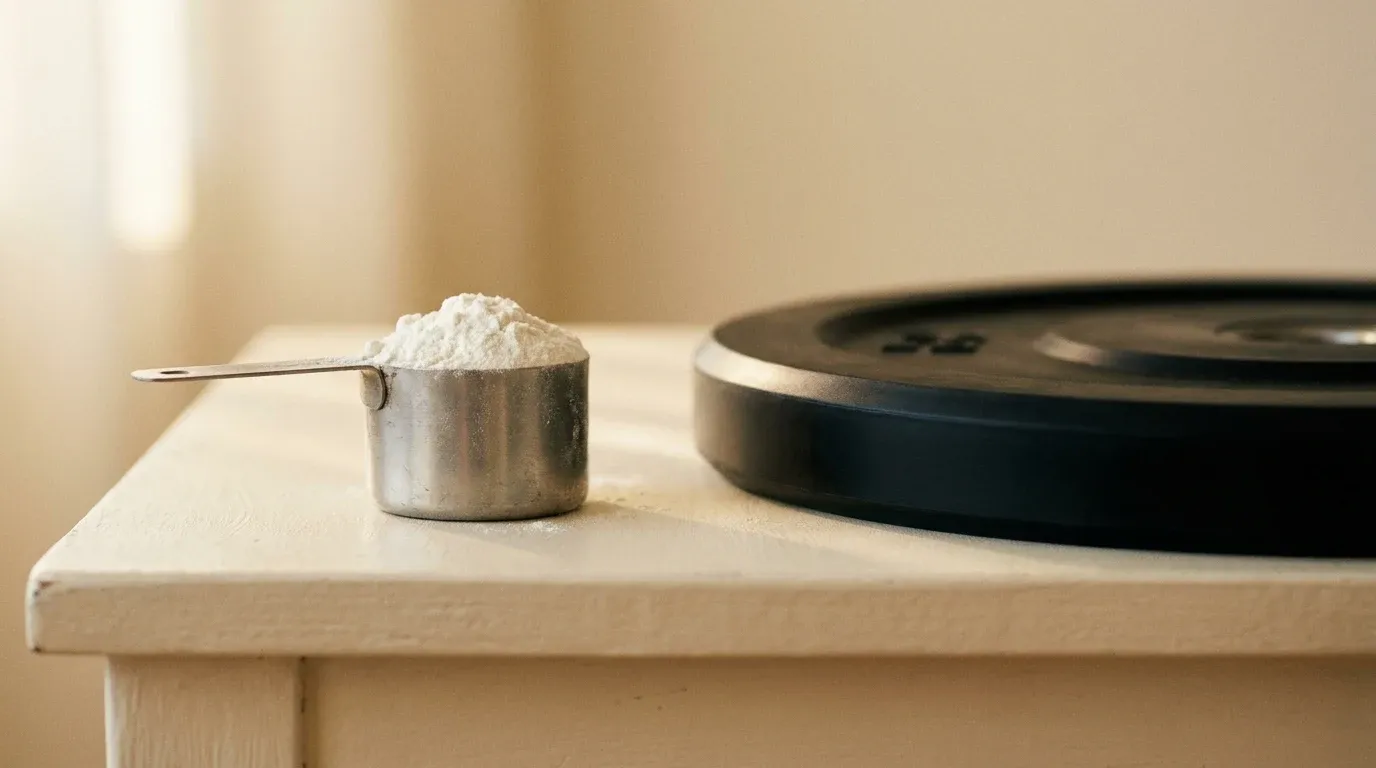
Creatine has been a staple of gym bags and supplement stacks for decades. The conventional wisdom has always been simple: take creatine, lift heavy, get stronger. But a growing body of research is starting to complicate that picture. New findings suggest creatine may support muscle development and preservation even in the absence of a structured exercise program. That's a significant shift. And it raises questions the fitness world hasn't fully answered yet.
What the New Research Actually Shows
A recently published study examined the effects of creatine supplementation on muscle mass in participants who were not enrolled in any resistance training program. The results were notable. Subjects taking creatine showed measurable improvements in lean muscle retention and, in some cases, modest gains. The control group, supplementing with a placebo and also not training, showed no such changes.
The effect sizes were modest. Nobody went from sedentary to jacked just by taking creatine. But the fact that any meaningful muscle-related change occurred without exercise at all is what's turning heads in sports science circles.
This challenges one of the most deeply embedded assumptions in fitness nutrition: that creatine's benefits are essentially inert without the mechanical stimulus of resistance training. That assumption has shaped supplement marketing, clinical recommendations, and gym culture for the better part of thirty years.
Why This Contradicts the Old Model
The traditional explanation for how creatine works centers on ATP resynthesis. Creatine helps regenerate adenosine triphosphate, the cellular energy currency your muscles burn during high-intensity efforts. More creatine in the muscle means more rapid ATP regeneration, which means you can push harder, recover faster between sets, and accumulate more training volume over time. The muscle growth, in this model, comes from the training. Creatine just helps you train better.
That model isn't wrong. But it may be incomplete.
Newer mechanistic hypotheses point to creatine's potential role in satellite cell activation, myogenic signaling pathways, and cellular hydration. Satellite cells are the stem cells of muscle tissue. They're involved in repair, growth, and maintenance. If creatine directly influences their behavior independent of mechanical load, the implications go well beyond what happens in a weight room.
There's also evidence that creatine may reduce markers of muscle protein breakdown. Less catabolism, even without added anabolism, could explain why muscle mass appears better preserved in supplementing groups compared to non-supplementing controls, particularly during periods of inactivity.
Who This Matters For Most
If creatine can do meaningful work without exercise, the populations that stand to benefit most aren't the athletes who already train consistently. It's the people who can't.
Older adults. Sarcopenia, the age-related loss of muscle mass and strength, is one of the most significant drivers of frailty, falls, and loss of independence in older populations. Many older adults face barriers to consistent resistance training. Physical limitations, chronic pain, low baseline fitness, and access issues all create gaps. If creatine can slow muscle loss during those gaps, or even during periods of sedentary living, that's clinically relevant. If you're over 50 and trying to figure out how to structure your training safely, how to find the right personal trainer after 50 is worth reading before you make decisions about supplementation alone.
Injured athletes. Muscle atrophy during immobilization is a well-documented problem. After a surgery, a fracture, or a serious soft tissue injury, athletes can lose significant lean mass in just a few weeks. Some research has already pointed to creatine as a potential tool for reducing atrophy during immobilization. This new data adds weight to that possibility.
People with inconsistent training habits. Not everyone trains on a regular schedule. Life, stress, travel, and illness create weeks or months where structured exercise simply doesn't happen. If creatine helps maintain muscle during those breaks, it may offer a practical buffer for the majority of people who don't follow perfectly consistent programs.
The Mechanism Debate Is Now Wide Open
What makes this finding genuinely interesting, from a scientific standpoint, is that it forces researchers to take the mechanism question more seriously. If creatine only worked through ATP resynthesis, you'd expect essentially zero muscle-related benefit without training to drive energy turnover in muscle fibers. That's not what the data is showing.
The cellular hydration angle is worth attention. Creatine draws water into muscle cells, increasing cell volume. Some research suggests that cell swelling itself acts as an anabolic signal, triggering protein synthesis pathways. This would mean creatine is doing something at the cellular level that doesn't require mechanical load to initiate.
There's also the anti-inflammatory dimension. Creatine has shown some capacity to reduce systemic inflammation markers in certain populations. Chronic low-grade inflammation accelerates muscle protein breakdown. Less inflammation could mean slower muscle loss over time, and this effect would apply regardless of whether you're training or not.
None of these mechanisms are fully proven in isolation. What's shifting is the scientific posture. The old assumption, that creatine is essentially a training amplifier and nothing more, is no longer holding up as cleanly as it once did.
What Experts Are Saying (and What They're Cautioning)
The researchers behind this work and commentators in exercise physiology have been careful not to oversell the finding. Nobody is suggesting creatine replaces exercise. The consistent message from the scientific community is that creatine still delivers its largest, most reliable benefits when combined with structured resistance training. That hasn't changed.
What has changed is the framing. Creatine is now better understood as a compound with broader physiological activity than previously credited. The exercise amplifier model was accurate but partial. The new model accommodates direct effects on muscle biology that exist on a spectrum, with training at the high end and complete sedentary supplementation at the low end, but with meaningful activity occurring throughout.
It's also worth noting that creatine remains one of the most studied, best-tolerated supplements available. The safety profile in healthy adults is well established. This matters because it lowers the risk calculus when considering supplementation for non-athletic populations like older adults or those in rehabilitation.
Research on the intersection of recovery, sleep, and supplementation is evolving quickly. If you're looking at overall muscle preservation strategies, the role of quality sleep shouldn't be underestimated. the link between REM sleep and reduced disease risk is now well supported, and the same restorative processes that protect against illness also support muscle maintenance.
How to Think About Creatine If You're Not Training Consistently
Here's the practical reality. If you're currently training regularly, creatine is still most valuable as a training support tool. Take it, train hard, and the benefits are well established. even 30 minutes of lifting per week shows meaningful longevity benefits, and pairing that with creatine gives you a research-supported combination.
If you're in a phase where training isn't possible, whether due to injury, illness, life disruption, or age-related limitations, the new data suggests creatine may still be doing useful work. It likely won't build significant new muscle on its own. But it may help you hold onto more of what you have. And in the context of aging or recovery from injury, that matters more than most people realize.
Supplementation decisions don't exist in isolation. Your nutrition, hydration, stress levels, and sleep all interact with how your body uses what you give it. For example, pre-workout hydration is a factor that affects performance and cellular function more than most people account for, and creatine's hydration-related mechanisms make this particularly relevant. Similarly, stress management strategies with actual evidence behind them can influence cortisol levels that directly affect muscle catabolism.
The Bottom Line
Creatine without exercise probably won't transform your physique. But the idea that it does nothing without a barbell in your hand is no longer accurate. The research is pointing toward a more nuanced picture, one where creatine has genuine biological activity that supports muscle tissue beyond just helping you squeeze out an extra rep.
For aging populations, injured athletes, and anyone navigating inconsistent training phases, that's not a trivial distinction. It opens the door to using creatine more thoughtfully across a wider range of situations. Not as a replacement for training. But as a tool with a broader range of application than the old model ever acknowledged.
The science is catching up to what some clinicians suspected. Creatine was always more than just a gym supplement. We're just now building the evidence to understand how much more.