
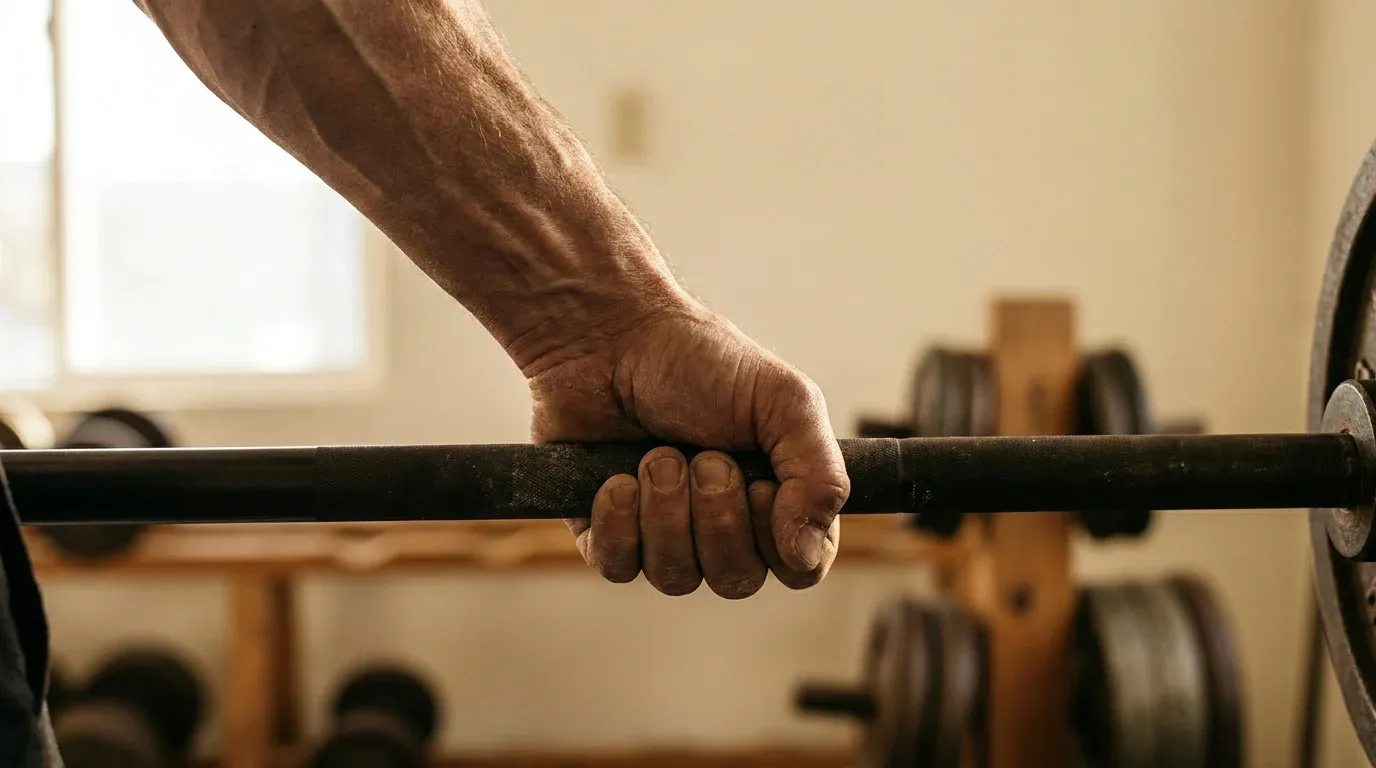
For decades, the fitness industry sold resistance training on a single promise: change how your body looks. Get leaner. Build a bigger chest. Tighten your arms. The marketing worked, at least for the people it was designed to reach. But it left an enormous portion of the population on the sidelines, people who weren't chasing aesthetics but who desperately needed the benefits of lifting anyway.
That's starting to change. A growing body of research is repositioning strength training not as a vanity tool but as one of the most powerful levers we have for extending healthy human life. The fitness industry hasn't fully caught up yet. It should.
What the Latest Research Actually Shows
A major analysis published in the British Journal of Sports Medicine found that adults who performed between 90 and 119 minutes of resistance training per week experienced a 13% reduction in all-cause mortality risk compared to those who did none. That's not a marginal improvement in a niche population. That's a statistically meaningful drop in the risk of dying from any cause, achieved through roughly two lifting sessions a week.
To put that in context: you don't need to train like an athlete. You don't need a $200-a-month gym membership or a personal trainer on speed dial. You need consistency, a modest time commitment, and enough progressive overload to challenge your muscles week over week.
The data also suggests a dose-response curve with diminishing returns at very high volumes, which means the headline message is accessible. A 90-minute weekly habit. Two sessions. Most people reading this could realistically do that starting next week.
The Industry Is Still Selling the Wrong Thing
Walk into almost any commercial gym in the US, the UK, or Australia. Look at the marketing on the walls, the before-and-after photos on trainer profiles, the language used in advertising campaigns. It's almost universally centered on body composition. Lose fat. Gain muscle. Look better by summer.
That message isn't false. Resistance training does improve body composition. But it's incomplete, and in 2026, it's increasingly out of step with why people say they actually want to exercise.
The American College of Sports Medicine's 2026 Worldwide Fitness Trends report is telling. Health and longevity have now emerged as the primary drivers behind global gym engagement. People aren't just chasing aesthetics anymore. They're motivated by energy levels, functional independence as they age, mental health, and yes, the fear of dying too soon or spending their final decades in physical decline. The data reflects a cultural shift that the industry has been slow to follow.
That lag is costing gyms, trainers, and the broader fitness sector a significant opportunity. Aesthetics-first messaging self-selects for a narrow audience: typically younger, already somewhat active, and already sold on the idea that how they look matters. The longevity message reaches everyone else.
Who Gets Left Out When Aesthetics Lead
Think about who doesn't respond to a before-and-after photo. A 58-year-old man who had a cardiac event last year. A 65-year-old woman navigating perimenopause who wants to stay mobile and independent for the next three decades. A 45-year-old who's never stepped inside a gym because he doesn't care about his abs but is genuinely worried about his long-term health.
These aren't fringe audiences. They represent the majority of adults in every English-speaking market. And research consistently shows that these are exactly the populations where resistance training delivers its most life-altering returns.
Muscle mass protects against metabolic disease, preserves insulin sensitivity, reduces fall risk, and supports cardiovascular health. The effects compound over years and decades. A 55-year-old who starts lifting today isn't optimizing for aesthetics. They're making a biological investment with a payout that extends into their 70s and 80s.
For women in particular, the longevity case for strength training is increasingly hard to ignore. Hormonal changes through perimenopause and beyond accelerate muscle loss, bone density decline, and metabolic slowdown. Resistance training is one of the few evidence-based interventions that directly counters all three. Pairing that approach with broader wellness strategies, including understanding what the evidence says about supplements like Shatavari for perimenopause, gives this demographic a comprehensive toolkit that aesthetics-focused messaging never offered them.
The Longevity Reframe Is Good for Business
This isn't purely an ethical argument. It's a commercial one.
The global wellness market is worth over $6 trillion. Longevity-focused health spending is one of its fastest-growing segments. Gyms, coaches, and fitness brands that position themselves at the intersection of strength training and long-term health are entering a market with far more paying customers than the aesthetics space ever offered.
Consider trainer positioning. A coach who markets as "I help you get lean" is speaking to a defined but limited group. A coach who markets as "I help busy adults in their 40s and 50s build the strength they need to stay active and independent for the next 30 years" is speaking to an enormous, underserved, and highly motivated audience. That second coach can also justify higher rates, because the value proposition isn't about looking better in photos. It's about functional longevity, and that's worth more to most people.
Gym programming needs to follow. Facilities that offer structured, progressive resistance training with clear longevity outcomes will attract and retain a different kind of member. Someone who isn't chasing a summer body drops off after three months. Someone who's training to be able to hike with their grandchildren tends to stay.
What Trainers and Coaches Can Do Right Now
If you're a fitness professional, the shift in messaging doesn't require a complete overhaul of what you do. It requires a reframe of how you talk about it. Here's where to start:
- Lead with outcomes that matter across the lifespan. Muscle mass, bone density, metabolic health, and functional strength are outcomes every client can connect to, regardless of age or aesthetic goals.
- Use the mortality data. A 13% reduction in all-cause mortality risk is a compelling number. Most clients have never heard it, and it reframes the entire conversation about why they're in the gym.
- Revisit your foundational coaching tools. Technique matters more than ever when clients are training for decades, not months. Resources like squat coaching cues that actually work for every client are worth integrating into how you teach movement patterns at any age.
- Address recovery as seriously as training. Longevity clients need to stay injury-free. Incorporating mobility work is non-negotiable. A structured approach like a daily 10-minute mobility routine is the kind of practical tool that keeps long-term trainees in the game.
- Stop using before-and-after as your primary social proof. Testimonials about energy, pain reduction, functional strength, and aging well resonate far more with the audience you're trying to reach.
The Cardio Comparison Is a Useful Conversation Starter
One reason the longevity message hasn't fully landed yet is that resistance training still lives in the shadow of cardio when it comes to heart health perception. Most people grew up hearing that running and cycling are what keep your heart healthy. The idea that lifting weights belongs in that conversation is still unfamiliar to large parts of the population.
The research is clear, though. Resistance training independently reduces cardiovascular risk, improves lipid profiles, and lowers blood pressure. It also delivers metabolic benefits that steady-state cardio doesn't replicate to the same degree. That's worth communicating plainly and often. And for clients who are cardio-curious, understanding how different training modalities compare, including what short, high-intensity efforts do that long cardio sessions can't, helps build a more complete picture of intelligent programming.
The Bigger Obligation
There's a public health dimension here that the fitness industry tends to underestimate. Chronic disease, metabolic dysfunction, and physical frailty in aging populations are not primarily pharmaceutical problems. They're movement problems. And resistance training is one of the most accessible, scalable, and cost-effective interventions available.
When gyms and trainers lead with aesthetics, they're not just missing a commercial opportunity. They're failing to communicate something genuinely important to people who need to hear it. A person who doesn't care about their bicep size but who is watching a parent lose mobility in their 70s will respond to a very different message. That message exists. It's grounded in solid science. It just hasn't been amplified the way it deserves to be.
The 2026 fitness landscape is at an inflection point. The data is there. The cultural appetite is there. What's lagging is the industry's willingness to reposition its most fundamental tool around the outcome that matters most: not how you look when you're 35, but how well you're living when you're 75.
Lifting has always had the potential to do that. It's time the industry started saying so.