
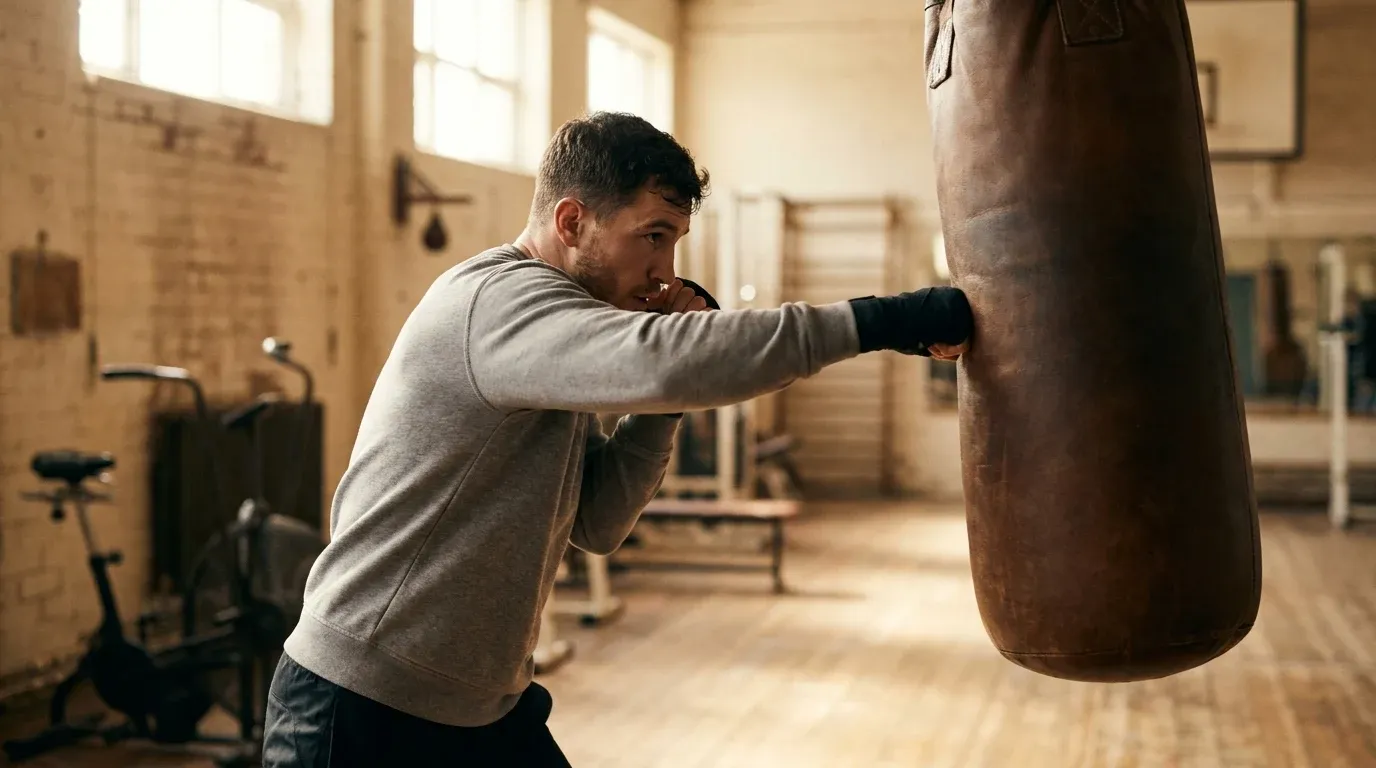
Most people who've never stepped inside a cage have still heard the pitch: MMA training is brutal, effective, and reserved for people who want to fight. That reputation is outdated. Striking-based training, drawn from the conditioning methods used by mixed martial artists, has become one of the more evidence-backed approaches to building full-body fitness without a competition goal in sight.
New research on striking strategies in MMA, published in the last 48 hours, sheds light on the tactical and physical demands of the sport. What it reveals isn't just relevant to fighters. It reframes what efficient conditioning can look like for anyone trying to get fit.
Why Striking Training Works for General Fitness
MMA striking is built around explosive, high-output bursts followed by brief recovery. That structure mirrors high-intensity interval training, but with one key advantage: it's skill-based. You're not just spiking your heart rate. You're learning to coordinate your body under fatigue, which taxes your cardiovascular system and your nervous system at the same time.
From a conditioning standpoint, striking rounds activate both aerobic and anaerobic pathways. A three-minute heavy bag round will push you into anaerobic territory during combination bursts, then pull you back toward aerobic recovery during footwork and reset. That metabolic oscillation is exactly what makes the training so time-efficient. Research consistently shows that interval-style work produces comparable or superior cardiovascular adaptations to steady-state cardio in significantly less time.
If you've read about how Muay Thai HIIT outperforms traditional cardio in 25-minute sessions, the MMA striking model follows a similar logic. The intensity ceiling is higher, the skill demand adds cognitive load, and the full-body recruitment makes passive rest periods feel earned.
The Coordination Advantage You Won't Get from Machines
Walk into most commercial gyms and you'll find rows of machines designed to isolate single muscle groups. That approach has its place in rehabilitation and targeted hypertrophy, but it doesn't train your body the way it actually moves. Striking does.
A proper cross punch, for example, starts at the back foot. Force transfers through the hip, rotates through the torso, travels across the shoulder, and exits through the fist. Every link in that chain has to fire in sequence. Miss one and the punch loses power and puts stress on the wrong joint. That kind of movement pattern, repeated across hundreds of reps per session, builds what exercise scientists call neuromuscular efficiency. Your brain gets better at recruiting the right muscles, in the right order, at the right time.
That translates to real-world function. Carrying heavy bags, catching yourself from a fall, throwing a ball. These actions all rely on the same sequential coordination that striking drills develop. It's also worth noting that grip strength is one of the most reliable indicators of overall health and longevity. Striking training builds it constantly, whether you're squeezing a bag, wrapping your hands, or working pad drills with a partner.
What the Latest MMA Research Actually Shows
The new research on striking strategies in MMA distinguishes between two tactical approaches: cumulative striking and critical striking. Cumulative strategies involve landing a high volume of lower-impact strikes to accumulate damage and score consistently. Critical strategies prioritize high-power, high-risk strikes aimed at decisive outcomes.
From a fitness standpoint, what matters is what these strategies demand physically. Cumulative striking requires sustained output, refined technique, and aerobic endurance to maintain punch quality over time. Critical striking demands peak power generation, explosive hip drive, and the capacity to produce maximum effort from a state of partial fatigue. Training for both means developing a broad physical base: conditioning, strength, speed, and coordination simultaneously.
That breadth is exactly what makes striking-based training valuable for non-fighters. You don't need to pursue either tactical goal. But training the physical qualities that underpin them, high-output intervals, rotational power, technical movement under fatigue, gives you a more complete conditioning stimulus than most gym-based programs can deliver.
How to Get Started: Practical Entry Points
You don't need a gym membership at a dedicated MMA facility to start. Here are the most accessible entry points, ranked roughly by ease and cost.
- Shadow boxing circuits: No equipment required. Stand in front of a mirror and throw combinations for 2-3 minute rounds with 60-second rest intervals. Focus on hip rotation, footwork, and extension rather than speed. Four to six rounds is a solid beginner session. A few tutorial videos and a basic understanding of stance and guard are enough to start safely.
- Heavy bag rounds: A heavy bag, hanging or freestanding, costs between $80 and $250. Add a pair of bag gloves ($30 to $60) and hand wraps ($10 to $15) and you're ready to train at home. Start with two-minute rounds. Prioritize form over power. The bag gives you immediate feedback on whether your technique is producing real force.
- Pad work with a trainer or partner: This is the most effective option and the one most beginners underuse. A coach holding pads for you creates a dynamic, reactive training environment that shadow boxing and bag work can't replicate. Expect to pay $60 to $120 per session for a private session with a qualified striking coach in most US cities. Small group classes at MMA or boxing gyms typically run $20 to $40 per session and are a solid middle ground.
If you're building this into a structured weekly program, two to three striking sessions per week is enough to see meaningful improvements in conditioning and coordination within four to six weeks. Pair it with your existing resistance training rather than replacing it.
Fueling Striking Sessions Properly
Striking-based workouts are demanding enough that nutrition and hydration deserve real attention. You'll sweat significantly during heavy bag or pad work, particularly in warmer environments. The electrolyte losses from that sweat matter more than most people account for. If you're training in the heat, or back-to-back days, understanding what endurance athletes get wrong about heat and hydration applies directly to your striking sessions.
On the protein side, the physical demands of striking training, muscle recruitment, coordination stress, and the minor tissue breakdown from impact work, all point toward adequate protein intake as a recovery priority. The case for higher protein targets across active populations is well-supported, and the broader trend in sports nutrition reflects that shift.
Recovery: Don't Skip It
Striking workouts create a specific kind of fatigue. It's not just muscular. The cognitive load of technical movement, the emotional charge of intense physical output, and the neurological demand of coordination work all add up. Recovery needs to be proportional.
Sleep is the most underrated tool here. If you're training with real intensity three or more times a week, your sleep needs will shift. The blanket advice to get eight hours doesn't account for training load or individual variation. Understanding your actual recovery needs is worth the effort. And if you're using contrast therapy, ice baths, or heat exposure to accelerate recovery, having a clear sense of which recovery tool actually fits your situation will save you time and discomfort.
Safety First: Technique Before Power
This is the part that gets skipped in the enthusiasm to train hard, and it matters most for beginners.
Striking without technique doesn't just limit your results. It raises your injury risk significantly. The most common issues for beginners are wrist injuries from improper fist alignment, shoulder strain from overextension, and lower back stress from poor hip rotation mechanics. None of these are inevitable. They're almost entirely preventable with basic instruction.
Before you throw your first punch at a heavy bag with real intent, do the following:
- Learn to make a proper fist. Thumb outside, knuckles aligned. A folded or exposed thumb on impact is a fast route to a fracture.
- Wrap your hands. Every time. Even on a light session. It takes two minutes and protects the small bones and tendons in your wrist and hand.
- Get at least one session with a qualified coach before self-programming. One hour of instruction on stance, guard, and basic punch mechanics will prevent months of ingrained bad habits.
- Start with technique rounds, not power rounds. The first four to six weeks are about moving correctly, not moving hard. Power emerges naturally from good mechanics.
Striking training is physically accessible to most healthy adults. You don't need a combat sports background. You don't need to spar. You don't need to compete. You need a willingness to learn movement patterns that are more complex than a treadmill, and a training environment that respects the technique-first principle.
The Case for Adding It to Your Routine
The research on MMA striking strategies reinforces something coaches and athletes have known for a long time. The physical demands of the sport are exceptional, and the training methods developed to meet those demands are genuinely transferable to general fitness goals.
You're not trying to become a fighter. But building the conditioning, coordination, and power that fighters develop through striking work will make you a more capable, more resilient athlete in whatever discipline you're already pursuing. That's a trade worth making.