
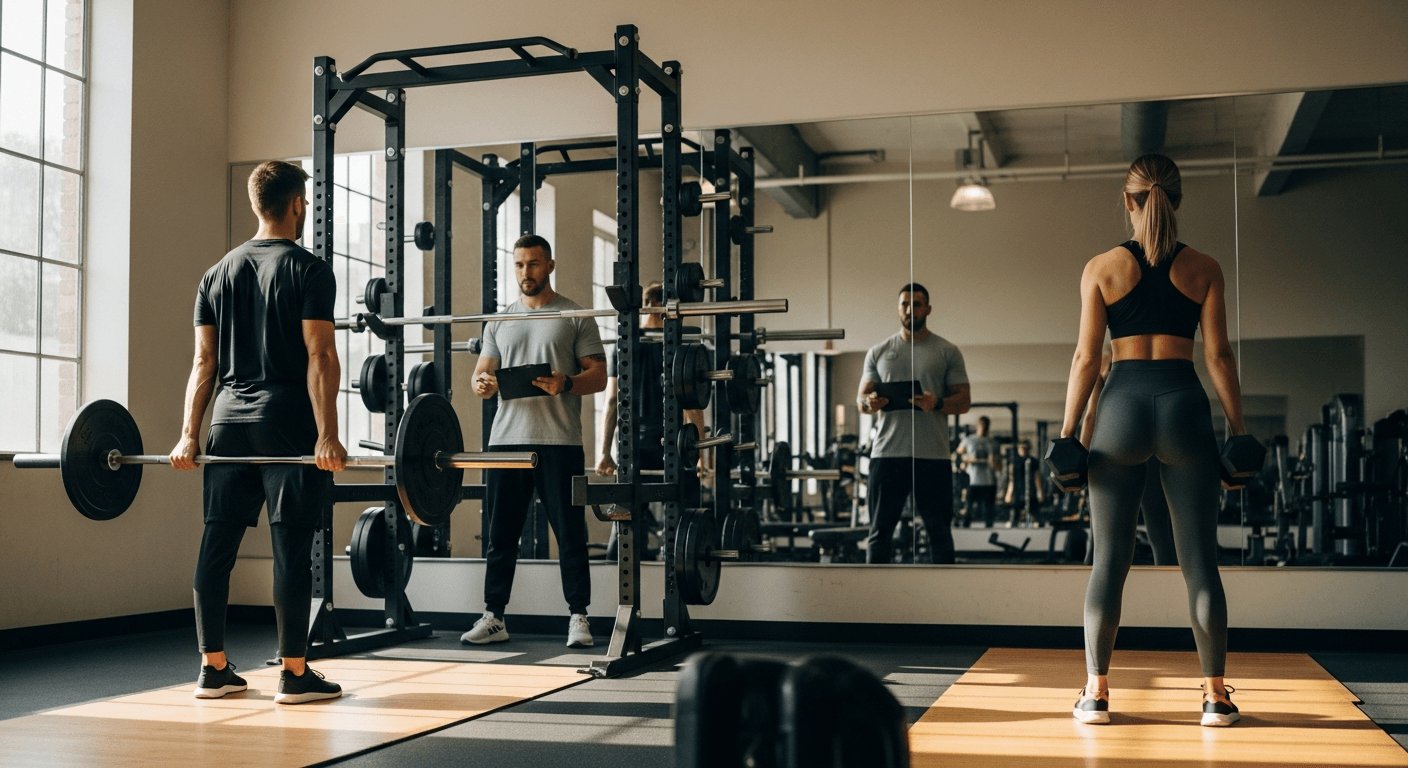
If you've ever wondered why the same fat loss program produces wildly different results across your training group, new research offers a compelling explanation. Obesity doesn't affect male and female physiology the same way, and those differences run deep enough to change how resistance training, caloric deficits, and recovery should be structured depending on sex.
This isn't about splitting hairs. The metabolic and hormonal divergences tied to excess body fat are significant enough that applying identical programming to men and women may be leaving real results on the table, or worse, undermining progress entirely.
The Science: Obesity Creates Different Metabolic Realities by Sex
Recent research has confirmed what many coaches have long suspected: obesity triggers distinct physiological responses in men and women at the hormonal, metabolic, and inflammatory levels. These aren't minor variations. They reflect fundamentally different ways the body accumulates, stores, and responds to excess fat.
In men, obesity tends to drive visceral fat accumulation, the deep abdominal fat that wraps around organs and is closely linked to insulin resistance, elevated cortisol, and suppressed testosterone. This creates a metabolic environment that's particularly hostile to muscle retention during a caloric deficit.
In women, subcutaneous fat storage is more common, distributed across the hips, thighs, and lower abdomen. While this pattern carries lower cardiovascular risk than visceral fat, it's also more metabolically stubborn. Women also experience more pronounced disruptions to leptin signaling and thyroid function when in sustained energy restriction, which can blunt fat loss and tank recovery capacity faster than most generic programs account for.
These differences are compounded by hormonal context. Estrogen plays a protective role in fat metabolism and insulin sensitivity, which means women in perimenopause or post-menopause face a different fat loss challenge than younger women, and a different one still from men of any age. Blanket programming ignores all of this.
How These Differences Show Up in the Weight Room
Understanding the physiology matters most when it translates to practical training decisions. Here's where the sex-specific differences become directly relevant to resistance training.
Muscle retention during a deficit is harder for men with high visceral fat. Because visceral obesity suppresses testosterone and elevates cortisol, men carrying significant abdominal fat are in a chronically catabolic hormonal environment. This means aggressive caloric cuts can accelerate muscle loss faster than expected, making protein intake targets and training volume management more critical, not less.
Women tolerate higher training frequencies better during fat loss. Research consistently shows that women recover faster from resistance training sessions and can sustain higher weekly volumes with less systemic fatigue. This is partly due to lower baseline levels of muscle damage per session and partly due to estrogen's role in muscle repair. A fat loss block for a woman shouldn't automatically mirror the reduced-volume approach that might suit a man in the same caloric deficit.
Metabolic adaptation is faster and more severe in women. When caloric restriction is too aggressive or sustained too long, women's metabolisms adapt more dramatically. Resting metabolic rate drops, thyroid output decreases, and reproductive hormones can shift significantly. This is why diet breaks and refeeds aren't just useful for women in fat loss phases. They're often physiologically necessary.
For coaches tracking client recovery and output, smart recovery trackers like Whoop, Oura, and Garmin can provide useful data on how differently male and female clients respond to the same training week, especially during a deficit.
Programming Fat Loss Blocks by Sex: What Should Actually Change
None of this means designing entirely separate systems from scratch. It means adjusting the variables that actually interact with these physiological differences. Here's a practical breakdown.
For male clients with obesity or significant visceral fat:
- Prioritize protein intake at or above 1g per pound of lean body mass to offset the catabolic hormonal environment
- Avoid very low-calorie deficits; moderate deficits of 300-500 calories tend to preserve muscle better when testosterone is already suppressed
- Include compound, heavy resistance work to provide maximal anabolic stimulus even in a deficit
- Monitor cortisol indicators: sleep quality, recovery markers, and mood, adjusting volume before cutting calories further
- Consider insulin sensitivity as a key variable when timing carbohydrates around training
For female clients managing obesity or metabolic resistance to fat loss:
- Use shorter deficit phases (4-6 weeks) followed by maintenance breaks to prevent severe metabolic adaptation
- Maintain or modestly increase training volume during fat loss phases rather than defaulting to reduced volume
- Pay attention to cycle phase if applicable: energy, strength, and recovery all fluctuate significantly across the menstrual cycle
- Avoid prolonged low-carbohydrate protocols without monitoring for thyroid and hormonal side effects
- Prioritize sleep quality as a non-negotiable recovery variable, not an afterthought
There's also a nutritional dimension worth considering. Fish oil has shown measurable effects on insulin resistance, which is relevant for both sexes dealing with obesity-related metabolic dysfunction, but the magnitude of benefit may differ given sex-specific insulin signaling patterns. Similarly, intermittent fasting's effects on gut composition are increasingly understood to vary by individual metabolic profile, which intersects with the sex-specific differences described above.
Why Generic Programs Keep Failing People
The fitness industry has a long history of applying male-derived research to female populations and calling it universal. Most early studies on resistance training, caloric restriction, and body composition were conducted predominantly on men. The protocols that emerged from that research became the default templates, regardless of who was following them.
That's starting to change. But it hasn't changed fast enough in commercial programming. The $35 fat loss PDF downloaded a hundred thousand times was probably built on data from college-aged men. It's not a conspiracy. It's a research gap that's only recently been taken seriously.
The practical result is that women following standard fat loss templates often experience more frustration, more plateaus, and more hormonal disruption than men on the same protocols, not because they're doing something wrong, but because the program wasn't built for their physiology.
Coaches working across both online and in-person contexts are increasingly recognizing this. Hybrid coaching models that blend check-ins, biometric tracking, and individualized adjustments are better positioned to catch and respond to sex-specific signals than generic app-based plans that treat every user as interchangeable.
The Case for Individualized Programming Has Never Been Stronger
The evidence doesn't just suggest that men and women respond differently to obesity and fat loss interventions. It specifies the mechanisms well enough to act on. That shifts the obligation from "it's probably a good idea to individualize" to "you should be individualizing if you want results that hold up."
This is especially true as strength training continues to dominate as the top health priority for adults across all age groups. More people are lifting with fat loss as a secondary goal, not just aesthetics. The stakes for getting the programming right, particularly during a deficit, are higher when muscle retention and metabolic health are both on the line.
Individualization doesn't require a PhD. It requires asking the right questions at intake: sex, age, hormonal context, history with caloric restriction, recovery patterns, and training experience. Those variables should directly shape the structure of any fat loss block, not be noted in a form and then ignored.
The research is getting specific enough that "I didn't know" is becoming a harder position to defend. If you're coaching fat loss without accounting for sex-specific physiology, you're working with a map that's missing half the territory.