
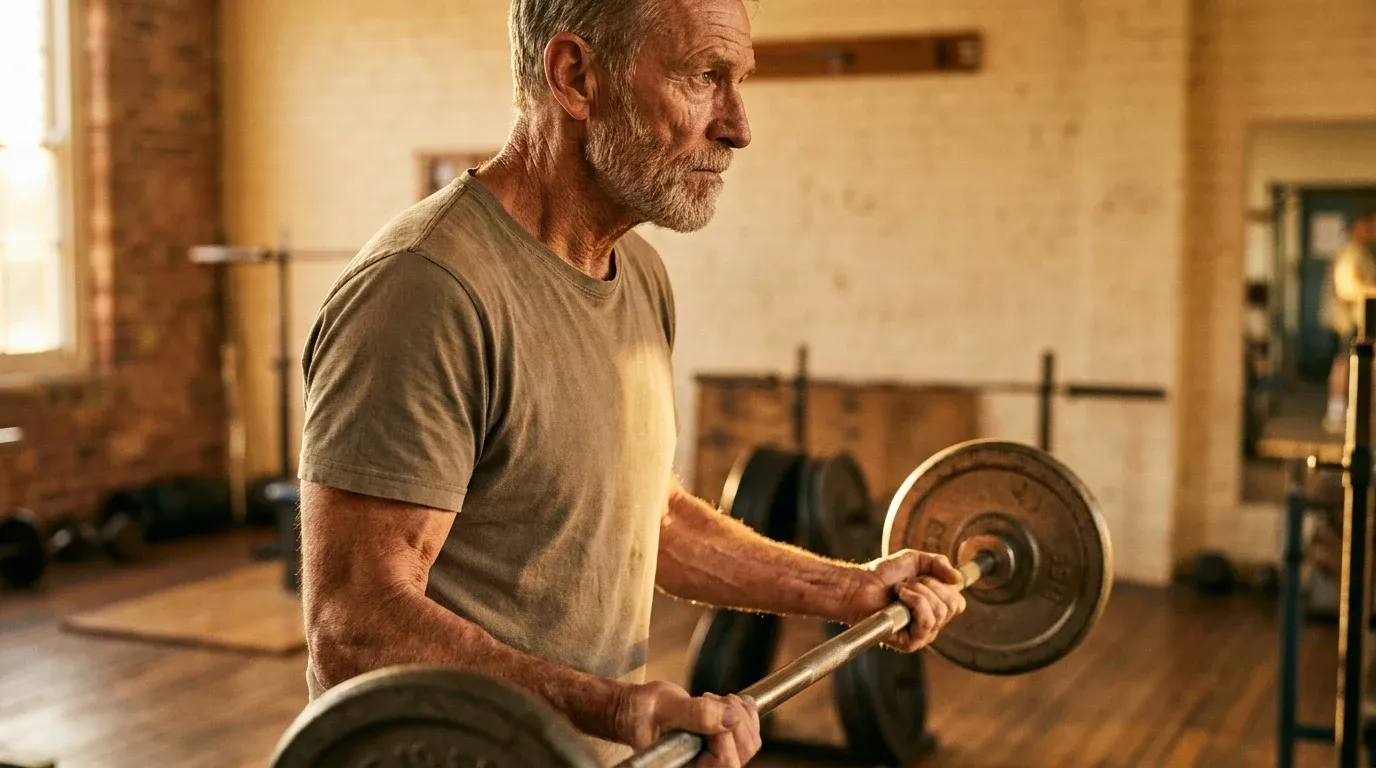
Most people trying to lose weight focus almost entirely on the scale. The number goes down, and they call it a win. But for adults over 50, that approach can quietly cause serious damage. A growing body of research is making one thing very clear: how you lose weight matters as much as how much you lose, and the wrong method can cost you the very tissue that keeps your metabolism, strength, and independence intact.
New research has zeroed in on a specific training modality that stands apart from conventional cardio and diet-only protocols. It doesn't just help older adults lose fat. It does so while actively protecting lean muscle mass. That distinction isn't a minor detail. It's the entire point.
Why Muscle Loss During Fat Loss Is a Bigger Problem Than You Think
When older adults lose weight through calorie restriction alone, or through steady-state cardio paired with a caloric deficit, a significant portion of what they lose isn't fat. Studies consistently show that anywhere from 20 to 40 percent of total weight lost through diet-only approaches in older populations comes from lean mass, including muscle tissue. That number should stop you cold.
Muscle is metabolically expensive tissue. It burns calories at rest, helps regulate blood sugar, supports joint stability, and underpins virtually every functional movement you make throughout the day. Lose it, and your resting metabolic rate drops. Your insulin sensitivity decreases. Your risk of falls and fractures climbs. You become what researchers call "sarcopenic obese," carrying too little muscle and too much fat simultaneously, which is arguably worse than being simply overweight.
The problem compounds with age. After 40, adults lose roughly 1 percent of muscle mass per year without deliberate resistance training. That rate accelerates after 60. When you layer aggressive caloric restriction or excessive cardio on top of that baseline decline, you're not just losing weight. You're accelerating a process that directly shortens your functional healthspan.
What the Research Actually Found
The training modality that keeps showing up in the research as uniquely protective for this population is resistance training. Specifically, structured progressive resistance training, meaning programs that systematically increase load or volume over time rather than maintaining the same effort week after week.
A meta-analysis examining older adults in caloric deficit found that those who combined resistance training with their dietary protocol lost significantly more fat and significantly less lean mass compared to groups relying on cardio or diet alone. The resistance training groups preserved up to 93 percent of their lean mass during active fat loss phases. Cardio-only groups preserved considerably less, often losing lean tissue at rates similar to the diet-only cohort.
What makes this finding particularly important is the mechanism. Resistance training sends a direct anabolic signal to muscle tissue. Even in a caloric deficit, that signal tells the body to hold onto muscle rather than break it down for fuel. Cardio, particularly long-duration moderate-intensity cardio, doesn't produce the same signal with anywhere near the same potency. In fact, excessive endurance training in a deficit can accelerate muscle catabolism, especially in older adults with already-lower anabolic hormone levels.
High-intensity interval training (HIIT) occupies an interesting middle ground. Some research shows it can partially preserve lean mass during fat loss, more so than steady-state cardio. But its effects are less consistent across older adult populations, and the injury risk for beginners or deconditioned individuals is meaningfully higher. Progressive resistance training remains the most reliable and broadly applicable option for this demographic.
What "Progressive" Actually Means in Practice
The word "progressive" is doing a lot of work here, and it's worth being specific. A resistance training program that never changes doesn't produce the same results. If you're lifting the same weights at the same rep ranges after six months, your body has adapted. The protective signal weakens.
Progression can mean increasing load, increasing the number of sets or reps, decreasing rest intervals, or adding complexity to movements over time. For older adults, a well-structured program typically involves two to four sessions per week targeting all major muscle groups, with compound movements like squats, deadlifts, rows, and presses forming the foundation. Isolation exercises can supplement, but the compound lifts are where the metabolic and hormonal benefits are most pronounced.
Rep ranges matter less than many people assume. Research suggests that loads ranging from 6 to 30 reps per set, when taken close to muscular failure, produce comparable hypertrophy and preservation outcomes. That's genuinely good news for older adults who may have joint concerns or who aren't comfortable loading heavy. You don't need to max out a barbell to protect your muscle.
Nutrition Remains Non-Negotiable
Resistance training is the anchor, but it doesn't work in isolation. Protein intake is the critical nutritional variable. For older adults in a fat loss phase, research consistently supports protein targets of 1.6 to 2.2 grams per kilogram of body weight per day, and some evidence suggests erring toward the higher end of that range offers additional lean mass protection.
This is meaningfully higher than standard dietary recommendations, which were not designed with muscle preservation during caloric restriction in mind. Hitting those targets through whole food sources, supplemented when needed, should be a foundational part of any fat loss program targeting older adults.
Certain supplements have also accumulated credible evidence. HMB: The Muscle-Preservation Supplement Worth Knowing has shown specific promise in older populations for reducing muscle protein breakdown during caloric deficits, and the evidence for it is more targeted than many other recovery-focused products on the market. Creatine monohydrate is another compound with strong, consistent data for supporting lean mass and strength in older adults. Creatine Plus Hydration: The Combo Taking Over explores how pairing creatine with proper hydration protocols may further optimize its benefits, which is especially relevant for older adults who are often chronically under-hydrated.
Anti-inflammatory dietary patterns also deserve mention. Fish, Omega-3s, and Inflammation: The 2026 Evidence outlines how omega-3 fatty acids appear to support muscle protein synthesis and blunt the low-grade inflammation that tends to accelerate muscle loss in aging populations. If you're already training consistently and eating adequate protein, optimizing your fat and micronutrient intake is the logical next layer.
Why Trainers and Gym-Goers Need to Rethink the Fat Loss Framework
The dominant model for fat loss still centers on energy balance. Eat less, move more. That framing isn't wrong, exactly, but it's incomplete in a way that causes real harm when applied to older adults without nuance.
A caloric deficit without a protective anabolic stimulus doesn't distinguish between fat and muscle. The body, under stress and low energy availability, will mobilize whatever fuel source is most accessible. Muscle, without the signal that it's needed, becomes a target. This is basic physiology, and yet most commercial weight loss programs, meal replacement plans, and even clinical interventions fail to account for it adequately.
For trainers, this research reinforces a straightforward but underutilized principle: resistance training should be the non-negotiable core of any fat loss program for clients over 50, not an optional add-on after cardio. The cardio can support cardiovascular health, caloric expenditure, and recovery. But it doesn't protect the tissue that determines long-term metabolic health. Resistance training does.
For gym-goers navigating this on their own, the practical takeaway is equally clear. If your current fat loss approach doesn't include two to four sessions of progressive resistance training per week, and adequate protein to support it, you're losing weight in a way that may be setting you up for harder problems down the road. Body composition matters. The scale doesn't capture it.
Sleep is another underappreciated variable in this equation. Sleep and Longevity: What 2026 Science Is Telling Us details how inadequate sleep disrupts the hormonal environment needed for muscle preservation, elevating cortisol and suppressing growth hormone in ways that directly undermine the benefits of resistance training. You can follow the ideal program and eat the right foods, but chronic poor sleep will erode your results.
The Takeaway Is Simple, Even If the Biology Isn't
The research doesn't ask you to do something complicated. It asks you to do something most people have been avoiding in favor of easier, less demanding options.
Progressive resistance training, paired with adequate protein and a modest caloric deficit, is the most evidence-supported approach for losing fat without losing muscle in older adults. It's not a trend. It's not a novel protocol. It's a well-established physiological principle that still isn't being applied consistently enough in practice.
If you're over 40 and your current fitness strategy is built primarily around cardio and calorie counting, the research is giving you a clear signal to restructure. The goal isn't just to weigh less. It's to be stronger, leaner, and more metabolically resilient at every age. Those outcomes don't happen by accident. They happen by design.