
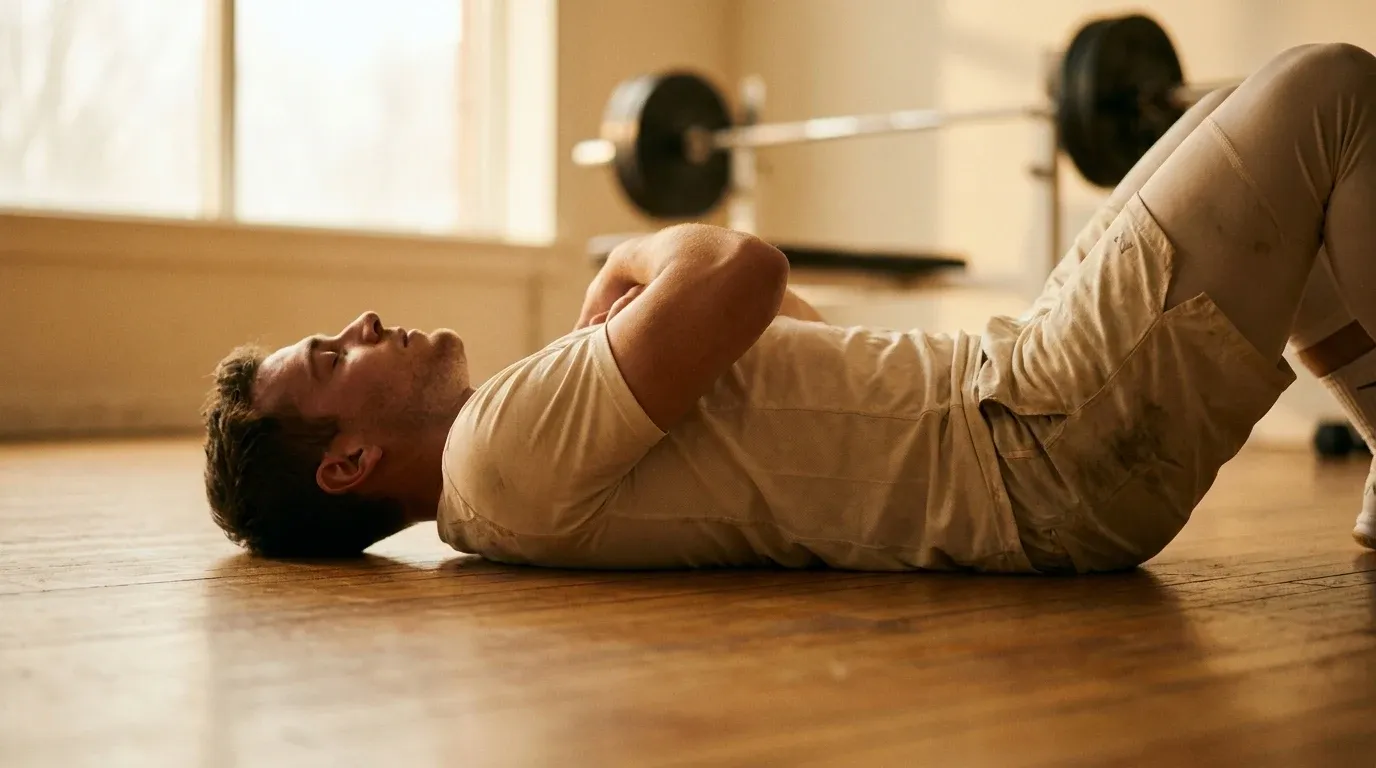
You already know that skipping the gym has consequences. But a growing body of research suggests that skipping sleep carries nearly the same penalty. In July 2026, the National Institutes of Health published findings showing that the combination of quality sleep and regular exercise can reduce mutation-driven inflammatory processes in the body. Not one or the other. Both, working together.
For lifters who treat rest days as optional and bedtime as a soft target, that's a significant recalibration.
What the NIH Research Actually Found
The July 14, 2026 NIH study examined how sleep quality and exercise frequency interact at the cellular level, specifically around inflammatory processes linked to DNA mutation activity. The researchers found that neither variable alone produced the same anti-inflammatory effect as the two combined. That synergy is the headline.
Mutation-driven inflammation refers to inflammatory responses triggered by cellular damage and genetic instability, processes that accumulate over time with poor recovery, chronic stress, and inadequate sleep. This isn't just about feeling sore after leg day. It's a longer-term biological process that affects tissue repair, immune function, and how your body ages under physical load.
What the NIH data adds to the conversation is specificity. We've long known that both sleep deprivation and sedentary behavior increase systemic inflammation. Now there's evidence that the protective effect isn't simply additive. It's synergistic. Train hard but sleep poorly, and you're leaving a significant portion of those anti-inflammatory benefits on the table.
Why Inflammation Is the Real Enemy of Progress
Inflammation gets complicated in a fitness context because some of it is necessary. Acute inflammation after a training session is part of the repair signal. It's how muscle fibers rebuild stronger. The problem is chronic, low-grade inflammation. That's the version that accumulates quietly and undermines everything you're trying to build.
For regular gym-goers, chronic inflammation is associated with slower recovery between sessions, persistent muscle soreness that doesn't resolve with normal rest, increased injury risk over time, and blunted adaptation to training stimuli. In other words, you can be doing everything right in the gym and still stall if your inflammatory baseline is elevated.
Sleep is one of the most powerful regulators of that baseline. During deep sleep, the body ramps up its cellular repair processes, clears inflammatory byproducts, and resets immune system signaling. Cut that window short, or fragment it with poor sleep quality, and those processes don't complete. The next training session begins on a compromised platform.
The Synergy Problem: Why You Can't Hack One Without the Other
Here's where the NIH findings get practically important. The research indicates that the anti-inflammatory benefit of the sleep-exercise combination depends on both inputs being present at meaningful levels. Skimping on either one appears to undermine the effect.
This matters because most performance-oriented people already have exercise covered. The gap is almost always sleep. Seven to nine hours is the standard recommendation for adults, but training volume, stress load, and sleep quality all affect how much actual recovery you're getting within that window.
It's also worth noting that sleep quality is not the same as sleep quantity. Six hours of consolidated, high-quality sleep may outperform eight fragmented hours. If you're waking frequently, struggling with restlessness, or relying on alcohol to fall asleep, your recovery architecture is compromised regardless of how long you're technically in bed. Tools like wearables can help surface these patterns. What your sleep tracker can actually tell you about apnea is a useful starting point if you want to understand what your device's SpO2 and HRV readings are actually signaling.
And don't underestimate how your post-workout habits feed back into sleep quality. Screen time, late-night training sessions, and high-stimulant pre-workouts taken too late in the day all erode the sleep architecture that makes the recovery process work. Research has shown that excessive screen time has its own cognitive and physiological costs. Endless scrolling hurts your memory, and exercise fights back covers the cognitive dimension of that relationship in detail.
Diagnosing Your Own Recovery Gap
Most lifters don't realize they have a sleep problem because the effects are gradual. You don't collapse after one bad night. You just slowly accumulate a deficit that expresses itself as persistent fatigue, mood disruption, stalled strength gains, and elevated injury frequency. By the time it's obvious, the hole is deep.
Some practical questions worth asking yourself:
- Are you regularly sleeping fewer than seven hours on training days?
- Do you wake feeling unrefreshed even after a full night?
- Is your perceived exertion creeping up without a corresponding increase in load?
- Are you relying on caffeine to function in the morning rather than to sharpen an already functional state?
- Are small injuries taking longer than expected to resolve?
If you're checking multiple boxes, your recovery is likely the limiting factor. Not your programming, not your protein intake. Sleep. It's also worth flagging that sleep disorders are underdiagnosed in athletic populations. A single in-lab sleep study may not give you the full picture. One night of sleep testing isn't enough, according to research from Flinders University, and that has real implications for anyone who's been cleared based on a single screening.
Building the Anti-Inflammatory Stack
The practical application of this research isn't complicated, but it does require treating sleep with the same intentionality you apply to your training. Here's what that looks like in practice.
Anchor your sleep window. Going to bed and waking at consistent times regulates your circadian rhythm, which in turn governs cortisol, growth hormone release, and immune function. Consistency matters more than any single long sleep on a weekend.
Protect the hour before bed. Lower light exposure, avoid intense training within two to three hours of sleep, and limit high-stimulant substances in the afternoon. This isn't about being rigid. It's about not actively disrupting the hormonal conditions that make sleep restorative.
Train regularly, but not recklessly. The NIH research reinforces that exercise is a co-factor in reducing inflammatory load. That means consistent, structured training over time. If you're unsure whether your current program is structured appropriately for your recovery capacity, these five recovery habits that actually work offer a grounded starting framework.
Don't overlook nutrition's role. Anti-inflammatory eating patterns support the cellular processes that sleep and exercise are trying to drive. Ultra-processed foods, high sugar intake, and inadequate micronutrient density all feed into the inflammatory load your body is managing. Getting the basics right matters. If you're unsure where to start, simple diet changes that actually move the needle covers the fundamentals without unnecessary complexity.
Track trends, not nights. One poor night doesn't erase your progress. A pattern of poor nights does. Use your sleep data directionally, not as a daily grade. Look for trends across weeks, not hours on any given evening.
The Bigger Shift This Research Demands
The NIH findings are a prompt to rethink how you categorize the components of your fitness. Most lifters mentally split their week into training and everything else. Sleep sits in the everything else column, somewhere alongside foam rolling and hydration. It's treated as optional infrastructure.
That framing is wrong, and now there's cellular-level evidence to back that up. Sleep is not recovery fluff. It's where a significant portion of the training stimulus actually resolves into adaptation. Without it, you're completing the input but suppressing the output.
If you want the anti-inflammatory benefit that exercise produces, you need the sleep. If you want the sleep to do its full job, you need the exercise. The two are not separate levers. They're the same mechanism operating at different phases of the same cycle.
Treat them accordingly. Your inflammation markers, your recovery timeline, and your long-term training longevity all depend on it.