
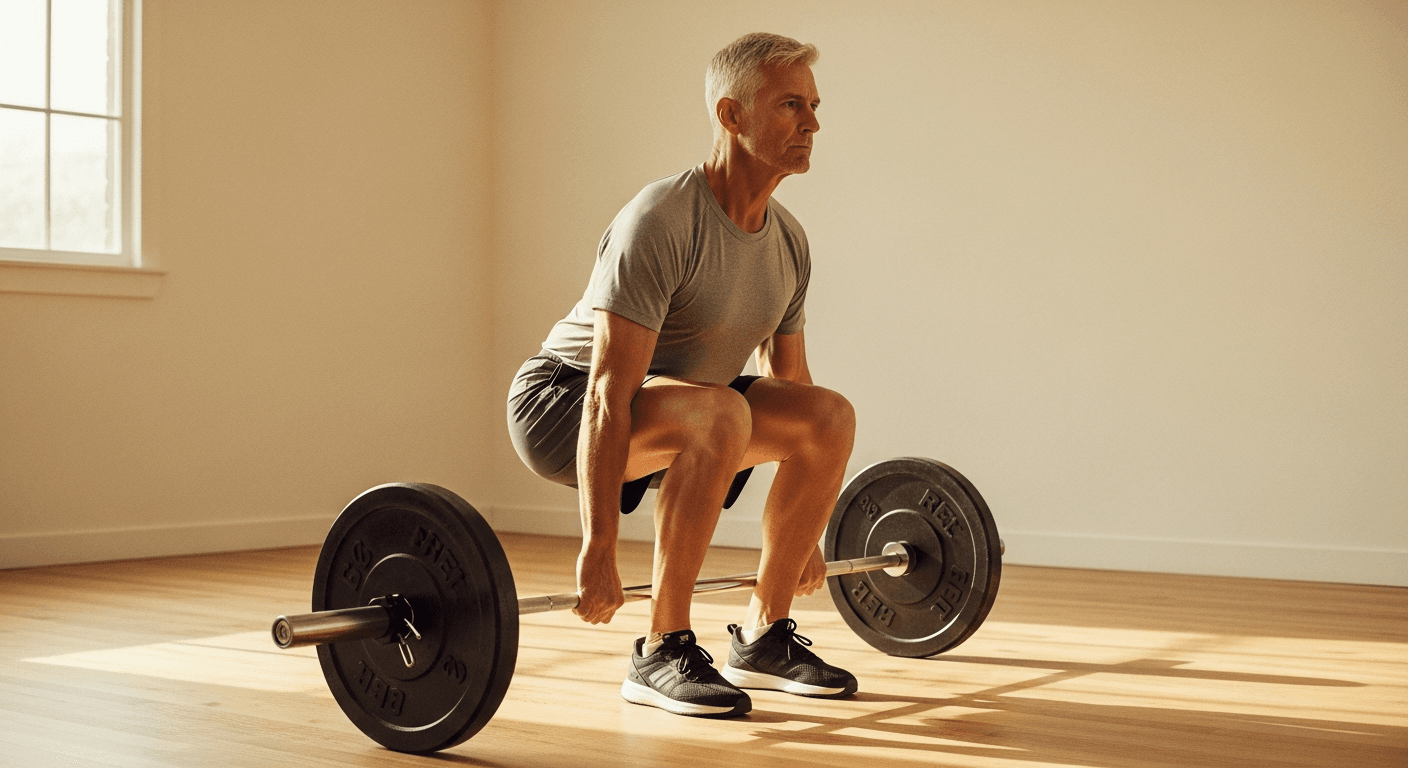
Why strength training matters more after 50, not less
Sarcopenia — the progressive loss of muscle mass and strength with age — accelerates significantly after 50. Without regular resistance training, adults lose 1-2% of muscle mass per year after their mid-fifties. Over 10 years, that's 10-20% of total muscle mass. This isn't an aesthetic issue. Muscle mass is directly tied to bone density, metabolic health, fall resistance, and overall quality of life. Adults with better muscle mass at 65 show significantly better health outcomes over the following 20 years. The good news: resistance training slows, stops, and often reverses sarcopenia at any age. It's never too late to start lifting.
What actually changes after 50
The fundamentals of training don't change — progressive overload, compound movements, sufficient volume all still apply. But several parameters shift:
Recovery takes longer. Before 40, a muscle group can be retrained 48 hours after an intense session. After 50, 72 hours is often the right minimum. Forcing sessions too close together on the same muscle groups accumulates fatigue and slows progress. A 3-day full-body or upper/lower split often beats a 5-day split that overloads recovery capacity.
Absolute loads matter less than volume. Hitting a new squat max at 55 isn't the goal for most people. What matters is weekly training volume per muscle group — sets and reps in a moderate-to-higher rep range (8-15). Studies show comparable muscle mass gains between heavy loads (85% 1RM) and moderate loads (65-70% 1RM) when volumes are equated.
Joints need more attention. Tendons and ligaments always adapt more slowly than muscle — but this gap widens after 50. Warm-ups should be longer and more progressive. Extreme ranges of motion on exercises like deep squats or decline press deserve individual evaluation.
Nutrition: the anabolic window narrows
After 50, the body's capacity to use dietary protein for muscle synthesis decreases slightly — what researchers call "anabolic resistance." In practice, this means protein timing around training becomes more important. The takeaway from studies: consume 30-40g of complete protein within 2 hours of your session, rather than waiting for the next meal. Total daily intake of 0.7-0.9g per pound of bodyweight remains the target.
A sample program for 50+
Recommended structure: 3 sessions per week, minimum 48-72 hours between each. Priority exercises:
- Squat or goblet squat (knee pattern)
- Romanian deadlift or conventional deadlift (hip pattern)
- Bench press or dips (push)
- Dumbbell row or assisted pull-up (pull)
- Standing or seated shoulder press
Progression: add weight modestly (5-10 lbs) when you hit the top of your rep range for 2 consecutive sessions. Progress should still be there — just less linear than at 30.
Starting from scratch after 50
The data on beginners is encouraging at any age: strength gains in people starting resistance training after 50 are comparable in percentage terms to gains in younger adults during the first 6 months. The body responds to resistance stimulus regardless of starting age. If you're starting, prioritize technique before load. Two or three sessions with a coach to learn fundamental movement patterns is worth more than six months of building bad habits under heavy weight.