
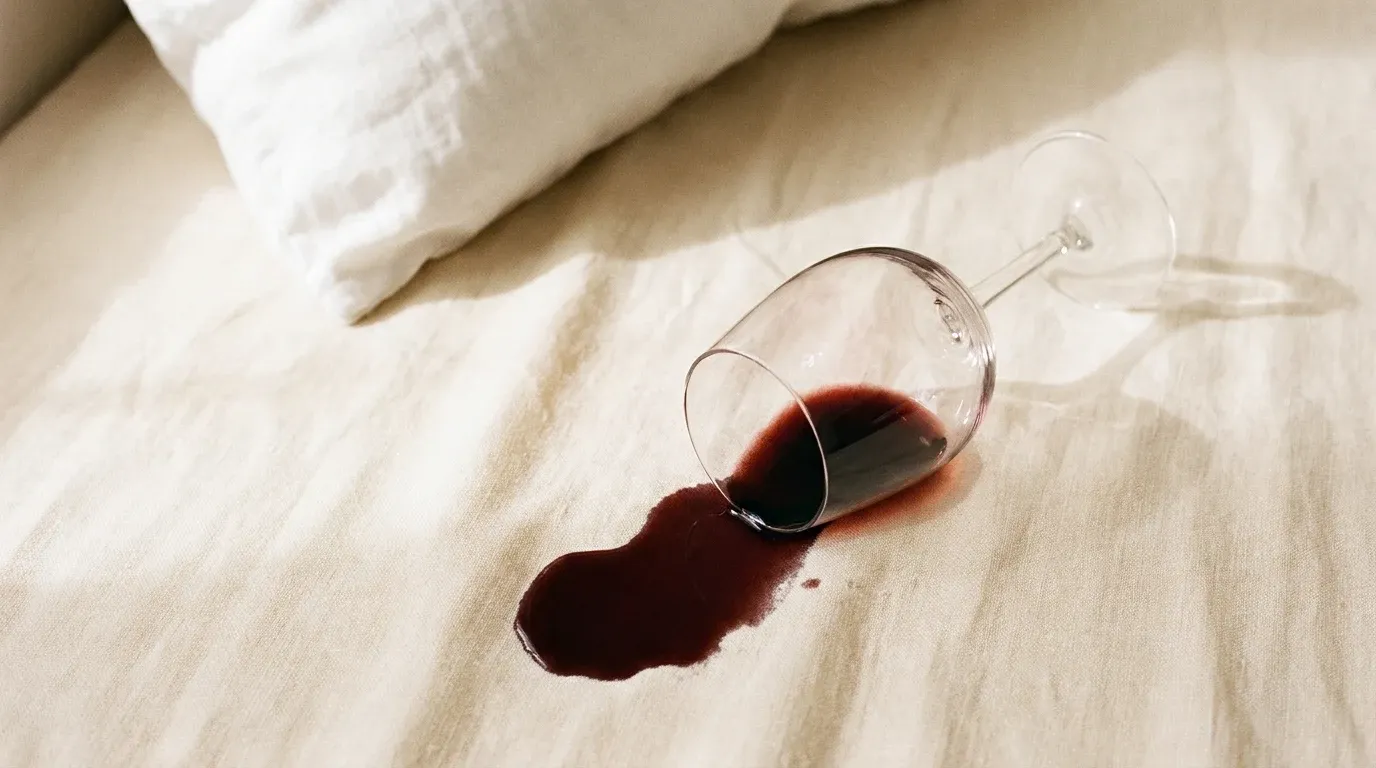
You train hard, you eat well, and you take your sleep seriously. Then Friday rolls around and you have a couple of drinks with friends. No big deal, right? The honest answer is more complicated than the wellness industry usually lets on. And a wave of recent cardiovascular research has muddied the picture further, leading some athletes to conclude that a glass of wine is basically a health food. It isn't. Not when sleep and recovery are on the line.
Here's what the science actually says about alcohol, sleep architecture, and what your adaptation window looks like the morning after.
What Alcohol Does to Your Sleep, Starting at One Drink
Alcohol is a sedative. It speeds up sleep onset, which is why it feels like a wind-down tool. The problem is what it does to sleep structure after you're out. Research consistently shows that even low doses of one to two standard drinks reduce REM sleep by up to 24 percent across the first half of the night.
REM sleep isn't just dream time. It's the phase where your brain consolidates motor learning, regulates emotional stress hormones, and coordinates the pulsatile release of growth hormone. For anyone doing structured training, that window is when a significant portion of neuromuscular adaptation gets locked in. Blunt it regularly, and you're essentially leaving gains on the table every single week.
The mechanism is fairly direct. Alcohol elevates adenosine levels early in sleep, which deepens slow-wave sleep in the first half of the night at the expense of REM. As your body clears the alcohol in the second half, you get a rebound effect: more fragmented, lighter sleep and elevated cortisol. You may log seven or eight hours on a tracker, but the architecture of that sleep is compromised in ways a wristband won't tell you.
The Wine Loophole That Doesn't Exist
Cardiovascular research published over the past few years has drawn distinctions between beverage types, suggesting that moderate wine consumption carries a different risk profile than spirits. This finding has spread fast in fitness communities. Some athletes have quietly reframed wine as the acceptable option.
When it comes to sleep, that distinction doesn't hold. The sleep-disrupting effects of alcohol are driven by blood alcohol concentration, not by what's in the glass. A 150-milliliter glass of wine at 13 percent ABV produces essentially the same blood alcohol curve as a standard 44-milliliter measure of spirits at 40 percent. The polyphenols in red wine, the ones referenced in the cardiovascular literature, have no meaningful counteracting effect on sleep architecture.
At equivalent blood alcohol concentrations, red wine, white wine, beer, and spirits all degrade REM sleep in the same measurable ways. If you're using the cardiovascular research to justify late-night wine as a recovery-neutral choice, you're applying findings that simply weren't designed to answer that question.
The Three-Hour Rule and Why Timing Matters More Than You Think
Not all drinking decisions are created equal. When you drink relative to your bedtime changes the degree of damage significantly, and this is one area where a practical cutoff actually works.
Studies on alcohol and sleep latency show that drinking within one hour of bedtime produces the most severe REM suppression, particularly in the first two sleep cycles. When the same dose is consumed three or more hours before sleep, measurable REM disruption drops substantially. Your liver has had time to process a meaningful portion of the alcohol load, and your blood alcohol concentration is lower when you actually fall asleep.
This doesn't make two drinks before bed fine if you have them at 7 p.m. instead of 10 p.m. But for athletes who are going to drink socially and can control the timing, that three-hour buffer is one of the most effective harm-reduction levers available. If your last drink is with dinner at 7:30 p.m. and you're in bed at 11 p.m., the recovery cost is meaningfully lower than if you're drinking until 10 p.m. and crashing at 11 p.m.
Hydration matters in that window too. Alcohol is a diuretic, and mild dehydration independently degrades sleep quality by increasing nighttime waking. Drinking a full glass of water per alcoholic drink during that buffer period helps your body clear the load faster and reduces the secondary disruption effects.
Weekend Drinking and the Sleep Debt You Don't See Coming
Here's where things get particularly relevant for athletes in structured training blocks. Most people who drink socially don't do it every night. They cluster it on weekends. This pattern feels low-risk because the weekdays look clean on paper. The problem is that sleep debt compounds, and alcohol-induced sleep disruption takes longer to repay than most athletes realize.
Research on sleep debt recovery suggests that after two nights of impaired sleep from alcohol, it takes three to four nights of undisturbed sleep to fully restore baseline cognitive performance and hormonal regulation. For athletes in a heavy training block who are already running on compressed recovery windows, two weekend nights of drinking can effectively compromise the first half of the following week's adaptation.
This compounds a problem that many athletes already have. ultra-processed foods are quietly degrading recovery quality for a large portion of active people, and alcohol on top of an already-compromised recovery baseline accelerates the deficit. The body isn't managing one stressor at a time. It's managing the entire load simultaneously.
If you're in a competition prep phase, a high-volume strength block, or working with a coach toward a specific performance target, that weekend-clustering pattern deserves genuine scrutiny. Two nights of impaired REM per week, multiplied across a twelve-week program, represents a significant reduction in total adaptation quality.
What This Costs in Actual Hormonal Terms
It's worth being specific about the hormonal mechanics, because "blunted recovery" can feel abstract until you see what it actually means physiologically.
Growth hormone secretion is tightly linked to slow-wave sleep and the early REM cycles. Alcohol disrupts this release directly, with some studies showing reductions in nocturnal growth hormone output of 70 to 75 percent following moderate drinking. Testosterone production follows a similar overnight rhythm and is suppressed by even moderate alcohol consumption, with measurable effects appearing at doses as low as one to two drinks in men and women who are training regularly.
Cortisol, meanwhile, rises during the alcohol clearance phase in the second half of the night, compounding the catabolic picture. You're not just reducing anabolic signaling. You're simultaneously elevating the hormone most associated with muscle breakdown and impaired immune function. This is precisely why some popular recovery strategies can backfire when the foundational sleep quality is already compromised. You can't cold plunge or protein-supplement your way out of a consistently wrecked hormonal overnight window.
For athletes managing weight loss alongside performance, these hormonal disruptions are particularly costly. Protocols that already stress the system, including strategies around muscle preservation during GLP-1 drug use, rely heavily on optimized sleep to maintain lean mass. Adding regular alcohol-induced REM disruption to that picture makes an already difficult balance harder to sustain.
Practical Cut-Off Rules for Athletes
The goal here isn't abstinence messaging. It's giving you a clear framework so that when you do drink, you're making an informed trade-off rather than an accidental one.
- Apply the three-hour buffer. Stop drinking at least three hours before your target bedtime. This is the single highest-leverage rule for protecting sleep architecture when drinking socially.
- Keep doses below two standard drinks. The REM disruption curve steepens sharply above two drinks. One drink has measurable effects; three drinks has effects that are roughly three times larger in magnitude, not proportionally linear.
- Avoid alcohol entirely the night before or after key training sessions. If Tuesday is your highest-output day, Monday and Tuesday nights are not the nights to drink. The adaptation window for that session extends 24 to 48 hours.
- Treat back-to-back drinking nights as a training risk. Two consecutive nights of drinking, even at low doses, stacks the sleep debt and extends the repayment period into your training week.
- Track your sleep data honestly. Wearables undercount the full damage because they measure duration more than architecture. But if you notice HRV dropping and resting heart rate rising after weekend drinking, that data is telling you something real. Use it.
None of this means that a glass of wine at a dinner party is incompatible with serious training. It means that the trade-off is real and dose-dependent, and that the timing and frequency decisions you make around alcohol have more structural impact on your recovery than most nutrition advice you'll encounter. protein distribution errors are one of the most common limiters on adaptation quality, and alcohol-disrupted sleep compounds those limitations directly by reducing the overnight window in which protein synthesis peaks.
The athletes who perform best over long training blocks aren't necessarily the ones who never drink. They're the ones who understand what the cost is and make deliberate choices about when that cost is worth paying.
For anyone looking at what researchers are currently testing in sleep science, much of the leading work centers on exactly this question: how modern lifestyle habits interact with sleep architecture to either accelerate or inhibit long-term adaptation. Alcohol is near the top of that list, and the findings keep pointing in the same direction.
Know the buffer. Watch the dose. Protect the window.