
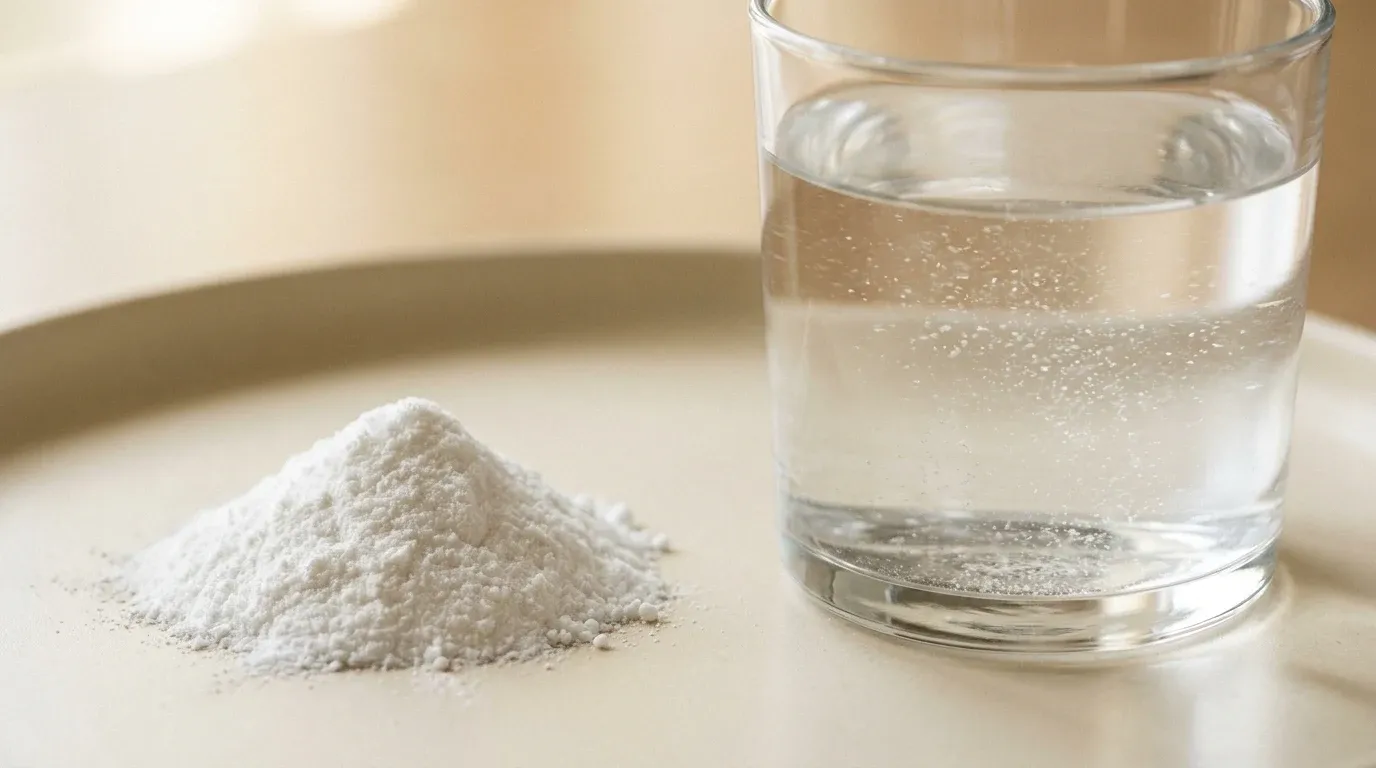
Creatine monohydrate has earned its reputation. Decades of research back its effects on power output, muscle recovery, and even cognitive function. But there's a side of creatine that gets less attention, one that has real consequences for how you train, how you recover, and how you read the scale. Creatine changes how your body handles water. And that shift has a direct impact on your hydration strategy.
A new wave of formulations is pairing creatine with taurine and electrolytes, and this isn't just a product trend. There's a physiological case for it. Here's what the science actually says.
What Creatine Actually Does to Your Fluid Balance
When you supplement with creatine monohydrate, your muscles store more phosphocreatine. That process pulls water into muscle cells through osmosis. Intracellular water content rises, which is why studies consistently show a bodyweight increase of 0.5 to 1.5 kilograms during the first one to two weeks of creatine loading. That water isn't going anywhere problematic. It's sitting inside your muscle tissue, where it belongs.
The issue is that this intracellular shift doesn't happen in isolation. When more water moves into cells, your total fluid and electrolyte needs rise to compensate. If you're training hard and not adjusting your intake accordingly, you're running a quiet deficit without realizing it.
During heavy training blocks, this matters more than most people account for. Sweat losses, high training volumes, and now an elevated intracellular water demand create a situation where standard hydration habits fall short. Research suggests that adequate fluid intake during creatine use is not just a general wellness recommendation. It's physiologically necessary to support the compound's mechanism of action.
The Role of Taurine in Cell Volume Regulation
Taurine doesn't get the same spotlight as creatine, but it's one of the most abundant amino acids in human muscle tissue. Its role in cell volume regulation is well-documented. Taurine acts as an osmolyte, meaning it helps cells manage their internal water balance in response to osmotic stress.
When you're supplementing creatine and driving intracellular water retention, taurine may support the cell's ability to handle that volume shift without dysfunction. Some research also points to taurine's role in reducing exercise-induced oxidative stress. During intense training, reactive oxygen species accumulate and contribute to muscle fatigue and delayed recovery. Taurine appears to blunt some of that oxidative burden.
The combination is complementary rather than redundant. Creatine drives performance and intracellular hydration. Taurine supports the cellular environment that creatine is acting on. Together, they address two sides of the same equation: load and resilience.
Dosing in research studies typically ranges from 1 to 3 grams of taurine per day, and it's generally well-tolerated. If you're already using creatine and haven't considered taurine, it's worth adding to your tracking conversation with a coach or sports dietitian.
Why Electrolytes Belong in This Stack
The early creatine loading phase, roughly five to seven days at 20 grams per day split into four doses, or a slower load at three to five grams daily, triggers that notable water shift. During this window, your body is recalibrating its fluid compartments. Electrolytes are what make that recalibration work properly.
Sodium, potassium, and magnesium each play specific roles. Sodium is the primary extracellular electrolyte and governs how much water your kidneys retain versus excrete. Potassium works in concert with sodium to maintain cellular electrical gradients. Magnesium is involved in over 300 enzymatic reactions, including muscle contraction and protein synthesis, and it's commonly depleted through sweat during intense exercise.
When creatine increases intracellular water demand and training pushes sweat losses higher, an electrolyte deficit can emerge quickly. Symptoms like early fatigue, cramping, or a persistent sense of thirst despite drinking enough water are often signs that you're replacing fluid but not electrolytes.
Co-formulated creatine products that include a meaningful dose of these three electrolytes address this gap directly, rather than leaving you to piece together a stack from multiple products. The key word is meaningful. Some formulations include token amounts of electrolytes that don't move the needle. Look for products that provide at least 200 to 400 milligrams of sodium, 150 to 300 milligrams of potassium, and 50 to 100 milligrams of magnesium per serving.
Fall Athletes and the Hydration Transition Problem
There's a specific population that should pay close attention to this pairing: athletes moving from summer heat training into fall programming. If you trained outdoors through July and August, you built unconscious hydration habits designed for high sweat rates and hot ambient temperatures. You were drinking more, sweating more, and probably salting your food more aggressively without thinking about it.
As temperatures drop in September and October, those instincts fade. You feel less hot, you thirst less, and your fluid intake naturally decreases. But if you're starting or continuing a creatine protocol in the fall, you're adding an intracellular hydration demand at exactly the moment your hydration habits are contracting.
This is a real gap. Fall is also when many athletes begin new strength blocks or return to structured programming after a looser summer. If you're working with a coach on a fall restart, it's worth building hydration and supplementation into that conversation from day one. A framework like the one outlined in Fall Fitness Restart: How a Coach Gets You Back Fast puts structure around exactly this kind of transition, where small oversights in nutrition and recovery compound quickly.
Don't Confuse Water Weight With Fat Gain
This point is worth stating directly because it affects a significant number of people who start creatine and quit within two weeks. The 0.5 to 1.5 kilogram increase you see on the scale during early creatine use is water inside your muscle cells. It is not fat. It is not inflammation. It's a sign that the supplement is working.
Body composition tracking during a creatine loading phase requires a more nuanced lens. Scale weight alone is a poor metric during this window. If you're tracking body composition seriously, use measurements like circumferences, training performance markers, and progress photos alongside scale weight rather than relying on one number.
The confusion matters beyond just psychology. Athletes who misread this water weight as fat gain often reduce calories unnecessarily, which can undercut the training stimulus that creatine is supposed to support. You're trying to build muscle and improve performance. Cutting calories in response to a normal physiological response is counterproductive.
If you're working with a trainer and this comes up, a good coach will walk you through the distinction clearly. Your First Month With a Trainer: What Actually Happens covers the kinds of education and recalibration that should happen early in a coaching relationship, including how to interpret body composition data without overreacting to short-term fluctuations.
How to Structure Your Creatine and Hydration Protocol
Here's a practical framework for combining creatine monohydrate with taurine and electrolytes in a way that makes physiological sense:
- Creatine dose: 3 to 5 grams daily is sufficient for most athletes. Loading at 20 grams per day for five to seven days accelerates saturation but increases the short-term water retention effect.
- Taurine dose: 1 to 2 grams daily, taken alongside creatine or as part of a co-formulation.
- Electrolyte intake: Prioritize sodium, potassium, and magnesium. Consider a dedicated electrolyte product or a co-formulated creatine blend, especially during the first two weeks of use.
- Fluid targets: Aim for at least 35 to 45 milliliters of water per kilogram of bodyweight on training days. Adjust upward if you're training in a heated environment or sweating heavily.
- Timing: Creatine timing matters less than consistency. Daily intake at a time you'll remember is more important than hitting a specific pre- or post-workout window.
Recovery is the other side of this equation. Hydration doesn't operate in isolation from sleep, stress, and nervous system recovery. If you're under-recovered, your body's ability to regulate fluid balance is compromised at a hormonal level. Active Recovery: What Actually Works and What Doesn't is a practical reference for the recovery side of training, where hydration strategy and supplementation meet tissue repair.
The Bigger Picture on Supplementation Strategy
Creatine monohydrate remains one of the most researched and cost-effective performance supplements available. Adding taurine and electrolytes to that foundation isn't about complexity for its own sake. It's about addressing a gap that the physiology of creatine actually creates.
If you're training seriously, transitioning between seasons, or starting a new strength block, the pairing deserves to be part of your nutrition planning. And if you want that planning to be individualized rather than generic, working with a coach who understands supplementation in context is worth the investment. What a Wellness Coach Actually Does for You outlines how that kind of support translates into real, applied changes rather than general advice.
Hydration and supplementation are not separate conversations. When you understand why creatine changes your fluid needs, pairing it with the right support isn't optional. It's the logical next step.