
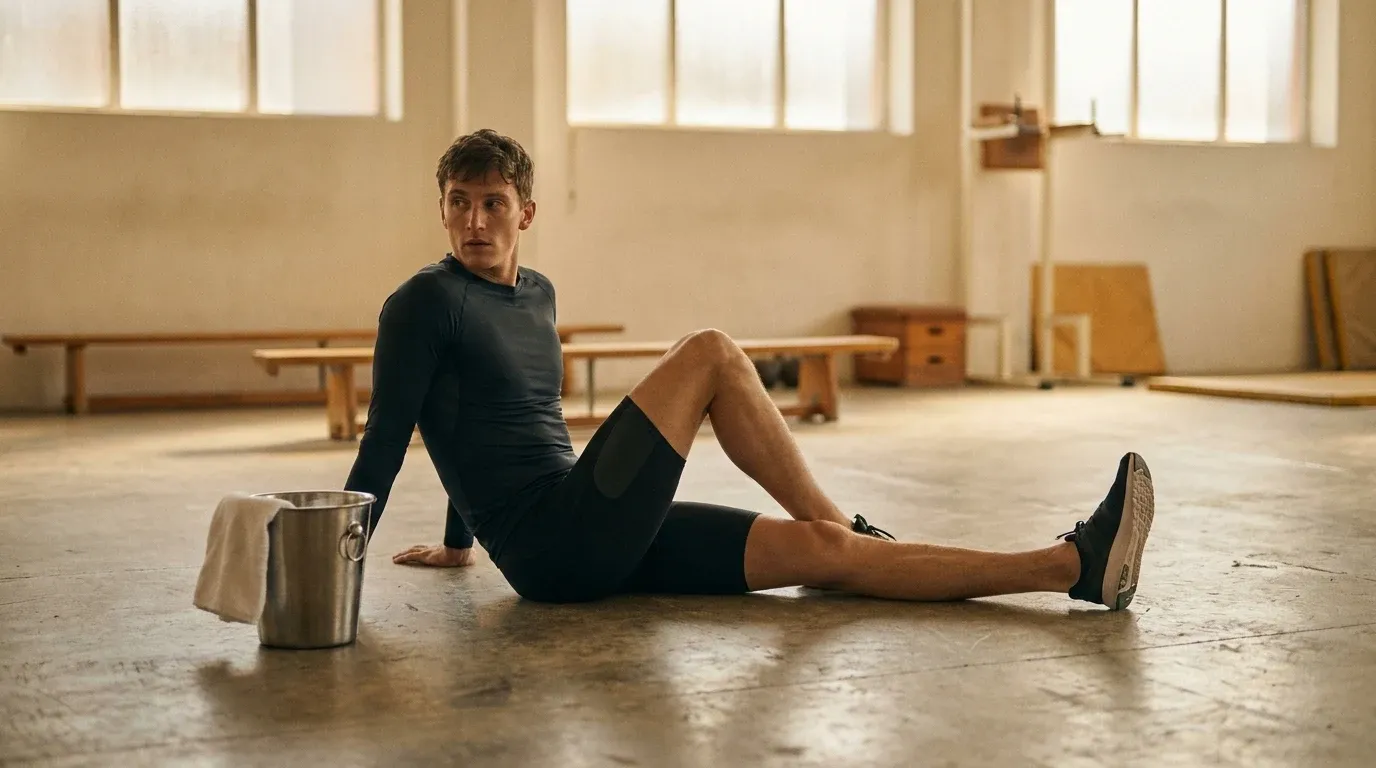
Recovery has become its own industry. Cold plunges, compression boots, foam rollers, yoga flows, passive rest days. everyone has a strong opinion, and most of it is presented with more confidence than the evidence supports. If you've ever felt paralyzed by too many options or suspicious that you're wasting time on the wrong ones, you're not alone.
The honest answer is that recovery tools aren't interchangeable. Each one acts on a different physiological mechanism, which means the right choice depends on what you just trained, how hard you trained, and what you're trying to protect. Here's a cleaner way to think about all of it.
Why "Just Rest" Isn't Always the Best Answer
Passive rest has its place, but research consistently shows that low-intensity movement beats total rest for reducing delayed-onset muscle soreness (DOMS) in trained individuals. Studies comparing active recovery protocols to passive rest found that light aerobic activity performed the day after intense training reduced perceived soreness by 20 to 40 percent in the following 24 hours.
The mechanism isn't mysterious. Movement increases blood flow to damaged muscle tissue, accelerates metabolic waste clearance, and maintains lymphatic circulation without adding meaningful mechanical stress to the muscle fibers. A 20-minute walk, a gentle cycling session at 40 to 50 percent of max heart rate, or a slow yoga flow all qualify.
What doesn't qualify: anything that pushes you into a training stimulus. Active recovery should feel almost embarrassingly easy. If you're breathing hard, you've crossed the line.
To understand why rest days still matter despite all this, Rest Days: Why Not Training Makes You Stronger breaks down the full adaptation cycle and when complete unloading is actually the smarter move.
Cold Water Immersion: Useful, But Context Is Everything
Cold water immersion (CWI) has genuine science behind it, which is why it keeps showing up in elite sport environments. Immersion at temperatures between 10 and 15°C (50 to 59°F) for 10 to 15 minutes significantly reduces acute inflammation markers and perceived muscle soreness following high-volume endurance or team-sport sessions.
For athletes competing in back-to-back events, or anyone who needs to feel functional again within 24 to 48 hours, CWI is one of the most reliable tools available. The anti-inflammatory effect is real and fast.
The catch is that the same inflammatory response CWI suppresses is also a key driver of long-term adaptation, particularly in strength and hypertrophy training. Multiple controlled trials have shown that regular cold immersion after resistance sessions blunts muscle protein synthesis and reduces hypertrophic gains over training blocks of 4 to 12 weeks compared to passive recovery. The signal you're dampening for comfort is partly the signal your muscles use to grow.
The practical rule: use cold immersion strategically, not habitually. It belongs after high-output endurance days, competition days, or during periods of congested scheduling. It doesn't belong as your standard post-lifting ritual if long-term strength and size are the goal.
Movement-Based Recovery: Walking, Yoga, and Easy Cycling
These are the most consistently underrated recovery tools in most training programs. They're free, accessible, and well-supported by evidence. More importantly, they work across nearly all training contexts without the adaptation trade-offs that come with cold immersion.
Walking in particular is underused. A 20 to 30 minute low-intensity walk the morning after a heavy session does the same metabolic clearance work as more elaborate recovery protocols, with zero risk of adding to cumulative fatigue. For athletes running high weekly training volumes, incorporating two or three structured walks per week as deliberate recovery activity can reduce injury risk and improve readiness for subsequent hard sessions.
Yoga adds flexibility maintenance and parasympathetic nervous system activation to the mix. Research on yoga's effect on recovery isn't as voluminous as other areas, but the evidence on its impact on perceived recovery, sleep quality, and range of motion is strong enough that most sports science practitioners now treat it as a legitimate recovery tool rather than a soft option.
Easy cycling, swimming, or any low-resistance movement you enjoy follows the same logic. The format is less important than the intensity. Keep it light, keep it consistent.
Compression and Foam Rolling: Real Benefits, Realistic Expectations
Compression garments and foam rolling are often discussed in terms of performance recovery, which sets expectations too high. The honest picture is more nuanced.
Compression therapy, whether through garments worn post-exercise or pneumatic compression devices like recovery boots, consistently shows positive effects on perceived recovery and reduced soreness ratings. The effects on objective performance metrics like force production or sprint times are much smaller and less consistent across studies. That's not a reason to dismiss compression. Feeling recovered matters. An athlete who feels better is more likely to train with appropriate intensity. But don't expect compression to do something it's not designed to do.
Foam rolling occupies similar territory. A solid body of research supports its use for improving short-term range of motion and reducing muscle stiffness before training or competition. Its effect on next-day soreness is real but modest. Its effect on performance is minimal. Used as a 5 to 10 minute pre-session mobility tool or a post-session wind-down, foam rolling earns its place in a recovery routine. Used as a primary recovery strategy after a brutal training block, it's probably not enough on its own.
Nutrition: The Recovery Variable Most People Under-Optimize
No recovery protocol fully compensates for inadequate nutrition. The window immediately after training is when carbohydrate and protein intake has the most direct impact on glycogen resynthesis and muscle repair. This is especially true in the first 30 to 60 minutes post-session for athletes training twice daily or on consecutive days.
The debate between whole food and supplement sources for recovery nutrition is worth understanding clearly. Real Food vs. Supplements for Recovery: Who Actually Wins? covers the actual evidence on timing, bioavailability, and what matters most depending on your training load.
Nutrition timing also interacts with recovery modalities in ways that matter. When and What to Eat Around Your Workouts provides specific guidance on pre and post-training nutrition that most general recovery advice overlooks entirely.
Sleep and Cortisol: The Foundation Everything Else Sits On
You can do everything else right and still recover poorly if your sleep is disrupted or your cortisol rhythm is off. Sleep is when most tissue repair happens, when growth hormone is secreted, and when the nervous system consolidates adaptation from training stress. Cutting sleep to make time for cold plunges or foam rolling is a losing trade.
Light exposure in the morning is one of the simplest and most evidence-backed ways to anchor your cortisol rhythm and improve sleep quality downstream. Morning Light: Reset Your Cortisol in 10 Minutes explains the mechanism and what it practically looks like.
Social connection also matters more than most athletes acknowledge. Chronic social isolation elevates cortisol and systemic inflammation, both of which directly impair recovery. Social Connection Is a Recovery Tool You're Ignoring covers the research on how relationships influence inflammation and recovery outcomes in ways that go beyond the anecdotal.
Matching the Tool to the Stressor
The core mistake most athletes make is treating recovery as a fixed routine rather than a response to specific training demands. Here's a framework that actually holds up:
- After heavy strength sessions: Prioritize sleep, protein intake, and light movement the next day. Avoid chronic cold immersion if hypertrophy is the goal.
- After high-volume endurance sessions: Cold water immersion, compression, and carbohydrate-focused nutrition are appropriate and well-supported.
- After competition or back-to-back training days: Cold immersion, compression, and complete rest the following day are all valid. Speed of recovery matters more than adaptation here.
- During deload weeks or low-intensity training blocks: Active recovery movement, yoga, and sleep optimization should take priority. Mechanical tools like foam rolling and compression are useful but secondary.
- For general training soreness between normal sessions: Low-intensity movement, proper nutrition timing, and consistent sleep are enough for most people. More elaborate interventions are often unnecessary.
The underlying principle is that recovery should be proportional to the stressor and matched to your immediate goal. If you're in a hypertrophy block, don't systematically suppress the inflammatory signal driving adaptation. If you're in a performance phase with competition deadlines, recovery speed matters more than optimization.
The Simplest Framework You'll Actually Use
Ask yourself two questions after any session. First: how long until my next hard session? Second: is adaptation or performance the priority right now?
If you have 48 hours or more and adaptation is the goal, keep interventions minimal. Sleep, move lightly, eat well. If you have less than 24 hours or you're in a competition window, use every tool available: cold, compression, active movement, optimized nutrition.
Recovery doesn't need to be complicated. It needs to be deliberate. The athletes who recover best aren't necessarily using the most tools. They're using the right ones at the right times.